


As operators manage more transactions, third-party ordering sites, tighter margins, tariffs, and more, restaurant fraud prevention has become a bigger priority. Fraud isn’t always a dramatic event. In fact, it typically shows up as small inconsistencies that are easy to overlook, especially during a busy shift or across locations.
Unauthorized refunds, fake vendor invoices, restaurant POS theft, payroll manipulation, and chargeback abuse can all create financial strain when they go unnoticed. Even when operators do have security measures in place, disconnected systems and inconsistent oversight can create gaps.
Effective restaurant loss prevention depends on visibility. Having strong financial reporting, payment systems, inventory tracking, and employee workflows allows operators to identify unusual activity before it turns into a larger problem.
Most Common Types of Restaurant Fraud You Need to Watch For
Customer and Payment Fraud
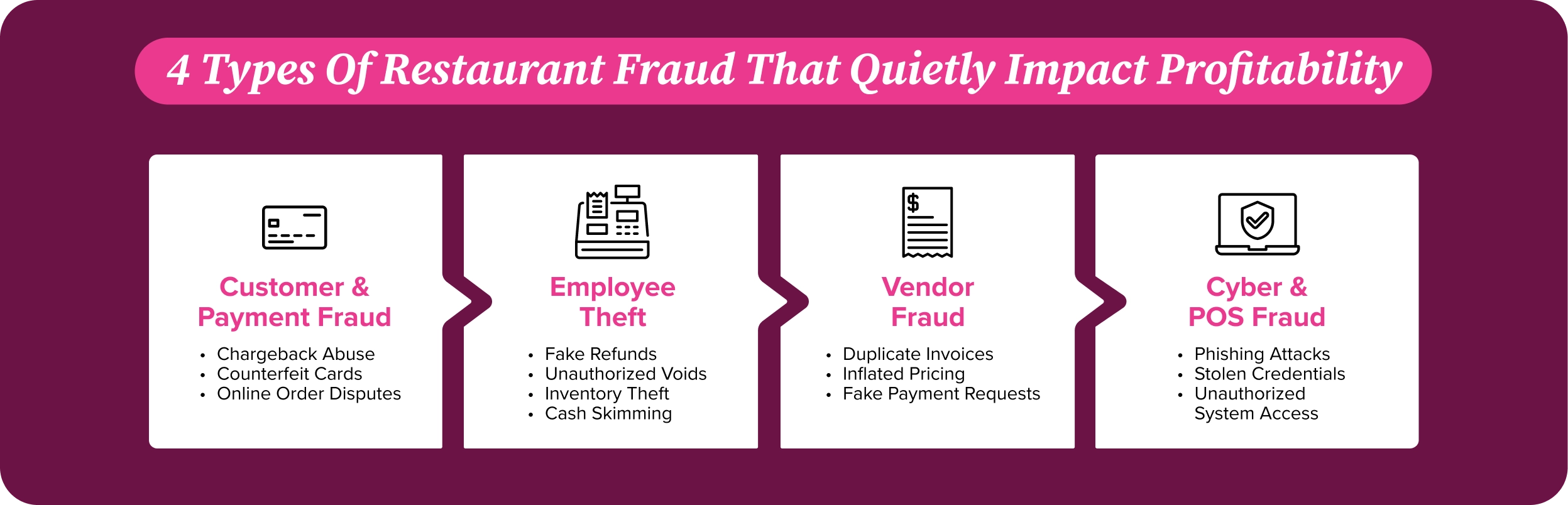
Customer fraud often involves chargeback abuse, counterfeit cards, and disputes about online ordering or delivery transactions. In fast-paced restaurants, it’s very easy for suspicious transactions to blend in with normal sales activity. Restaurants with weak payment verification processes or inconsistent refund policies are more vulnerable to fraud attempts, especially during peak service periods when staff is busy.
Employee Theft and Internal Fraud
Internal fraud is one of the most persistent restaurant loss prevention challenges. Think unauthorized voids, fake comps, inflated overtime, cash skimming and inventory theft. These issues often worsen over time. Without regular audits and consistent reporting, it’s difficult to recognize patterns until losses have already affected profitability.
Vendor and Supplier Fraud
Vendor fraud can take several forms: duplicate invoices, inflated pricing, unauthorized substitutions, or fake payment requests sent through email scams. Restaurants that rely on manual approval processes may have a harder time identifying irregularities quickly. Consistently reviewing purchasing activity helps operators spot discrepancies in a timely manner.
Cyber Fraud and POS System Exploits
Restaurant POS theft increasingly involves things like stolen login credentials, phishing attacks, malware, or unauthorized remote system access. Older systems with inconsistent software updates are especially vulnerable. Even a small security breach can expose payment information, interrupt operations, and create compliance concerns that take valuable time and resources to resolve.
Real-World Restaurant Fraud Scenarios Operators Face

Credit Card Fraud Slips Through the POS
A restaurant begins noticing an increase in disputed charges tied to online orders. At first, the chargebacks appear isolated, but eventually, patterns emerge across multiple locations. Because reporting systems are disconnected, operators struggle to identify the source quickly. By the time the issue escalated, the restaurant had already absorbed significant costs in revenue losses and administrative labor.
Employee Theft That Goes Undetected for Months
A shift manager regularly processes fake refunds during slower service periods and pockets the cash. Individual transactions are small enough to avoid immediate attention, but the activity continues for months. The issue is finally uncovered during a broader financial review after discrepancies appear between POS reporting and daily cash reconciliation totals.
Vendor Payment Scams That Drain Cash Flow
An accounts payable employee receives an email from what appears to be a supplier requesting updated payment information. The request looks legitimate, so the employee changes the payment details without additional verification. Multiple invoices are paid before the restaurant realizes funds were redirected to a fraudulent account controlled by scammers.
Restaurant Fraud Prevention Strategies That Actually Work
- Limit employee access to sensitive systems based on role responsibilities.
- Review voids, comps, refunds, discounts and overtime activity consistently, not just during monthly reconciliation.
- Separate financial responsibilities so the same employee is not handling approvals, payments and reconciliations alone.
- Use approval workflows for vendor changes, large purchases and unusual transactions.
- Maintain updated POS software.
- Require strong passwords across all restaurant systems.
- Conduct regular inventory audits to identify unusual shrink patterns.
- Strengthen bookkeeping and accounting oversight to improve financial visibility. Restaurants with clear financial processes are better positioned to identify irregular activity early on.
- Regularly review reporting data across locations, shifts and departments to identify recurring patterns.
Building a Fraud-Resistant Restaurant Culture
Train Employees to Recognize Fraud Red Flags
Fraud prevention works best when employees understand what suspicious activity actually looks like in day-to-day operations. Training should cover phishing attempts, unusual payment requests, refund manipulation, inventory discrepancies and unauthorized POS activity. Employees who understand these warning signs are more likely to report concerns before losses escalate.
Create Clear Policies for High-Risk Transactions
Restaurants benefit from having documented procedures for refunds, cash handling, vendor updates, overtime approvals and invoice processing. Clear policies reduce confusion and help managers respond consistently. They also create stronger accountability when unusual activity needs to be reviewed or investigated later.
Anonymous Reporting and Whistleblower Systems
Employees are often the first people to notice suspicious behavior, but they may hesitate to report concerns directly to management. Anonymous reporting systems give staff a safer way to raise issues involving theft, policy violations or unethical conduct. Even simple reporting processes can improve visibility into problems that might otherwise stay hidden.
Enforce Accountability at All Management Levels
Fraud prevention standards should apply consistently across owners, general managers, department leaders and hourly employees. Restaurants that prioritize accountability throughout the organization typically have stronger reporting habits, cleaner financial records and more reliable oversight overall.
Restaurant Fraud Prevention Checklist for Owners and Operators
- Review POS permissions regularly.
- Audit voids, comps, and refund activity weekly.
- Require dual approval for vendor payment changes.
- Reconcile cash deposits consistently.
- Monitor overtime and payroll adjustments.
- Keep POS software and security systems updated.
- Train employees on phishing and scam awareness.
- Conduct regular inventory counts.
- Separate financial approval responsibilities.
- Maintain organized bookkeeping and reporting processes.
- Review unusual transaction patterns across locations.
- Document fraud response procedures clearly.
- Use centralized reporting tools to improve visibility across operations.
- Evaluate whether disconnected systems are creating operational gaps.

How Back Office Helps Restaurants Prevent Fraud at Scale
Fraud prevention is more difficult when restaurants rely on disconnected systems, manual reporting, and inconsistent financial oversight. Restaurants using multiple platforms without integrated oversight may miss important financial inconsistencies.
BEP Back Office helps operators centralize reporting across purchasing, labor, accounting, inventory and operational workflows, making inconsistencies easier to identify.
With stronger visibility into daily activity, operators can monitor trends, review unusual variances and improve accountability across locations. Centralized reporting also helps reduce delays caused by fragmented systems or incomplete financial data.
Strong restaurant fraud prevention depends on consistency. When operators can see all aspects of operation in one place, it’s much easier to reduce preventable losses and protect long-term profitability.
Reach out to the Back Office team to learn more about how we can support your operations.
FAQ’s
How can I tell if fraud is happening in my restaurant if the losses are small?
Small losses are often the first sign of a larger fraud issue. Watch for patterns like excessive refunds, frequent voids, inventory variances, duplicate vendor payments, unusual overtime adjustments, or discounts that don’t align with sales activity. Reviewing these reports regularly can help uncover recurring issues before they have a significant impact on profitability. Even seemingly minor discrepancies can add up quickly when they occur repeatedly across shifts, departments, or locations.
What area of a restaurant is most vulnerable to fraud?
Cash handling, refunds and voids, inventory management, and accounts payable are typically among the highest-risk areas for fraud in a restaurant. These functions involve frequent transactions, multiple employees, and opportunities for errors or manipulation. Common examples include cash skimming, unauthorized discounts, inventory theft, duplicate invoice payments, and fraudulent vendor change requests. Operators who lack consistent oversight in these areas often have a harder time identifying problems before they affect the bottom line.
How often should restaurant owners review fraud-related reports?
High-risk activities such as refunds, voids, discounts, and cash reconciliation should be reviewed daily or weekly whenever possible. Payroll adjustments, inventory variances, and vendor payments should be reviewed at least monthly. Regular reviews make it easier to spot unusual patterns before they become larger financial problems. The more frequently operators review key reports, the easier it becomes to identify changes that may otherwise go unnoticed.
Can technology really help reduce restaurant fraud?
Yes. Technology helps restaurants identify potential fraud faster by centralizing reporting across POS systems, inventory, labor, purchasing, and accounting. Operators can more easily spot unusual refund activity, inventory shortages, duplicate vendor payments, payroll anomalies, or location-to-location variances that may indicate a problem. While technology doesn’t replace oversight, it provides the visibility needed to investigate issues more quickly. Centralized data also helps management compare performance across locations and identify inconsistencies that warrant further review.
What should I do if I suspect fraud but don’t have proof?
Start by gathering facts rather than making accusations. Review transaction reports, refund activity, inventory counts, payroll records, vendor invoices, and any other relevant documentation to look for recurring patterns. Document what you find and involve the appropriate leadership, accounting team, or outside experts if concerns persist. Many restaurant fraud cases are uncovered through a series of small inconsistencies rather than a single obvious event. Taking a measured, evidence-based approach can help protect both the business and employees while the situation is being investigated.