



Restaurant profitability begins with understanding where the money goes. From food and labor to rent and utilities, every expense affects what’s left at the end of the day.
Understanding the average restaurant profit margin gives operators a benchmark—and more importantly, context—about where money is being made or lost. Here’s a breakdown of what those margins look like and where operators have the most control.
What Is Restaurant Profit Margin?
Restaurant profit margin measures how much of each revenue dollar the business keeps after covering its expenses. It’s one of the clearest indicators of financial health and operational efficiency.
Margins are influenced by a wide range of factors, from menu pricing to labor management to overhead. Even small gaps in consistency, such as over-portioning, missed invoices, or inefficient scheduling, can erode profitability. Understanding where those costs originate is key.
Gross Profit vs. Net Profit
Both gross profit and net profit sound similar, but they tell different stories.
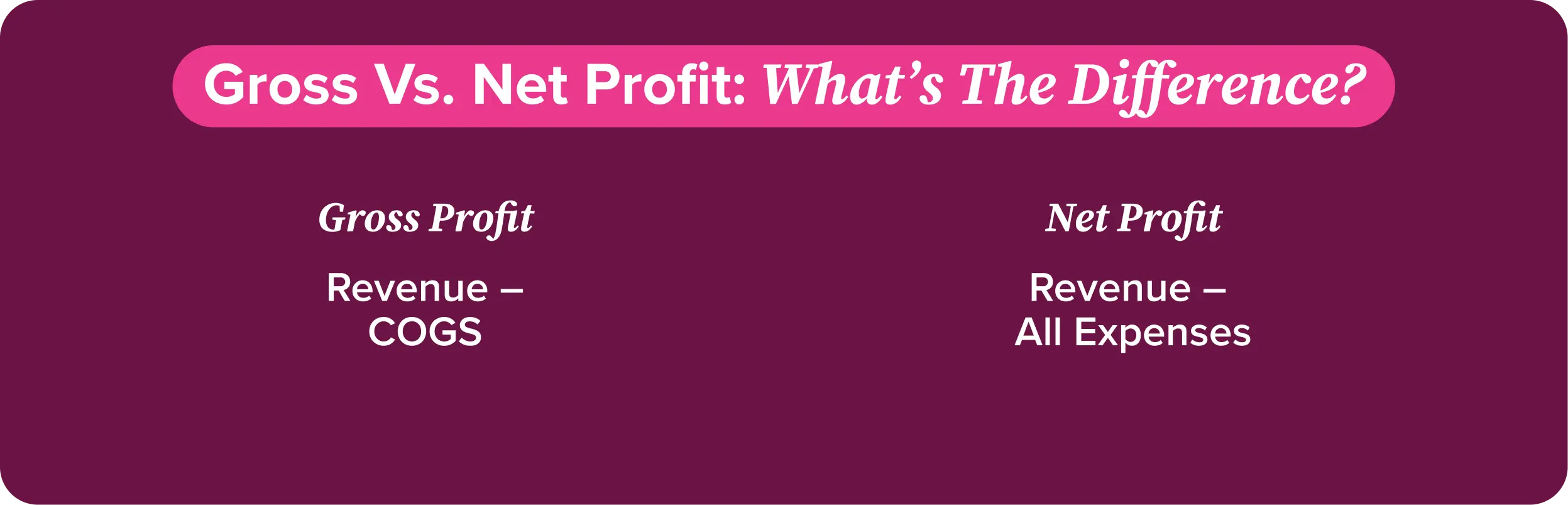
Gross profit reflects revenue after subtracting the cost of goods sold (COGS), primarily food and beverage. It shows how efficiently your menu is performing.
Gross profit is calculated as: Revenue – Cost of Goods Sold (COGS)
Net profit goes further. It accounts for all operating expenses, including labor, rent, utilities, marketing, and administrative costs. This is the number that ultimately determines whether a restaurant is sustainable.
Net profit is calculated as: Revenue – (COGS + operating expenses + taxes + interest)
Operators often focus on gross profit when evaluating menu performance, but net profit is what reveals the full financial picture.
How to Calculate Restaurant Profit Margin
Profit margin is expressed as a percentage and calculated by dividing profit by total revenue.
Gross Profit Margin Formula
Gross profit margin is calculated by subtracting the cost of goods sold from total revenue, then dividing that number by total revenue. The result shows how much revenue remains after covering direct production costs. For restaurants, this is closely tied to food cost percentage and menu pricing strategy.
Net Profit Margin Formula
Net profit margin is calculated by subtracting all operating expenses from total revenue, then dividing by total revenue. This includes labor, occupancy, utilities, and other overhead. Net margin gives a more realistic view of a restaurant’s profitability and long-term viability.
Average Restaurant Profit Margin in the Restaurant Industry
Restaurant margins vary widely, but most operators work within a narrow range.
Typical Profit Margin Range Across the Industry
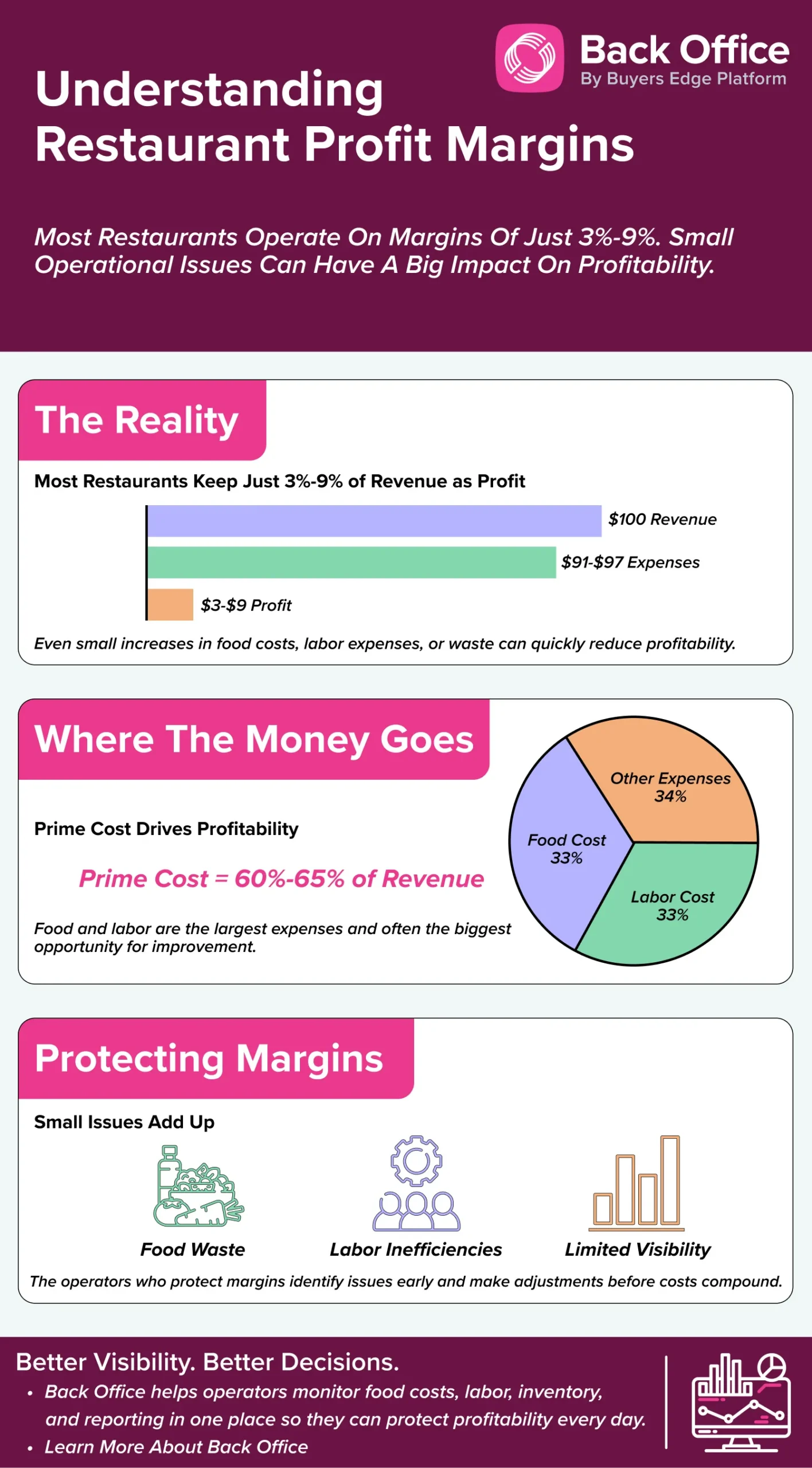
On average, restaurant net profit margins typically fall between 3% and 9%, depending on concept, location, and cost structure. Quick-service restaurants often operate on the higher end due to lower labor costs and faster turnover. Full-service restaurants tend to see tighter margins because of higher staffing needs and longer service times. Independent operators may also face more variability compared to chains with centralized purchasing and systems.
Key Costs That Impact Restaurant Profit Margins
A handful of cost categories drive the majority of margin pressure.
Food Cost Percentage
Food cost is among the most closely watched metrics in restaurant operations. Even slight increases in ingredient pricing or portion inconsistency can quickly eat into margins. If inventory isn’t tight, food cost issues can creep up unnoticed.
Managing food cost requires tight inventory control, supplier oversight, and recipe standardization.
Labor Cost Percentage
Labor is often a restaurant’s biggest controllable expense. Scheduling inefficiencies, overtime, and turnover can all increase labor costs beyond the target range. At the same time, cutting too much labor can impact service and revenue. The goal is to align staffing levels with factual demand patterns, not static schedules.
Prime Cost and Its Role in Profitability
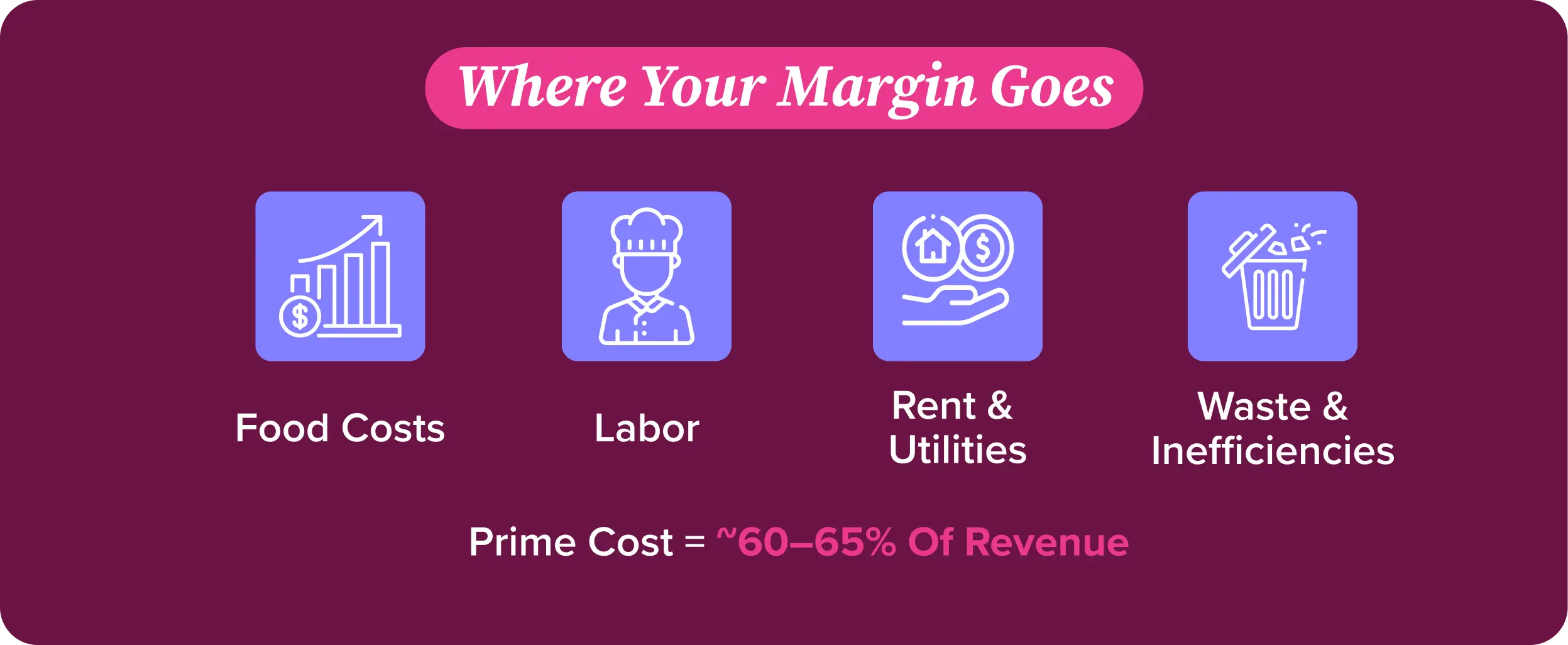
Together, food and labor are the two largest cost centers, each accounting for roughly a third of sales, according to the National Restaurant Association. These costs, known as prime cost, typically account for around 60% to 65% of revenue, making them the most important drivers of profitability.
The good news is that prime cost is one of the few areas operators can actively control day to day.
Why Restaurant Profit Margins Are Often Low
Oftentimes, margins are tight not because of a single issue, but because of many small pressures that happen in the background of daily restaurant operations.
High Food Costs and Waste
Ingredient price volatility and food waste are constant challenges. On top of that, spoilage, overordering, and prep inefficiencies all contribute to lost revenue.
Reducing waste requires better forecasting and visibility. Tools like AI-driven waste tracking are helping operators identify patterns and adjust in real time.
Rising Labor Costs and Staff Turnover
Wages continue to rise, and turnover remains high across the industry. Training new staff adds cost and operational strain. Without systems in place, it’s difficult to maintain consistent labor margins.
Rent, Utilities, and Fixed Overhead
Occupancy and utilities are largely fixed, but they still impact profitability. In high-cost markets, rent alone can significantly compress margins. Energy costs and equipment maintenance add another layer to account for in pricing and planning.
How to Improve Your Restaurant Profit Margin
Improving margins comes down to tightening systems, with the goal being more control and consistency.
Reduce Food Cost Through Inventory Accuracy
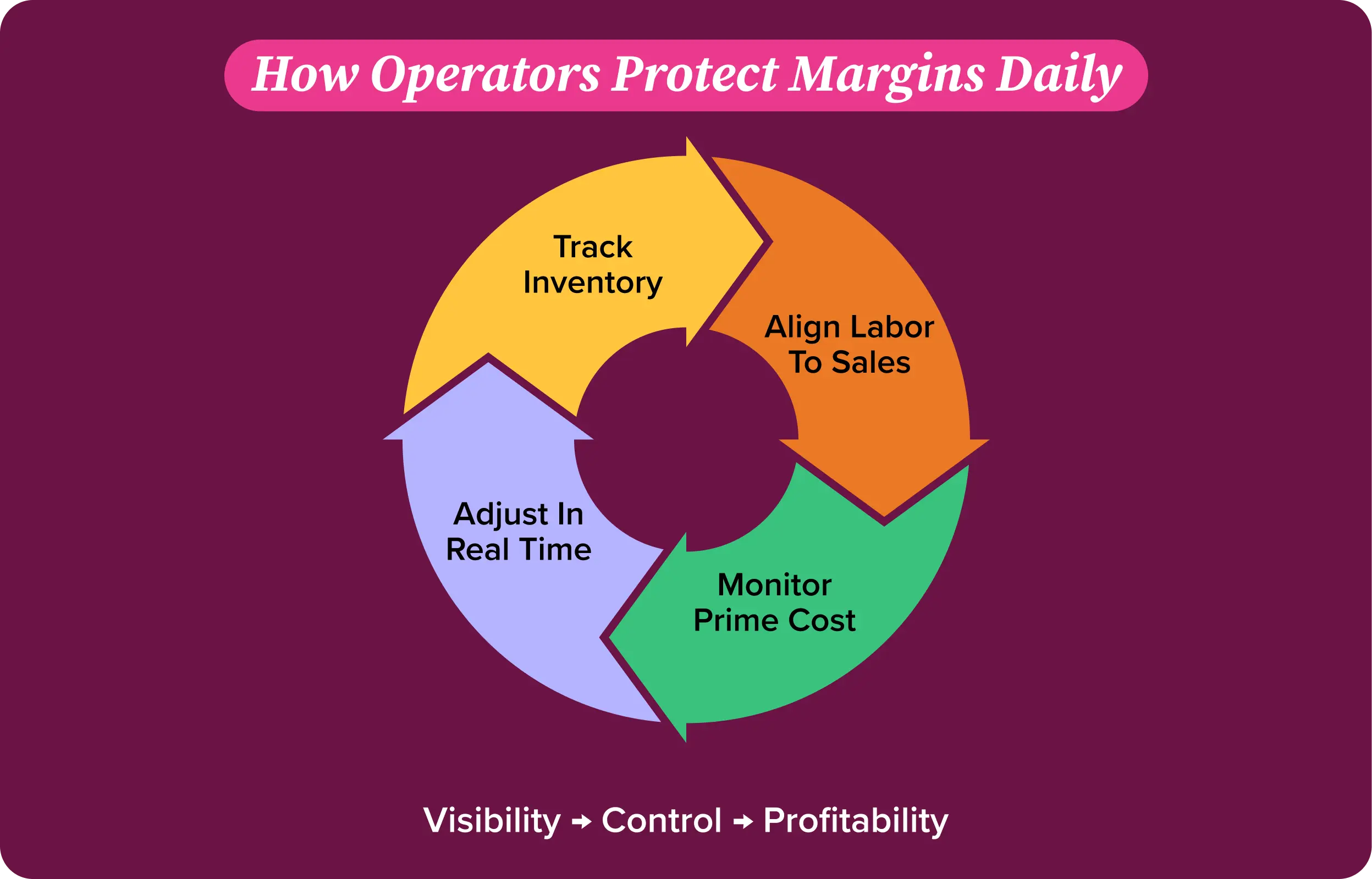
Accurate inventory tracking helps prevent overordering and reduces spoilage. With a clear view of what’s on hand and what’s moving, operators can make better purchasing decisions and maintain more consistent food costs.
Optimize Labor Scheduling Using Sales Data
Aligning labor with real-time sales trends helps avoid overstaffing during slow periods and understaffing during peak hours. Data-driven scheduling improves efficiency without sacrificing service quality.
Control Prime Cost with Real-Time Reporting
Real-time visibility into food and labor costs allows operators to make faster adjustments. Instead of reacting weeks later, teams can correct course daily, protecting margins before issues compound.
How Restaurant Back Office Software Supports Margin Improvement
Restaurant back office software brings financial and operational data into one place, making it easier to manage margins proactively. Instead of relying on spreadsheets or delayed reporting, operators can track food cost, labor, and prime cost in real time.
Platforms like Back Office help standardize processes across locations, improve forecasting accuracy, and surface cost issues early. This kind of visibility changes how decisions get made. Instead of reacting to problems weeks later, operators can adjust in the moment before small issues turn into margin loss.
Final Takeaways
Restaurant profit margins are tight, but they’re not out of your control. Strong margins come from consistent systems. Operators who can make data-backed decisions and adjust before small issues turn into big ones are positioned to maximize profitability.
If you’re looking to strengthen visibility and control across your back office operations, reach out to the Back Office team.
FAQs
What’s a good profit margin for a restaurant, really?
Most operators land somewhere between 3% and 9%, but that number only tells part of the story. A “good” margin is one you can maintain consistently without cutting corners on food quality or service. If you’re constantly chasing it, something in the operation probably needs tightening.
Where should I look first if my margins feel off?
Start with what you can control today. Inventory and labor usually show issues the fastest. Are you throwing food away? Scheduling based on habit instead of actual sales? Those are the kinds of things that quietly chip away at your margins.
Why does it feel like margins disappear even when sales are steady?
Because most of the damage doesn’t come from one big problem. It’s the small stuff. A little over-portioning here, a missed price increase there, a few extra hours on the schedule. None of it stands out on its own, but together it adds up fast.
How much should I actually worry about prime cost?
A lot. Food and labor together usually take up the majority of your revenue, so even a small shift in either direction makes a difference. The operators who stay on top of this daily, not monthly, are usually the ones protecting their margins.
Do I really need back office software to improve margins?
At this point, yeah, you probably do. You can manage things manually, but it usually means you’re catching problems after they’ve already hit your numbers. When everything lives in one place and updates in real time, you’re not guessing or digging through spreadsheets. You’re making decisions while there’s still time to fix them.