


Understanding how to calculate food cost — and then applying those figures strategically to business operations — is a prime driver of restaurant success. It’s a reality many seasoned restaurant leaders have had to acknowledge through hard-learned lessons.
Historically, controlling food costs has been a challenging feat, complicated by a dynamic environment with ever-shifting prices, a cumbersome calculation process, and the need to account for other operational issues that demand management’s attention. As a result, many “set it and forget it,” determining food costs once and never revisiting them, even when the environment changes.
To cost out a cheeseburger and fries, for example, you need to know the price of the bun, the eight-ounce patty, the two-ounce slice of cheddar cheese, the lettuce, the one-ounce tomato slice, and the seven ounces of fries. Commodity prices often fluctuate, meaning the cost to put a cheeseburger and fries in front of the customer today isn’t what it might be in a month. Without awareness of, say, a 10% jump in the price of ground beef and a nickel increase in the cost of the bun, your profit margin shrinks, and you’re none the wiser.
This threat of dwindling margins is why mastering the basics of food cost management — from calculating plate costs to determining food cost percentage — and monitoring these key figures vigilantly is vital to your business.
Calculating and Analyzing Food Cost
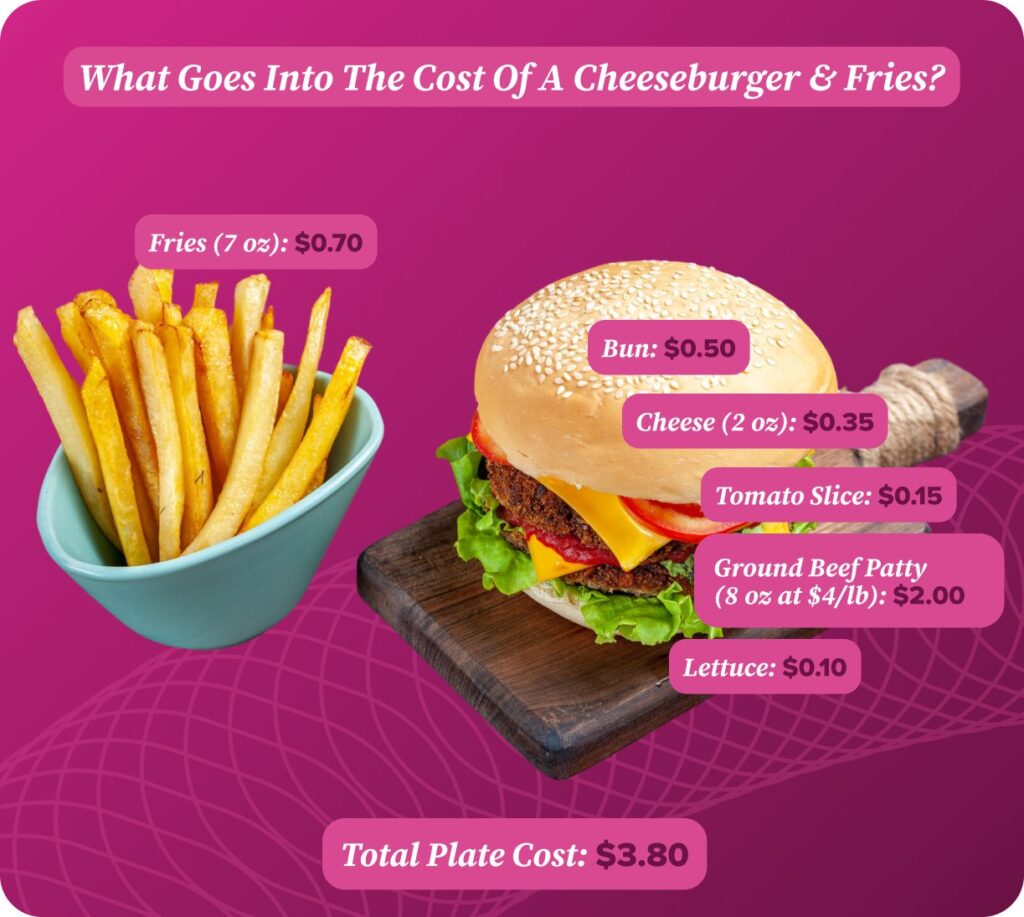
Understanding your restaurant’s cost structure is essential for driving profitability and making smarter business decisions. Food cost is the amount a restaurant pays for food ingredients used to produce the items sold. If you want to calculate the food cost of a cheeseburger, for example, you might list 50 cents for a hamburger bun, 35 cents for a slice of cheese, and $4 for a pound of 80/20 ground beef.
Rather than tracking each ingredient for each item as it’s used, restaurants typically calculate food cost used within a given period as Cost of Goods Sold (COGS) using the following formula:
Beginning Inventory + Purchases – Ending Inventory = Food Cost
Tracking food cost in this way can help:
- Evaluate how efficiently you’re maintaining portion control.
- Identify waste or theft issues.
- Make data-driven decisions about menu pricing.

Tracking Food Cost Percentages in Restaurants
While knowing your actual food cost is important, tracking food cost as a percentage of sales can provide more context. Food cost percentage is the ratio of ingredient cost to sales price. This percentage can help restaurant operators evaluate how well they’re managing their kitchen expenses in relation to their revenue and how their performance stacks up against industry norms.
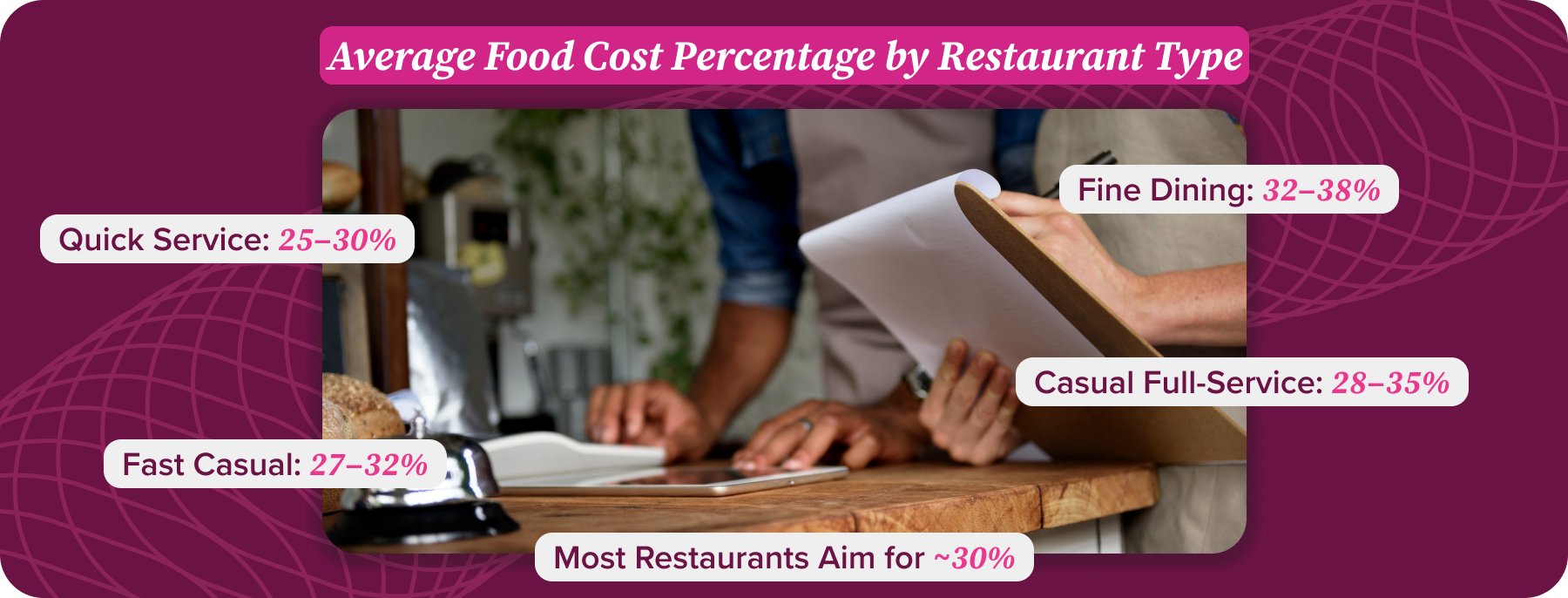
To learn how to calculate food cost percentage, divide your total COGS (how much you spent) by the total sales for that period and multiply by 100. Restaurants generally aim for a food cost percentage of roughly 30%, though that figure could vary depending on the type of operation you’re running.
Industry Benchmarks for Food Cost Percentage
Food cost percentages can vary widely based on restaurant concept, menu offerings, service model, and geographic location. Here are some typical industry benchmarks:
- Quick Service: 25–30%
- Fast Casual: 27–32%
- Casual Full-Service: 28–35%
- Fine Dining: 32–38%
Ultimately, your target percentage should reflect your restaurant’s business model. Staying within your desired range is key to maintaining healthy margins that can support sustainability and leave room for growth.
Benefits of Regular Food Cost Tracking
Understanding your food costs is essential to running a successful restaurant because these expenses can directly impact your bottom line, especially when rapidly rising prices can eat into your profit margins.
In July 2025, for example, wholesale prices for beef and veal were up by 9.3% year over year, coffee soared by 31.8%, eggs were up by 19.5%, poultry jumped by 9.6%, and fresh fruit was up by 11.1%, according to data from the National Restaurant Association.
Beyond the constant ebb and flow of pricing, other factors can influence your food costs. Vendors might close shop, or products might get discontinued, forcing you to find substitute options. Ongoing attention to influencing factors can enable you to pivot quickly when needed and optimize the performance of your restaurant, despite industry changes.
What You Can Do with Your Food Costs
Once you have a clear picture of your food cost — both in total and as a percentage of sales — you’ll no longer be operating in the dark. Instead, you can use that information to make smarter, more strategic decisions that can directly impact your restaurant’s bottom line. Food costs will naturally fluctuate over time due to factors like supply and demand, seasonality, and even global events, but with consistent tracking and analysis, you can stay ahead of those shifts and make decisions with confidence.
Here are four key areas where knowing your food cost can help guide your next move:
Determining the Right Menu Prices
Understanding your food cost allows you to price your menu items accurately, not just based on what your competitors are charging but also based on what you need to charge to cover your expenses and still turn a profit. By calculating the food cost per dish, you can apply appropriate markups to set menu prices that align with your brand, customer expectations, and profit goals.
Keeping Your Profit Margin Healthy
Restaurants operate on historically slim margins, often about 3 to 5%, so understanding the dynamic nature of food costs can help ensure your margins never shrink below an acceptable level. By keeping a close eye on your food cost percentage, you can quickly identify issues and make small changes, such as portion sizes or recipe ingredients, that keep your margins where they need to be.
Managing Your Food Budget
Tracking food costs over time can make it easier to build a realistic food budget. You can gain insight into spending patterns, understand which ingredients or vendors are driving up costs, and make more accurate forecasts. This can help prevent over-ordering, reduce waste, and avoid costly surprises in your profit and loss statement.
Growing Your Business
When your food costs are under control, you can free up capital to invest in other parts of the business. You can also create reasonable forecasts and make enterprising business decisions with confidence regarding marketing, operational expenditures, labor, and expansion opportunities.
Using Technology to Calculate Food Costs in Real-Time
Traditionally, operators have calculated food costs manually. This process involves painstakingly entering numbers into a spreadsheet — an approach that requires consistent upkeep. Of course, manual entry is undeniably time-consuming and prone to error.
With Back Office, you can automate much of this process, which can help get a handle on food costs, streamline your operation, and facilitate a healthier bottom line. Back Office prides itself on being the most accessible restaurant food cost software on the market. It removes the guesswork of managing food costs and provides real-time, actionable reports to inform decision-making and boost profitability.
Simply snap a photo of an invoice from your supplier or connect your food vendors to Back Office, and the software does the rest, automatically digitizing and importing every invoice line by line. With your recipes installed in the Back Office system, the technology automatically tracks your food spend and COGS without the hassle of invoice data entry or inventory counts.
When an invoice comes into Back Office, the software instantly updates your ingredient prices alongside your inventory and the reports detailing key metrics, like margin and food cost percentage. This integration can give you a no-hassle way of monitoring the ingredients pushing up your recipe costs and impacting profitability. After that, you can reconnect with vendors to explore new terms, investigate alternative products, or reconsider a dish’s place on your menu. If you incorporate substitute products, Back Office takes care of that, too, so you don’t have to update your recipes, inventory, or reports.
As a result, you can gain a complete understanding of how to reduce food costs in a restaurant in real-time, taking control of a prominent expense that can directly affect your bottom line.
Turning Food Cost Insights into Action
Mastering food cost isn’t just about crunching numbers — it’s also about turning that knowledge into smarter decisions across every part of your restaurant operation. From setting profitable menu prices to managing your budget and planning for growth, understanding your food cost empowers you to act decisively.
With the right tools, staying on top of your food cost no longer has to be time-consuming or complicated. Back Office can help you automate calculations, adjust menu prices, investigate new suppliers, and actively promote higher-margin items. Best of all, you can monitor changes in real-time and gain full visibility into your most critical expenses.
Ready to take control of your food costs and drive a healthier bottom line? Explore how Back Office can streamline your processes and discover the benefits of a solution designed by restaurant operators for restaurant operators.