

In a busy restaurant, it’s easy for small issues to hide in plain sight. A few inventory items missing here and a few dollars in extra vendor charges there may not seem important to track down in the moment, but over time, those small gaps can eat away at your bottom line. The challenge for many restaurant operators isn’t that these problems exist—it’s that they appear in dozens of small places across the business, and tracking each issue individually can feel like a constant game of whack-a-mole.
Conducting a structured restaurant audit can help bring those scattered details into focus by reviewing financial records, operational processes, and compliance checks in a consistent, organized way. Instead of reacting to problems after they happen, strategic leaders use a restaurant audit process to review every critical area of the business, helping to spot patterns early, strengthen cost controls, and support smoother day-to-day operations.
What Is a Restaurant Audit?
A restaurant audit is a structured review of a restaurant’s financial records, operational processes, and compliance procedures to ensure everything is functioning as intended. These audits typically examine key areas such as cash handling, inventory management, labor costs, vendor invoices, food safety practices, and POS reporting to confirm that policies are being followed and the numbers in reports match what managers see in the kitchen, on the floor, and in the cash drawer.
The audit is conducted by systematically reviewing reports, observing employee procedures, and comparing documented processes to actual performance. Rather than being a one-time inspection, this process is most effective when it becomes a regular routine that allows operators to compare results over time and confirm that operational improvements are delivering the intended results.
Why Is a Restaurant Audit Important?
Regular restaurant audits give operators a clearer picture of how their business is actually performing. More importantly, audits can help pinpoint operational inefficiencies and financial issues, leading to several key benefits for improving day-to-day operations:
Improve Financial Accuracy and Profitability
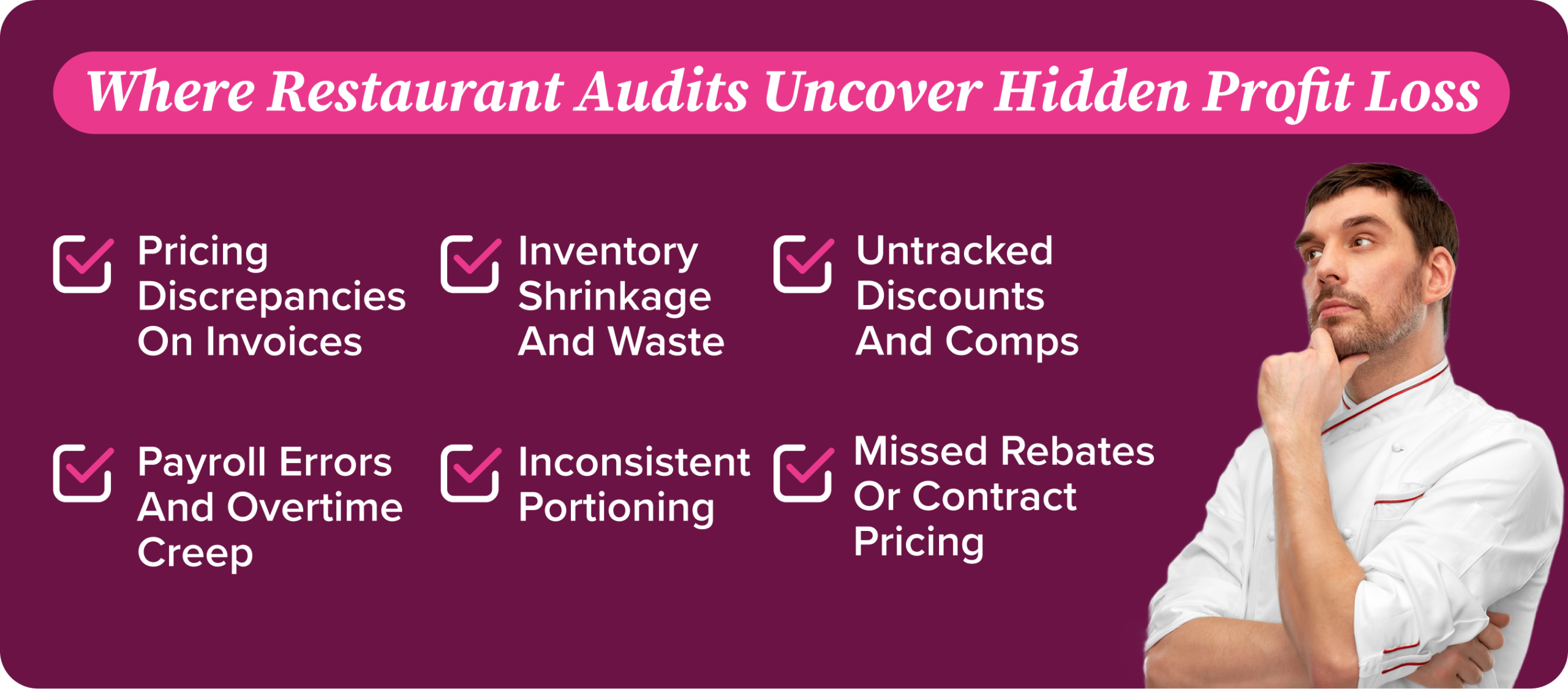
Auditing financial records involves reviewing sales reports, invoices, and cost data to identify pricing errors, unexpected charges, or unusual spending patterns that may be affecting margins. Catching these discrepancies early allows managers to correct mistakes, resolve vendor billing issues, and ensure the restaurant’s financial reports accurately reflect real operating performance.
Prevent Fraud, Theft, and Revenue Leakage
A review of cash handling procedures, refunds, voids, and employee transactions helps highlight irregular activity that may signal internal theft, policy violations, or simple processing errors. By monitoring these patterns consistently, operators can strengthen accountability, discourage dishonest behavior, and protect revenue that might otherwise be lost through unnoticed issues.
Strengthen Inventory and Cost Controls
Inventory-focused audits compare physical stock counts with purchasing records and usage reports to identify over-ordering, spoilage, inconsistent portioning, or missing product. Addressing these gaps improves ordering accuracy and inventory discipline, helping restaurants control food costs while simultaneously reducing unnecessary waste.
Enhance Operational Efficiency
Operational audits examine workflows such as scheduling practices, kitchen procedures, and task management to identify bottlenecks or processes that create unnecessary or inefficient work for staff. Streamlining these routines helps managers reduce wasted labor, improve team productivity, and maintain smoother service during busy shifts.
What Should You Review in a Restaurant Audit?
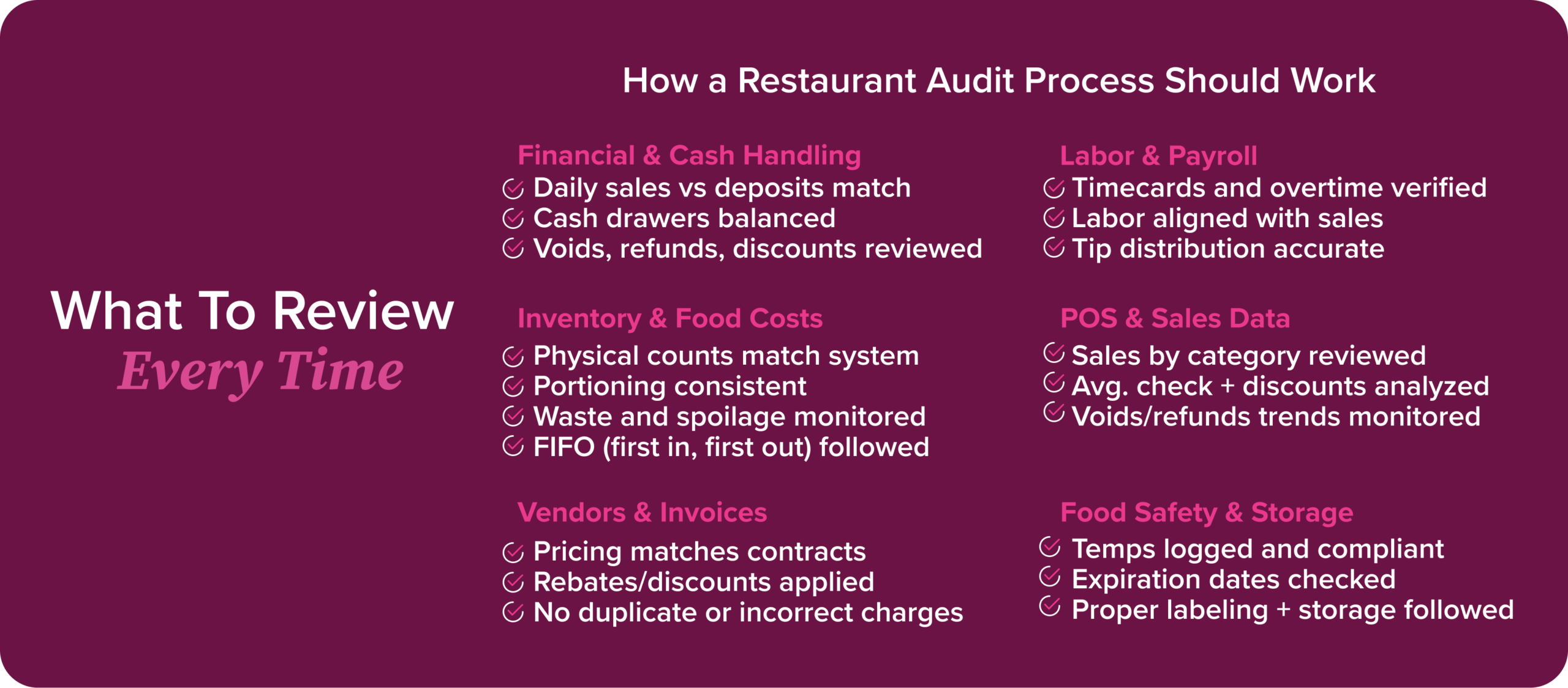
Using a structured audit checklist helps operators approach audits systematically rather than trying to review everything from memory. By organizing the process into clear categories, managers can move through each area efficiently and ensure that critical operational details are reviewed consistently every time.
Financial Records and Cash Handling
Start by reviewing daily sales summaries, cash drawer balances, and bank deposits to confirm that reported revenue matches what was actually collected. Look for unusual voids, refunds, or discounts that may indicate errors or improper handling. Comparing POS totals with deposit records can help identify discrepancies early and ensure that established cash handling policies are consistently followed by staff.
Inventory Management and Food Costs
Inventory audits should focus on verifying that physical inventory counts match recorded inventory levels. Look for signs of over-ordering, excessive waste, or inconsistent portioning that may increase food costs. Verify practices like stock rotation and consistent inventory counts are followed properly to help control costs and reduce unnecessary waste.
Vendor Invoices and Supplier Contracts
Review vendor invoices carefully to confirm that pricing matches agreed contract terms and that restaurants are receiving expected discounts or rebates. Look for duplicate charges, incorrect quantities, or unexpected price increases. Tracking vendor performance over time can reveal opportunities to renegotiate contracts or switch suppliers. Using organized records and digital invoices can also make it easier to identify pricing discrepancies during routine audits.
Payroll, Tips, and Labor Costs
Review timecards, overtime records, and payroll summaries to ensure employees are paid accurately, and labor budgets are being followed. Check that tip distribution policies are applied consistently, and that scheduling aligns with sales patterns to avoid unnecessary labor costs during slower service periods.
POS Reports and Sales Data
Using available POS data, review sales by category, average check size, and discount activity to identify unusual patterns. Comparing sales data with inventory usage can also highlight potential issues with portion control, waste, or theft. Pay close attention to trends in voids, refunds, and promotional discounts to ensure these transactions are being applied appropriately.
Food Safety, Storage, and Expiry Controls
Food safety audits should review storage procedures, temperature logs, and product expiration dates to ensure compliance with health regulations. Confirm that refrigeration units are maintaining proper temperatures and that labeling procedures are consistently followed. Reviewing storage practices also helps ensure that older inventory is used first, reducing spoilage and maintaining food quality standards that protect both guests and the restaurant’s reputation.
How Often Should You Conduct a Restaurant Audit?
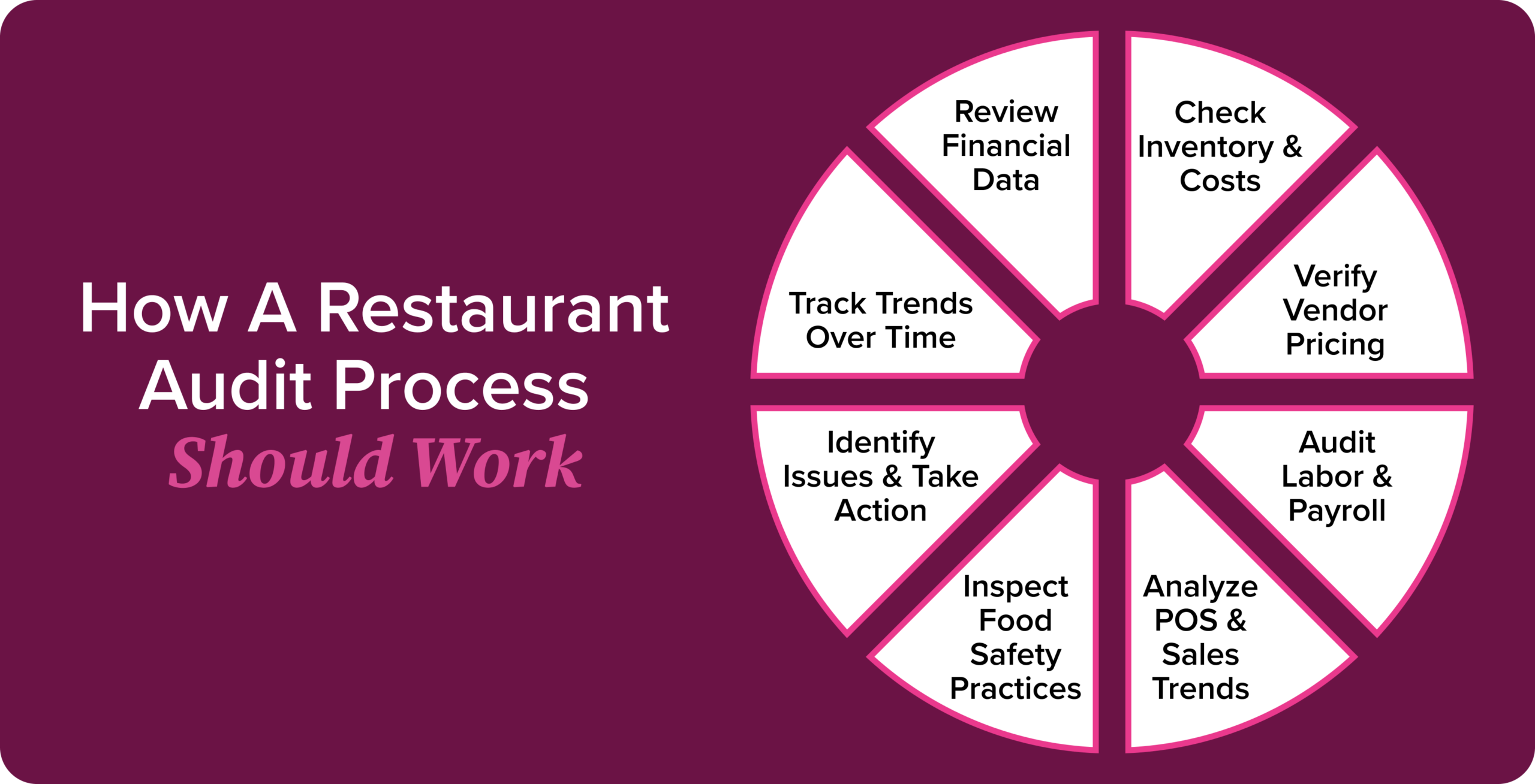
The ideal frequency for a restaurant audit depends on the type and complexity of your operation. Quick-service restaurants with high transaction volumes may benefit from weekly or bi-weekly reviews of key financial and inventory metrics, while smaller or fine dining establishments may conduct more comprehensive audits on a monthly basis. Multi-location brands often perform frequent internal checks at the store level with deeper corporate reviews quarterly. Regardless of the schedule, the most important factor is consistency. Establishing a predictable audit cadence allows operators to compare trends over time, quickly identify metrics that seem abnormal, and verify that operational improvements are producing the desired results.
Tools and Software That Simplify Restaurant Audits
Modern technology can dramatically reduce the time and complexity involved in conducting a restaurant audit. With the right tools in place, operators can automate data collection, improve accuracy, and quickly identify issues that might otherwise go unnoticed.
- Accounting and back-office software: Integrated accounting and back-office platforms centralize financial data such as sales, payroll, vendor invoices, and expense reports. Instead of manually compiling spreadsheets, operators can quickly review and analyze comprehensive, done-for-you financial records. These systems also make it easier to track audit findings over time and maintain consistent documentation across locations.
- Inventory management: Inventory management systems analyze food cost patterns by automating inventory counts, invoice logging, and cost monitoring. Real-time inventory data allows managers to compare physical counts against expected inventory levels to quickly identify lost product, waste, or over-ordering that could be negatively impacting food cost.
- POS reporting systems: Digital POS systems generate detailed sales reports from sales transaction data, including sales by menu item, discounts, refunds, voids, and payment methods. These reports allow managers to quickly analyze sales patterns, verify that transactions were processed correctly, and identify unusual activity that could signal pricing errors, improper discounts, or unauthorized transactions.
- Real-time audit dashboards for multi-location restaurants: Real-time audit dashboards aggregate sales performance data, labor costs, inventory levels, and compliance metrics across multiple locations. These dashboards consolidate financial, operational, and sales data into a single interface, giving leadership teams an edge in comparing locations, monitoring KPIs, and prioritizing deeper audits where unusual trends or discrepancies appear.
Build a Stronger Operation with Smarter Restaurant Audits
A consistent restaurant audit process helps operators stay ahead of problems before they grow into costly issues. By regularly reviewing financial records, inventory practices, vendor invoices, labor data, and operational procedures, restaurant leaders can uncover hidden inefficiencies, strengthen cost controls, and maintain a consistent guest experience.
Using purpose-built tools can make the audit process faster and far easier to manage. With integrated reporting, inventory tracking, and automated financial insights, Back Office solutions help turn restaurant audits into a streamlined routine rather than a time-consuming task. Contact Back Office today to explore tools that make your restaurant audit process simpler, clearer, and more effective.
FAQs
What is the difference between a restaurant audit and a restaurant inspection?
A restaurant audit is an internal review focused on financial accuracy, operational efficiency, and compliance with internal processes. An inspection, on the other hand, is typically conducted by external regulators and focuses primarily on health and safety standards. Audits are proactive, while inspections are often reactive.
Who should be responsible for conducting a restaurant audit?
Restaurant audits are usually conducted by general managers, regional managers, or corporate operations teams. In multi-unit operations, audits may also be handled by a dedicated internal audit or finance team. The key is having someone objective and consistent to ensure accuracy and accountability.
How long does a restaurant audit typically take?
The time required depends on the scope of the audit and the size of the operation. A focused audit on financials or inventory may take a few hours, while a full operational audit can take a full day or more. Using the right tools and systems can significantly reduce the time required.
What are the biggest mistakes operators make during restaurant audits?
One of the most common mistakes is treating audits as a one-time task instead of an ongoing process. Other issues include inconsistent documentation, relying on manual tracking, and failing to act on audit findings. The real value of an audit comes from using the insights to improve operations over time.