

Every restaurant owner imagines running the kind of place you see in commercials—the manager greets regulars by name, the team members are always smiling, and the food is always beautifully presented, hot and fresh, at the table. But behind the scenes, the realities of keeping a restaurant running often look very different. Instead of spending time on the floor, most operators are tucked away in the office, sorting through invoices, adjusting labor schedules, and searching for the root cause of the most recent increase in food cost.
For operators who want to spend less time chasing numbers and more time leading their teams, restaurant automation can be the missing piece. With the right systems in place, operations become more efficient in less time, saving money and freeing up managers to focus more on team-building and guest satisfaction. For automation to deliver real results, it must be approached with a clear strategy and the right operational partner to target the areas of your operation that can provide the biggest financial impact.
What Is Restaurant Automation?
At its core, restaurant automation involves using technology to streamline repetitive tasks, reduce manual errors, and create real-time visibility into your operation. With automation in place, operational data is passed seamlessly between your systems to ensure you are always working with the most accurate information. Automation transforms routine operational tasks from fully manual processes into “human-in-the-loop” workflows, putting critical sales, labor, and inventory data at your team’s fingertips to help them work more efficiently and effectively.
Just as importantly, restaurant analytics software helps uncover hidden cost leaks by highlighting trends in food cost percentage, labor variances, and purchasing patterns. Instead of scrambling to fix problems after the fact, operators gain the visibility needed to make proactive adjustments. As restaurant teams grow more comfortable using these insights, automation evolves into a financial control system that protects margins, saves management time, and drives smarter and faster decision-making.
Why Restaurant Automation Matters for Cost Control
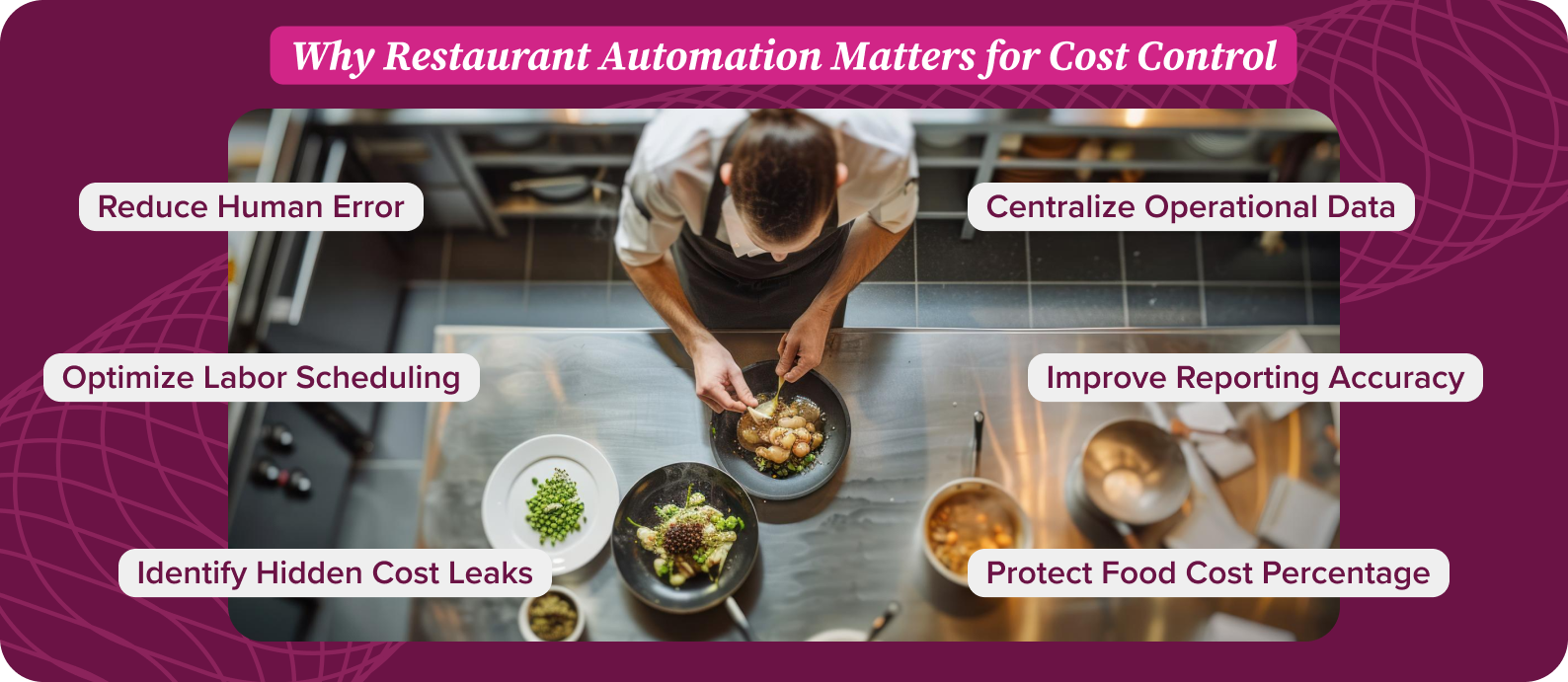
Unfortunately, most operational cost issues aren’t a one-and-done fix. Instead of focusing only on one aspect of your operation, automation helps to connect dozens of small processes and keep them all tightly aligned. When integrated into your operations effectively, restaurant automation protects your margins in several key ways:
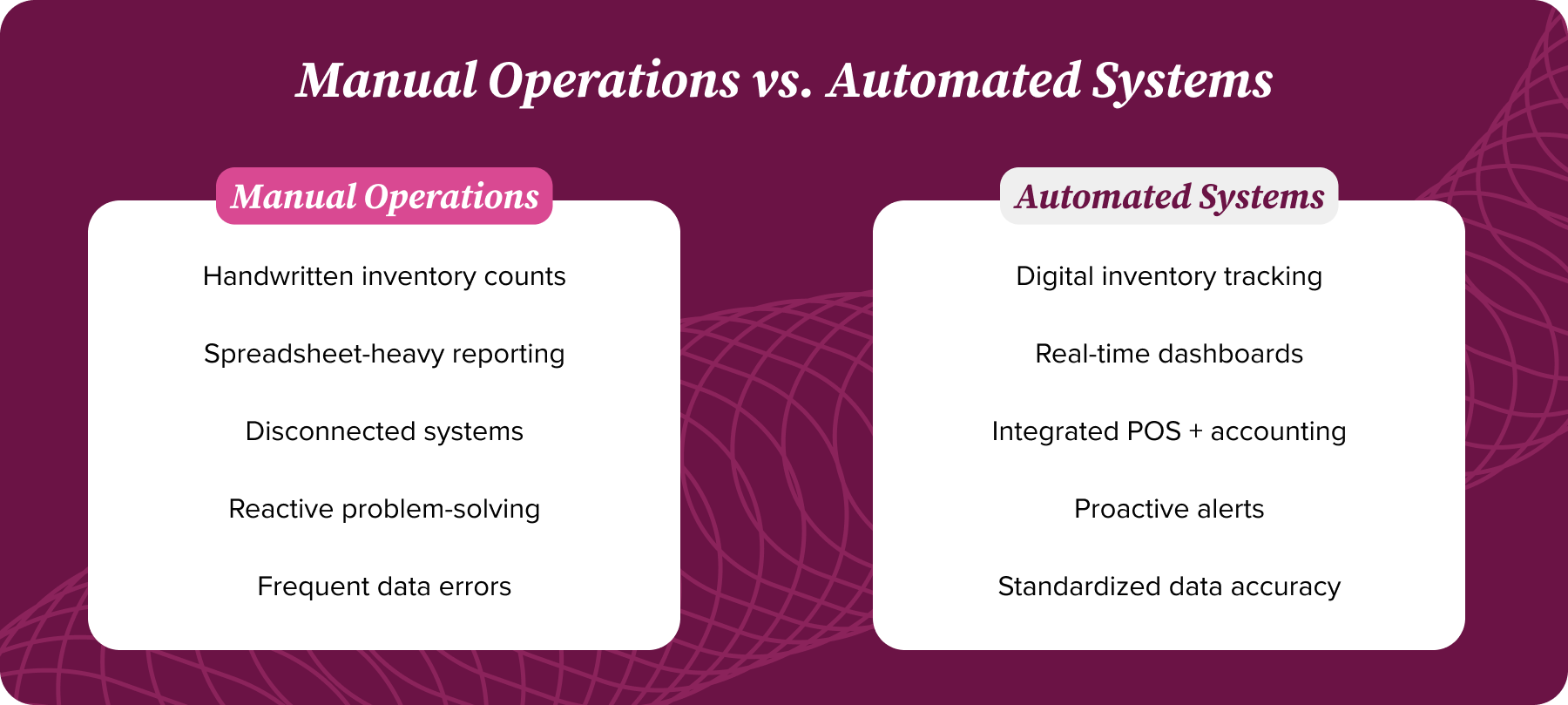
- Reducing Human Error: Processes such as inventory counts or invoice entry typically rely on manual tracking and input. Restaurant automation replaces handwritten logs and disconnected spreadsheets with integrated tools that standardize data entry and sync information in real time. The result is cleaner reporting, fewer costly mistakes, and more confidence that the numbers you’re reviewing accurately reflect what’s happening in your restaurant.
- Optimizing Labor Costs: Labor is one of the largest and most volatile expenses in any restaurant, yet it should be one of the most controllable. Scheduling often relies on guesswork or outdated sales trends. Automation leverages historical sales data and forecasting to build smarter schedules that align staffing with projected demand. With optimized schedules in place, managers can reduce overtime, prevent overstaffing, and maintain service standards without sacrificing profitability.
- Identifying Cost Leaks: Small inconsistencies in portioning, ordering, or waste can cause hidden cost leaks leading to thousands of dollars in additional expenses over time. Automated systems provide real-time tracking and flag unusual patterns before they escalate. Instead of discovering issues at the end of the month, operators can correct problems immediately and minimize cost leaks.
- Supporting More Efficient Operations: Many restaurants rely on fragmented systems that don’t communicate with each other. Restaurant automation connects POS data, inventory, labor, and reporting into a centralized platform, giving managers an end-to-end view of performance. With clearer insights and fewer manual administrative tasks, leadership teams can focus on coaching staff, enhancing the guest experience, and running a smoother operation.
Where Restaurants Should Focus Automation First
Not all automation delivers the same financial impact. If you’re evaluating where to begin, the smartest approach is to prioritize areas that directly affect your largest expenses or most time-consuming tasks.
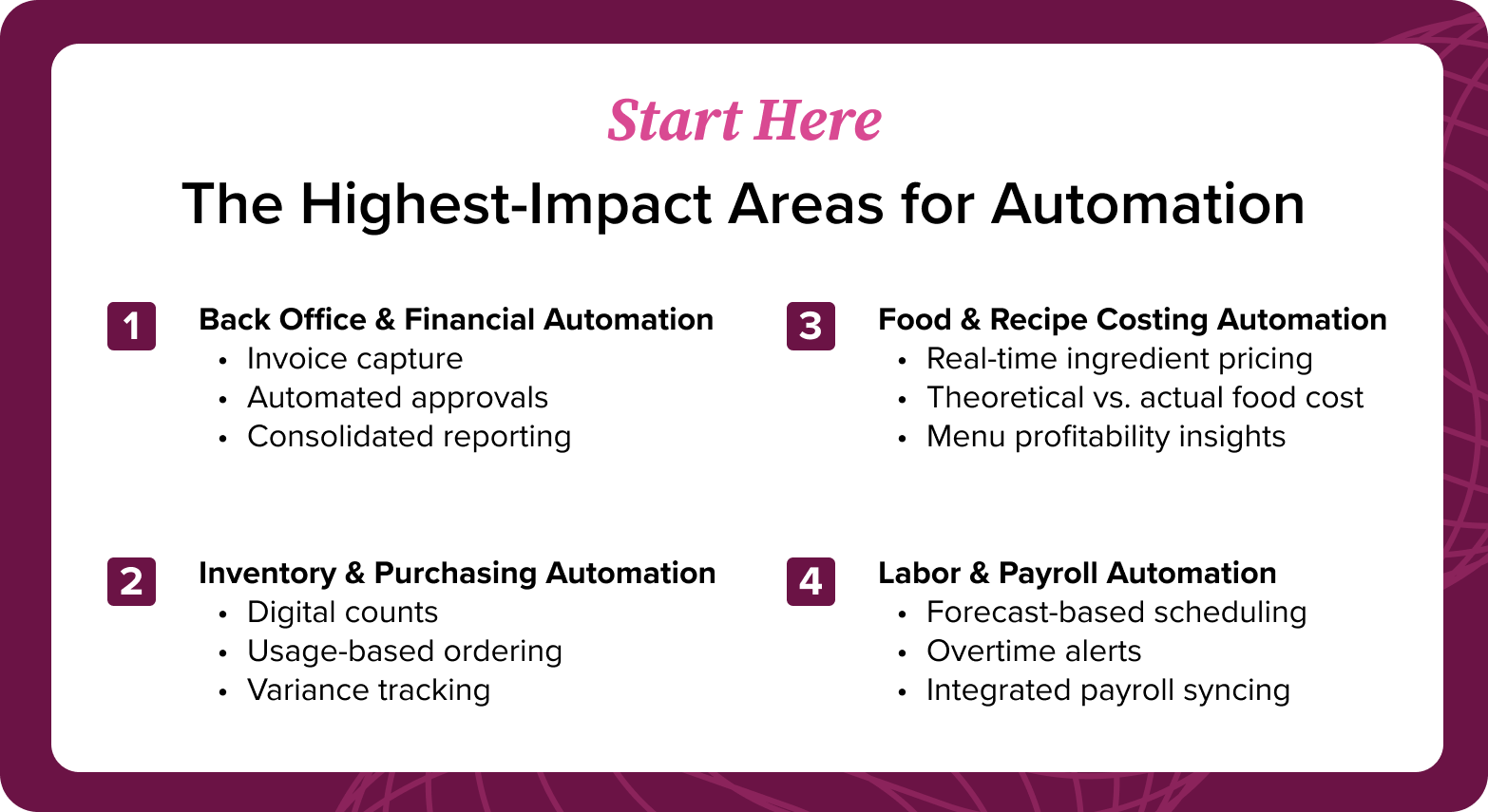
Back Office and Financial Automation
Without automation, managers need to manually enter vendor invoices, reconcile bank and credit card statements, track utility or rental payments, process royalty payments and fees, and compile a myriad of other bills or financial reports. Automation can reduce this burden by digitizing invoice capture, automating approval workflows, and syncing financial data directly with your accounting system. With automation in place, operators gain access to automated bill pay systems and consolidated financial reporting that simplifies the process of managing back office finances.
Inventory and Purchasing Automation
Manual inventory processes require handwritten counts, spreadsheet updates, pricing comparisons, and ordering decisions that are often based on outdated or incomplete data. Automation streamlines this process by syncing inventory levels with sales data and suggesting order quantities based on usage trends and forecasting. Operators can leverage digital inventory counts, automated purchasing suggestions, and variance reports to improve accuracy and control purchasing costs.
Food Cost and Recipe Costing Automation
When food cost is managed manually, operators invest time in calculating recipe costs, adjusting pricing as ingredient costs change, and analyzing food cost using static spreadsheets. Automation updates ingredient costs automatically and links recipe costs directly to current inventory pricing, calculating theoretical food cost in real time. With these tools, operators can see detailed plate cost breakdowns, theoretical vs. actual food cost reports, and menu profitability analyses, giving them greater control over menu performance.
Reporting and Analytics Automation
Managers can often spend hours every week cross-referencing reports from multiple systems, consolidating data, and building spreadsheets to track performance trends. Restaurant analytics software reduces this time burden by centralizing the most valuable data into a single reporting platform that consolidates data and generates relevant insights automatically. automates report generation and consolidates data into one centralized platform. With customizable dashboards, flash reports, and trend analyses, operators can more easily spot performance gaps and make informed operational decisions.
Labor and Payroll Automation
Manually building labor schedules, tracking time cards, processing overtime adjustments, or reconciling payroll can lead to frequent miscalculations leading to thousands of dollars in excess labor costs. With an automated system, labor schedules are aligned with forecasted sales and time tracking is integrated directly into payroll systems, reducing labor cost errors and overtime risk. Operators can see in-the-moment labor percentage tracking, get overtime alerts, and access wage compliance tools that help control one of their largest expenses more effectively.
Common Automation Mistakes Restaurants Make
While restaurant automation can dramatically improve cost control, implementing it without a clear strategy can limit its impact. Without a disciplined approach, restaurant owners often make these mistakes when attempting to automate their systems:
Automating the Wrong Processes First
Investing in flashy front-of-house technology before addressing high-cost back-of-house inefficiencies often limits ROI, so start with automation that directly impacts labor, inventory, and financial controls.
Adding Tools Without Centralized Visibility
Isolated automation tools can often cause more confusion and disconnected processes. Instead, prioritize tools that centralize all your relevant data into a single, unified platform.
Relying Only on POS-Based Automation
Making decisions based only on POS data ignores relevant considerations in inventory, purchasing, and labor metrics. Select robust software that is purpose-built to help you connect the full picture of your operation.
Ignoring Back Office Integration
Automation that doesn’t integrate with accounting, payroll, vendor management, and reporting systems creates data silos and manual reconciliation work. Without seamless back-office integration, operators lose visibility into true costs and margins.
How to Choose Restaurant Automation Tools
In choosing the right restaurant automation partner, you should consider more than just feature sets or monthly costs. The best automation solution should provide guidance during your initial setup and remain available as your business grows, supporting your long-term cost control strategy. Reliable automation vendors can provide:
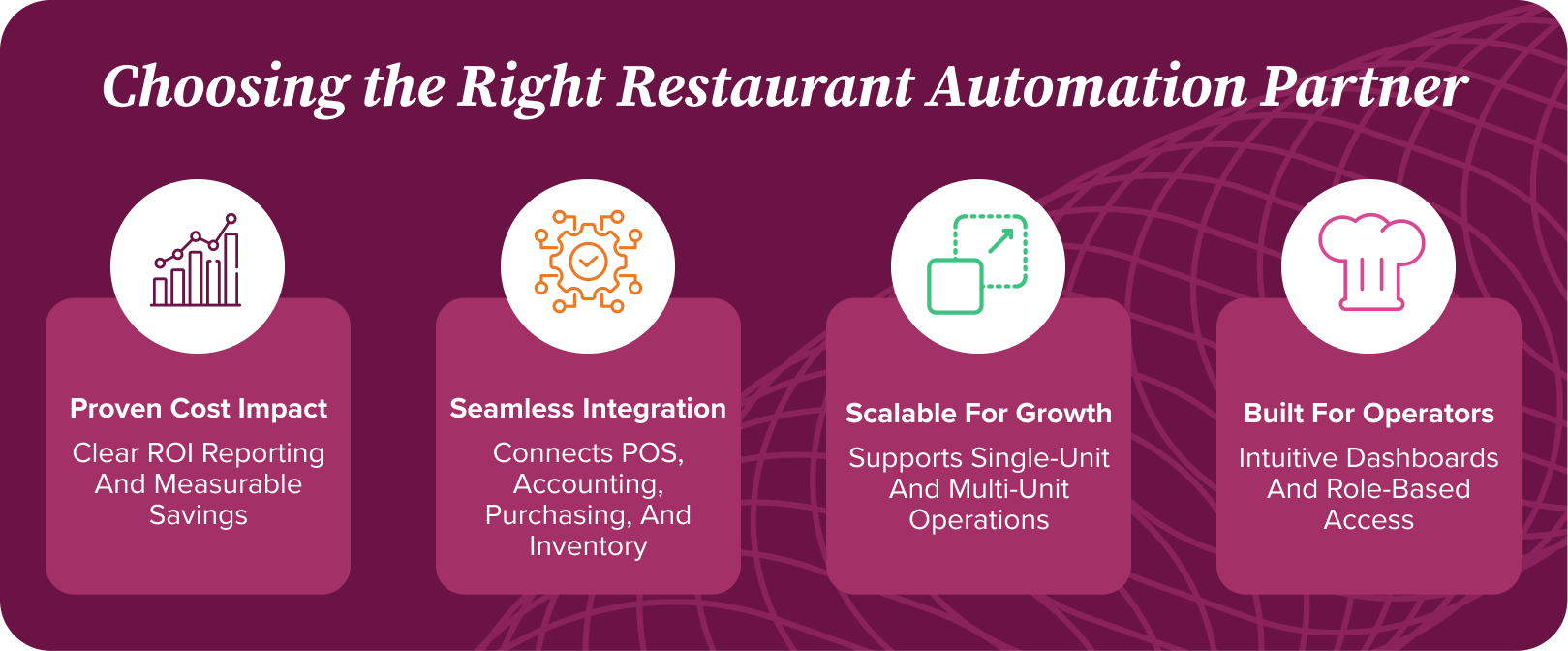
- Cost Impact and ROI Visibility: Look for tools that clearly demonstrate how they reduce food cost, labor expense, or administrative time, and prioritize platforms that provide transparent reporting so you can measure ROI quickly and consistently.
- Integration with Accounting and Inventory Systems: Choose solutions that simplify your invoicing and seamlessly connect your existing POS, purchasing, and accounting data, without forcing you to upgrade to completely new systems.
- Scalability for Multi-Unit Operations: Ensure the platform can standardize processes, centralize reporting, and maintain consistent controls as you grow from one location to several.
- Ease of Use for Operations and Finance Teams: Select restaurant management tools that offer intuitive dashboards, clear reporting, and role-based access so both GMs and accounting teams can access only what they need without data overwhelm or accidentally interfering with reports outside the scope of their roles.
Automate Cost Control with BEP Back Office
Profitable and stable restaurants are built on a foundation of strong systems that keep cost controls tight without demanding hours of your time sifting through spreadsheets. By incorporating automation into your restaurant systems, you can reduce human error, strengthen labor and inventory oversight, uncover hidden cost leaks, and connect your operational data into a clear, actionable dashboard.
If you’re ready to turn automation into measurable cost savings, start by focusing on high-impact areas like inventory, reporting, and back-office integration. Reach out to the team at Back Office to identify the highest-impact opportunities in your operation and equip your team with better decision-making tools.