


To run a successful restaurant, you have to learn to balance dozens of moving pieces at once. Food costs fluctuate constantly, labor expenses seem wildly unpredictable, and operational overhead continues to climb, all while your guests still expect fast service, consistent quality, and a great overall experience every time they walk through the door. In an industry with already thin margins, even small inefficiencies can quietly lead to significant hits to your business over time.
That’s why understanding restaurant costs is one of the most important skills for restaurant owners and operators. To maintain profitability, you have to go beyond simply identifying where money is being spent and learn how to control costs strategically without negatively impacting the guest experience. From smarter inventory management and labor planning to using technology to better understand your business, there are several key ways to reduce waste and protect your margins.
Understanding Restaurant Costs
Restaurant costs include every expense required to keep a foodservice operation running, from purchasing ingredients and paying employees to covering rent, utilities, and technology systems. While many operators focus primarily on increasing sales, long-term profitability often depends just as heavily on understanding where money is being spent and how efficiently it’s being used to contribute to your bottom line. Developing clear visibility into operational spending helps restaurant owners and managers make smarter decisions, identify opportunities for improvement, and build a more stable, profitable business. By considering restaurant costs and how they fit into broader cost categories, operators can more easily spot trends and identify which areas of the business have the greatest positive impact on profitability.
Average Restaurant Cost Percentages
Restaurant costs can vary significantly depending on your concept, service model, and operating environment. Factors like geographic location, labor availability and local labor rates, menu complexity, and whether your business offers dine-in, carry-out, or drive-through service all influence overall expenses. However, most restaurants tend to fall within these similar cost ranges:
- Quick-service restaurants typically operate with total prime costs (food cost plus labor expenses) at around 55–60% of sales.
- Full-service restaurants often see prime costs closer to 60% of sales.
- Bars and beverage-focused concepts usually have lower food costs but higher labor and occupancy expenses.
- Fine dining restaurants generally see higher labor and ingredient costs due to service expectations and premium menu offerings.
Major Restaurant Cost Categories Explained
Most restaurant expenses fall into a handful of core cost categories. Tracking expenses within these categories also makes it easier to compare your spending against industry benchmarks, helping operators recognize when costs are drifting outside healthy operating ranges.
Food and Beverage Costs (COGS)
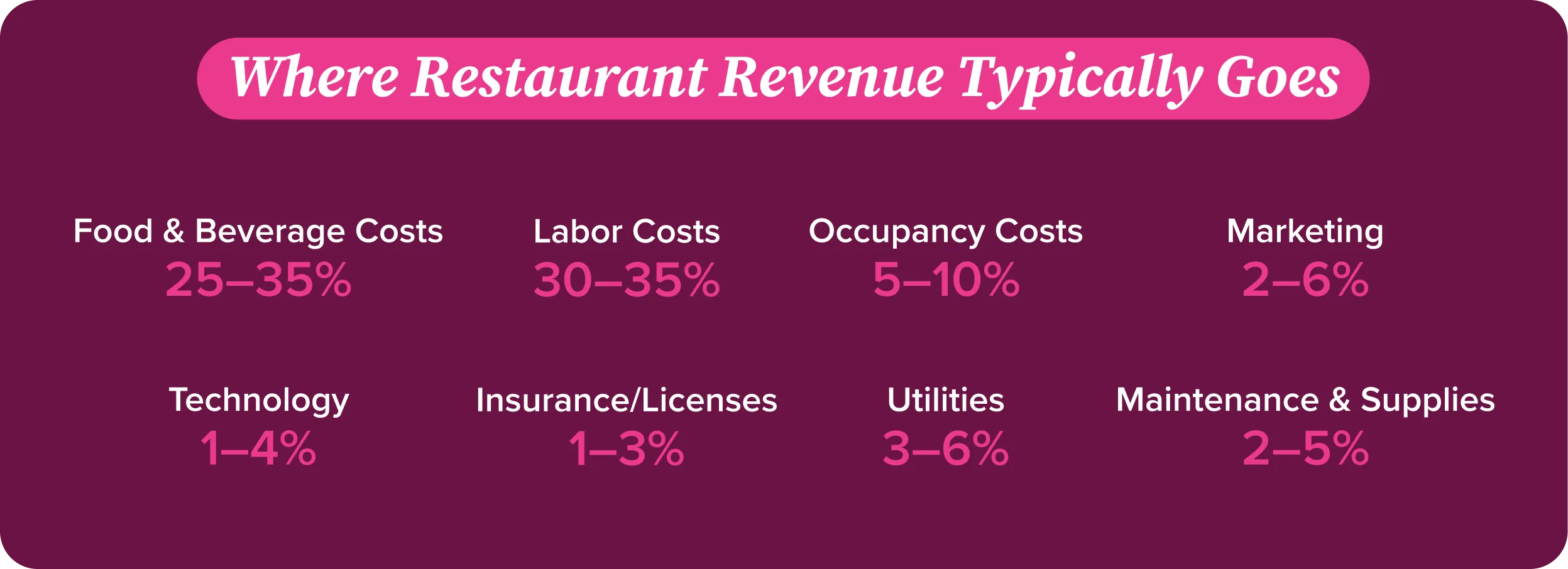
Includes ingredients, beverages, packaging, condiments, and other consumable inventory directly tied to sales. For most restaurants, cost of goods sold typically accounts for 25-35% of revenue, though this can vary somewhat based on menu offerings and concept type. Higher COGS percentages could indicate issues with portion control or inventory management effectiveness.
Labor Costs
Covers hourly wages, salaries, payroll taxes, employee benefits, overtime, and training expenses. Labor is often one of the largest restaurant expenses, usually representing 30-35% of revenue, though this can be influenced by service style and operating hours. Excessive labor percentages may indicate inefficient scheduling, excessive overtime, or high employee turnover.
Rent and Occupancy Costs
Includes monthly rent or mortgage payments, property taxes, common area maintenance fees, and other building-related expenses. Most restaurants aim to keep occupancy costs within 5-10% of restaurant revenue, though premium retail locations or urban markets may push this percentage higher.
Utilities Costs
Includes electricity, gas, water, internet, trash removal, grease disposal, and HVAC-related expenses. Utilities typically account for 3-6% of restaurant revenue, but kitchen size, equipment usage, and extended operating hours can affect overall utility consumption. If utility costs are continually rising, this could signal outdated or faulty equipment.
Marketing and Advertising Costs
Includes digital advertising, social media campaigns, loyalty programs, promotional discounts, website management, photography, and community outreach efforts. Restaurants commonly spend between 2-6% of revenue on marketing activities, depending on growth goals, competition levels, and brand awareness within the market. When marketing costs represent a higher percentage of revenue, this could indicate ineffective promotional strategies or poor campaign targeting.
Technology and Software Costs
Covers POS systems, inventory management tools, payroll software, online ordering platforms, accounting systems, and other technology subscriptions. While technology costs often range between 1-4% of revenue, operations with multiple integrated locations or higher automation levels may invest at a slightly higher percentage. Fortunately, these initial investments often correlate with substantial long-term savings through automation, reporting visibility, and operational efficiency improvements.
Insurance, Licenses, and Permits
Consists of business insurance policies, liquor licenses, health permits, workers’ compensation coverage, and other regulatory fees required to operate legally. These costs generally represent 1-3% of revenue, though alcohol sales, business size, and local regulations can affect this percentage. Increasing costs in this category could also indicate a broader rise in the overall cost of doing business within a particular market, potentially impacting the long-term profitability of that location.
Maintenance, Repairs, and Supplies
Covers equipment repairs, preventative maintenance, cleaning supplies, kitchen tools, uniforms, and other ongoing operational necessities. Restaurants typically spend 2-5% of revenue in this category, though aging equipment or reactive maintenance practices can cause this expense category to increase.
How to Reduce Restaurant Costs Without Hurting Quality
Not every cost-cutting decision leads to stronger profitability. Reducing ingredient quality or cutting labor too aggressively may lower expenses temporarily, but these steps can also hurt guest satisfaction and long-term sales. Instead, focus on these key strategies for reducing your restaurant costs while still protecting the overall quality of your restaurant experience.
Improve Menu Profitability and Reduce Food Waste
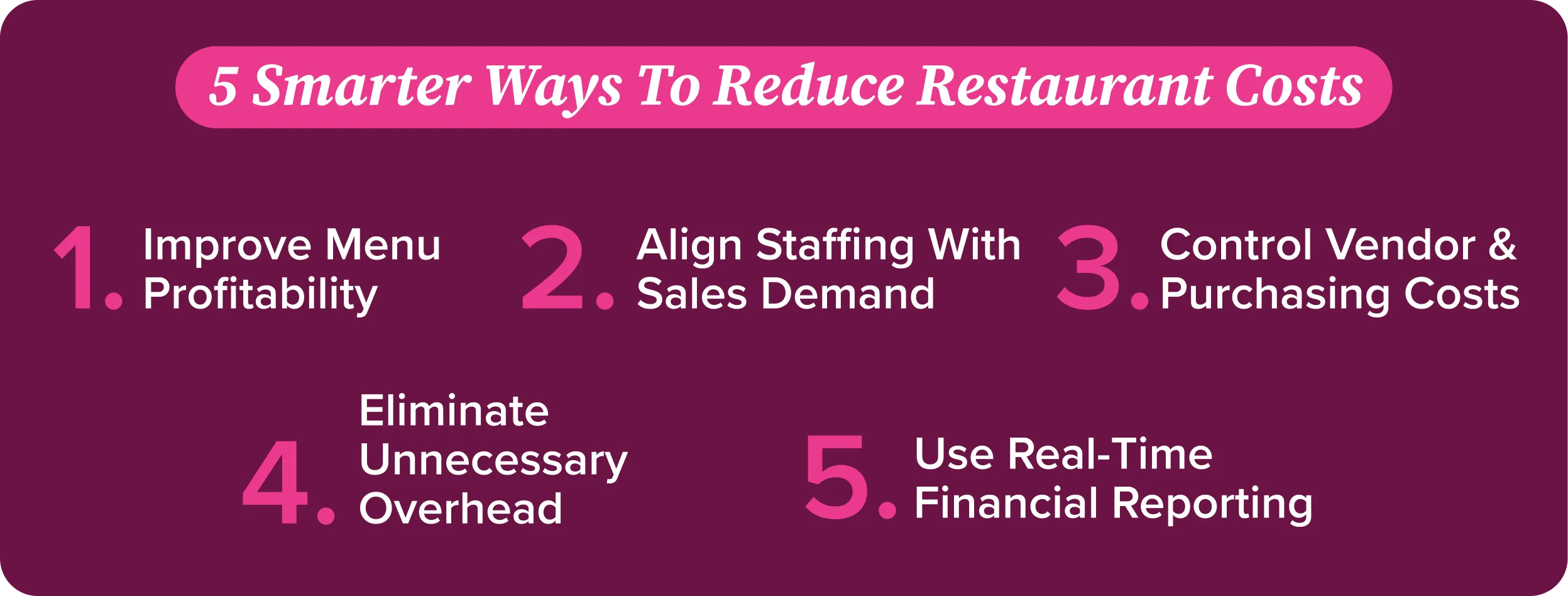
Regularly review your menu lineup to identify low-margin items, oversized portions, and ingredients that frequently expire before being used. Simplifying menu offerings, adjusting portion sizes strategically, and improving inventory rotation practices can significantly reduce food waste while preserving quality and consistency for guests.
Align Staffing Levels with Actual Sales Demand
Use historical sales trends, traffic patterns, and seasonal forecasting to build labor schedules around your actual business demand. Cross-training employees can also improve flexibility while helping maintain service standards during slower periods.
Control Food Purchasing and Vendor Costs
Itemize vendor pricing, monitor invoice discrepancies, and negotiate purchasing agreements whenever possible. Restaurants should also regularly calculate food cost percentages to identify rising ingredient expenses early. Centralized purchasing processes and tighter inventory controls can reduce over-ordering, spoilage, and unnecessary spending across locations.
Eliminate Unnecessary Overhead and Operating Expenses
Evaluate recurring subscriptions, utility usage, smallwares spending, and other administrative processes to identify areas where expenses have recently increased. Set a recurring schedule for your expense auditing process, and provide clear-cut justifications for managers to easily identify when recurring purchases are valid.
Use Real-Time Financial Data to Prevent Cost Leaks
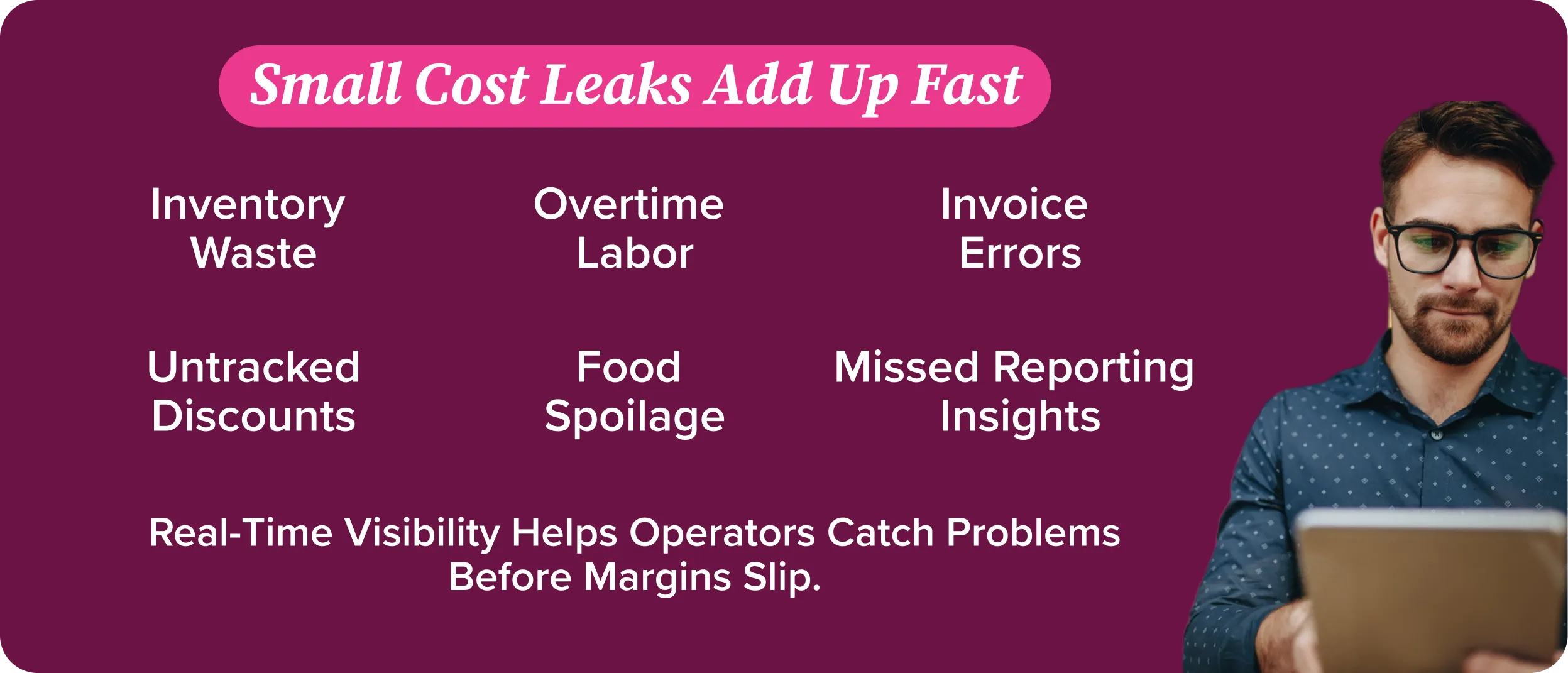
Use automated reporting tools and centralized dashboards to provide real-time financial insights into labor, inventory, and operational performance, helping you or your team to quickly identify unusual spending patterns, inventory loss, or other hidden cost leaks.
Common Restaurant Cost Mistakes That Kill Profits
Many restaurant profitability issues stem from small operational habits that gradually create major financial losses over time. Common mistakes include:
- Ignoring rising food costs without adjusting menu pricing
- Overstaffing during slow sales periods
- Failing to track inventory consistently
- Relying on outdated spreadsheets or manual reporting processes
- Allowing excessive discounting or uncontrolled comps
- Over-ordering inventory that leads to spoilage and waste
- Neglecting preventative maintenance on equipment
- Making decisions without real-time operational visibility
Even minor inefficiencies can quickly compound, making them even harder to correct later.
Take Control of Your Restaurant Costs
Understanding restaurant costs is essential for protecting profitability in today’s volatile foodservice environment. From food and labor to technology and occupancy expenses, every operational decision impacts your bottom line. By improving visibility into spending, optimizing daily processes, and leveraging real-time reporting tools, restaurant operators can make smarter decisions that reduce waste and strengthen long-term performance.
FAQ’s
How often should restaurants review their costs?
A quick check once a month isn’t enough, especially with food prices and labor changing as quickly as they do. Many restaurants review food costs, labor, and purchasing weekly to make sure nothing slips through the cracks. Catching a problem early is easier than trying to fix it after margins have already taken a hit.
What restaurant costs do operators forget about the most?
It’s usually the smaller things that sneak up on people. Random subscriptions nobody uses anymore, extra delivery fees, spoiled inventory sitting in the walk-in, or pricing mistakes buried in invoices. None of it looks huge on its own, but over time those little leaks start adding up fast.
Can rising restaurant costs affect employee turnover?
Absolutely. When costs start climbing, restaurants sometimes cut hours, run shorter shifts, or ask smaller teams to handle more work. That pressure catches up with people pretty quickly. If employees constantly feel stretched thin, turnover usually follows right behind it.
Why do restaurant costs seem to change constantly?
Ingredient pricing fluctuates, fuel costs increase, suppliers adjust pricing, labor gets tighter, and seasonal demand shifts operational costs throughout the year. One month chicken is stable, the next month it jumps. Restaurants are constantly adjusting to changes that impact margins day to day.
What’s one restaurant cost mistake that hurts profitability the fastest?
Trying to cut costs too aggressively in the wrong places. Guests notice when portions suddenly shrink or service slows down because the restaurant is understaffed. Usually, the better move is tightening operations behind the scenes first, like reducing waste, improving ordering habits, or getting better visibility into where money is actually going day to day.