


Every ingredient in your kitchen represents cash on the shelf. How you manage that cash determines whether it fuels growth or quietly erodes your margins. Mastering restaurant inventory management best practices is one of the most powerful ways operators can protect profitability, control costs, and keep operations running smoothly.
Inventory isn’t just a list of ingredients—it’s a sign of your restaurant’s financial and operational health. When inventory systems run efficiently, you can forecast demand accurately, avoid costly stockouts, reduce food waste, and make smarter purchasing decisions. When it doesn’t, the results show up as inflated food costs, over-ordering, and frustrated staff.
This guide breaks down the core restaurant inventory management best practices every operator should know, from fundamental methods like FIFO and weighted average cost to actionable steps to help streamline your back office. Whether you run a single-unit bistro or manage a growing franchise, these strategies will help you turn inventory management from a time-consuming task into a profit-driving system.
Essential Restaurant Inventory Management Best Practices
FIFO (First In, First Out) Method
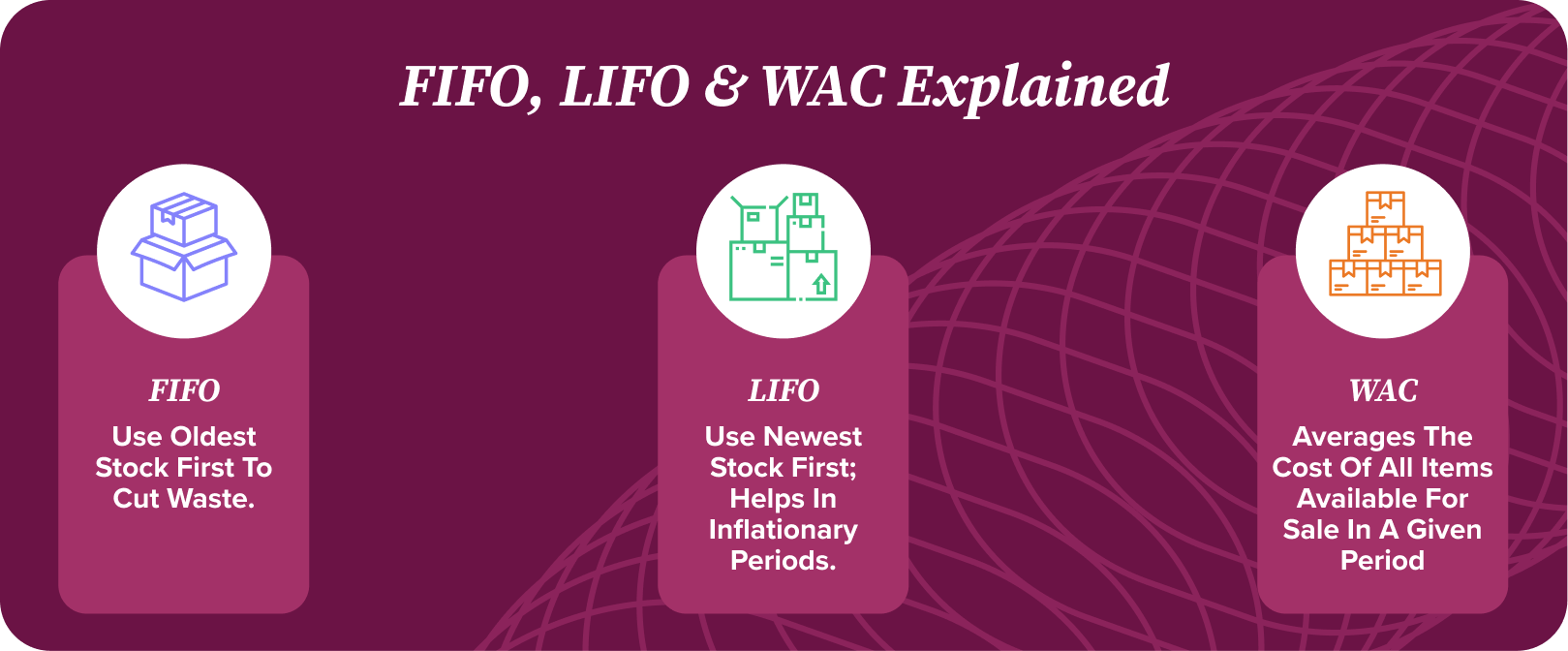
FIFO ensures older inventory is used before newer stock. By rotating products so that items purchased first are used first, you reduce waste and spoilage, especially for perishables. This simple method also improves accuracy when calculating cost of goods sold (COGS).
LIFO (Last In, First Out) Method
With LIFO, the most recently purchased items are used first. Though less common in restaurants, this approach can simplify accounting during inflationary periods by matching current costs with current revenues. It’s most useful in non-perishable categories.
WAC (Weighted Average Cost) Method
Weighted average cost spreads total inventory cost evenly across multiple units, which balances fluctuations in ingredient pricing. This method gives a more stable snapshot of your inventory’s true value and simplifies monthly accounting.
Forecast Demand in Advance
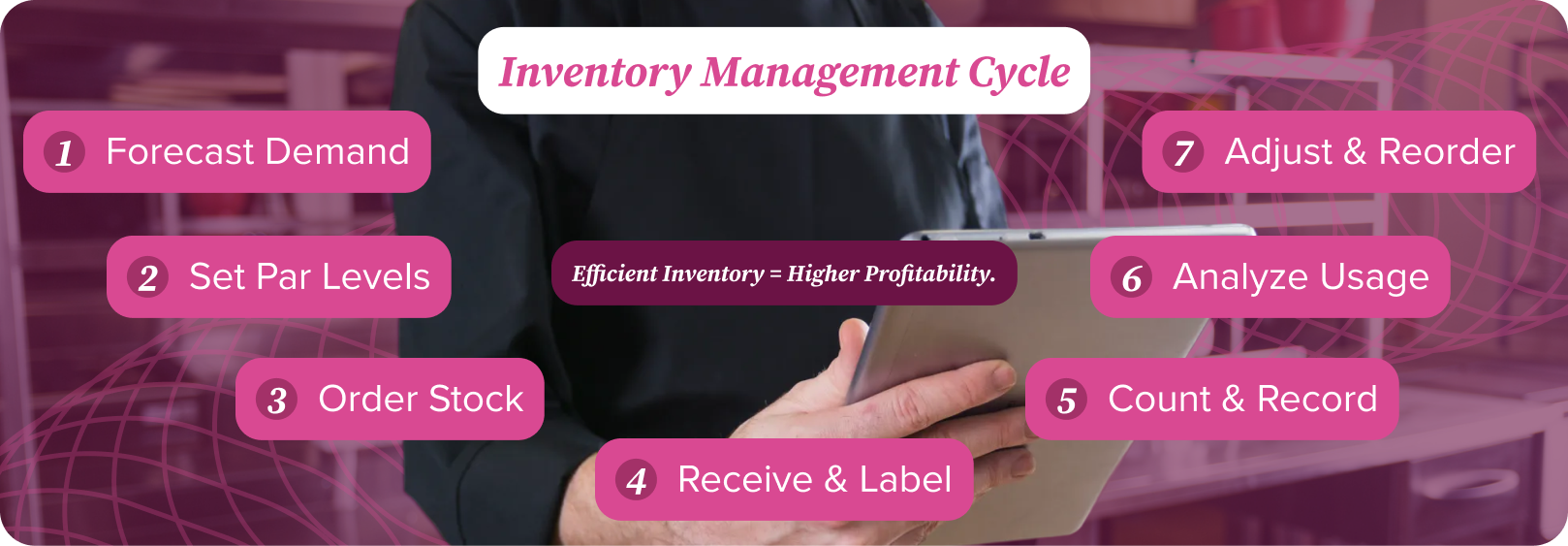
Accurate forecasting is critical to prevent both over-ordering and last-minute shortages. Use past sales data, seasonal trends, and upcoming promotions to anticipate what you’ll need. Well-forecasted inventory aligns purchasing with actual demand so you can keep your shelves stocked just right.
Maintain Safety Stock to Handle Uncertainty
Unexpected events happen: a supplier delay, a busy weekend, or a sudden menu hit. Safety stock acts as a buffer, preventing service disruptions and lost sales. The right balance keeps operations flexible without tying up too much capital.
Organize and Label Your Supplies
Inventory accuracy depends on visibility. Clearly labeled shelves, organized storage zones, and color-coded categories make it easier for staff to find, count, and rotate items quickly. An organized stockroom can significantly reduce counting time and minimize costly errors.
Create a Consistent Inventory Schedule
Consistency builds accuracy and accountability. A clear inventory schedule, whether weekly or biweekly, creates reliable data, reduces surprises, and helps identify usage patterns early. Stick to a regular schedule and make it part of your restaurant’s weekly rhythm.
Track Daily Sales and Monitor Sell-Through Rate
Sales data and inventory levels go hand-in-hand. Tracking daily sales helps you calculate your sell-through rate (the speed at which you use inventory) and pinpoint discrepancies between projected and actual usage. Over time, this data becomes invaluable for both pricing and forecasting.
Establish Clear Par Levels
Par levels define the minimum quantity of each item you need on hand to meet demand. They take the guesswork out of ordering, helping you maintain balance between shortages and overstock. Review and adjust par levels regularly as your menu and volume evolve.
Minimize and Track Food Waste
Food waste is heartbreaking for both managers and chefs. Track waste daily, categorize reasons (spoilage, overproduction, prep errors), and use that data to refine processes. Even small improvements, such as tighter prep lists or improved rotation, can save thousands of dollars over the course of a year.
Take Inventory Frequently
Frequent, smaller counts are far more effective than occasional, exhaustive ones. Weekly or even daily spot checks help you catch discrepancies early, spot theft or shrinkage, and keep numbers accurate.
Train Staff Regularly on Inventory Procedures
Even the best system fails without trained people behind it. Hold regular staff training to ensure consistency, accuracy, and accountability. Teach employees how to count, record, and rotate items correctly, and emphasize why accuracy matters to the restaurant’s bottom line.
Optimize Reordering of Stock
Smart reordering keeps you ahead of demand without excess spending. Use POS data and back office tools to automate reorder points, flag low inventory items, and streamline vendor communication. This reduces manual effort and prevents missed orders.
Determine and Monitor Inventory Turnover Rate
Your turnover rate measures how often you sell and replace inventory during a set period. A higher rate generally indicates efficient operations and fresh products. Track this regularly, since declines may signal over-ordering, menu issues, or waste.
Prevent Errors with Standardized Processes
Establish standardized procedures for counting, recording, and auditing inventory. Use the same format, schedule, and personnel whenever possible. Standardization minimizes human error, improves reliability, and provides a clear audit trail for reporting and analysis.
How Back Office Software Simplifies Inventory Management
Strong processes are the foundation, but automation takes restaurant inventory management best practices to the next level. Back Office software helps operators turn manual, time-consuming tasks into streamlined workflows.
With Back Office, you can automatically track ingredient usage, sync purchases with sales data, and generate cost analysis reports that show exactly where your money is going. Automated alerts flag low stock before it becomes a crisis, and real-time dashboards visualize food costs, turnover rates, and profitability across multiple locations.
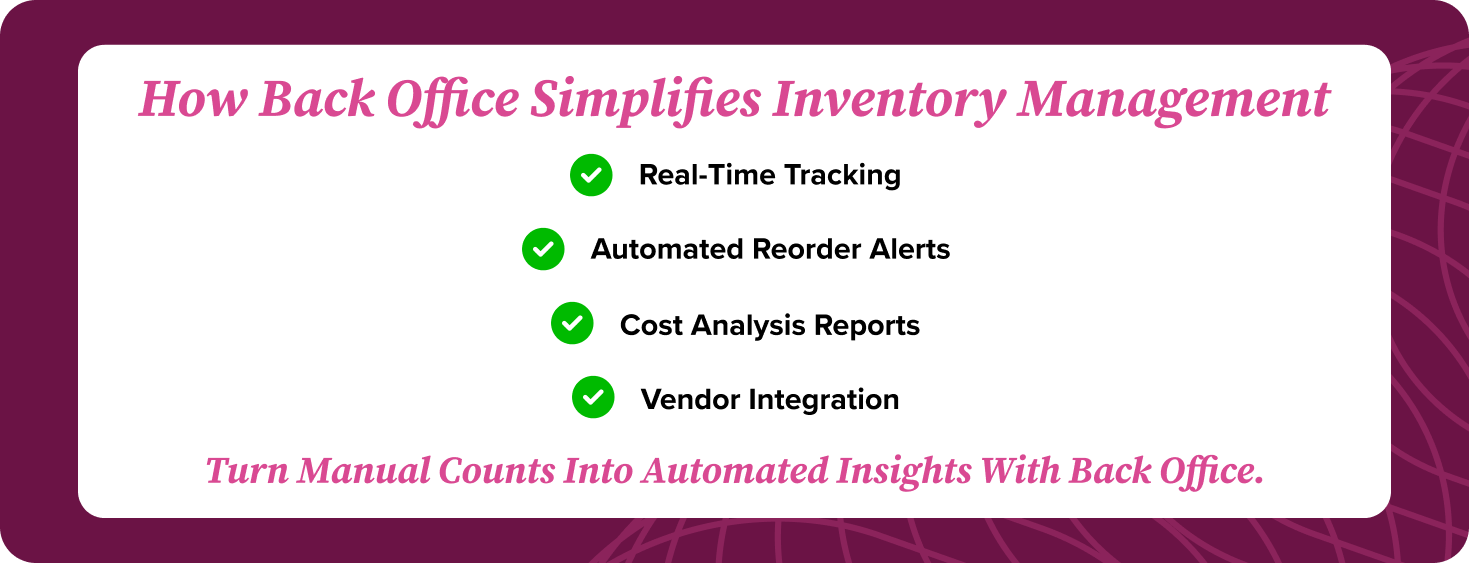
Back Office eliminates guesswork and human error, which helps operators make data-backed decisions faster. In short, it’s inventory management that works with you, not against you.
Build a Smarter, More Profitable Back Office
Inventory management isn’t glamorous, but it’s one of the strongest levers operators have in terms of profitability and control. With these restaurant inventory management best practices, you can flip what used to be a dreaded task into a strategic advantage. The result? Lower food costs, improved cash flow, and more time to focus on creating an exceptional guest experience.
Ready to simplify your inventory practices? Learn how Back Office streamlines restaurant inventory management and how automation can turn your inventory data into profits.