



Name a restaurant process, and chances are you have a reliable checklist for guidance and adherence to best practices. Kitchen procedures? Check(list). Supply chain optimization? Check(list) again. Payroll procedures and guidelines?
If running a payroll platform isn’t in your wheelhouse — and don’t worry, it’s not a specialty for most in the restaurant industry – you can still ensure you’re up to speed with taxes and compliance, on track for accurate tax reporting, and much more.
Back Office, the leader in restaurant accounting solutions, put together the following payroll checklist to help you establish a baseline process for anything and everything related to running a payroll. What’s more, our Payroll & HRIS software provides a streamlined, user-friendly software and service for payroll processes. From present regulations to on-the-fly changes, we’ll keep your recordkeeping current and accurate. Bottom line: whether you’re looking to improve targeted, specific aspects of your payroll, or you’re not sure how to run payroll, we’re here to help.
What Is Restaurant Payroll and Why It Matters
Restaurant payroll is really just the process of making sure your team gets paid correctly and on time. But in this industry, it’s rarely simple. You’re dealing with hourly employees, overtime, tips, different pay rates, and a whole mix of state and federal rules. It’s not just about running payroll, it’s about getting all the details right every single time.
And honestly, this is where things can go sideways fast. If payroll is off, your team notices immediately. People start asking questions, morale dips, and now you’re spending time fixing issues instead of running your operation. On top of that, mistakes can snowball into compliance problems or extra costs you didn’t plan for. When it’s handled right, though, it takes a lot off your plate. Your team trusts the process, and you have a clearer handle on what you’re actually spending on labor day to day.
Pre-Payroll Setup for Restaurants
Before we get into a basic restaurant payroll checklist, it helps to lay the groundwork for accurate, timely, and reliable payroll practices. Before you tackle all the tasks associated with how to run payroll, make sure you’ve covered these bases first:
- Consider a weekly payroll schedule. Not only is it easier to track expenses with weekly payroll, but it’s also a great way to increase employee retention!
- Keep a single account for payroll. Taxes are confusing enough sometimes – best to keep things as simple as possible with a single account dedicated for payroll processes.
- Comply, comply, comply. Here’s a payroll checklist item so critical, we’re going to mention it more than once. There are all sorts of labor laws that impact payroll compliance – but how can you stay in the loop at all times? Back Office customers have the advantage of a professional, prompt compliance team that keeps compliance in full focus.
This is only three elements of a full pre-checklist for how to run payroll for your eatery.
Restaurant Payroll Checklist (Step-by-Step)
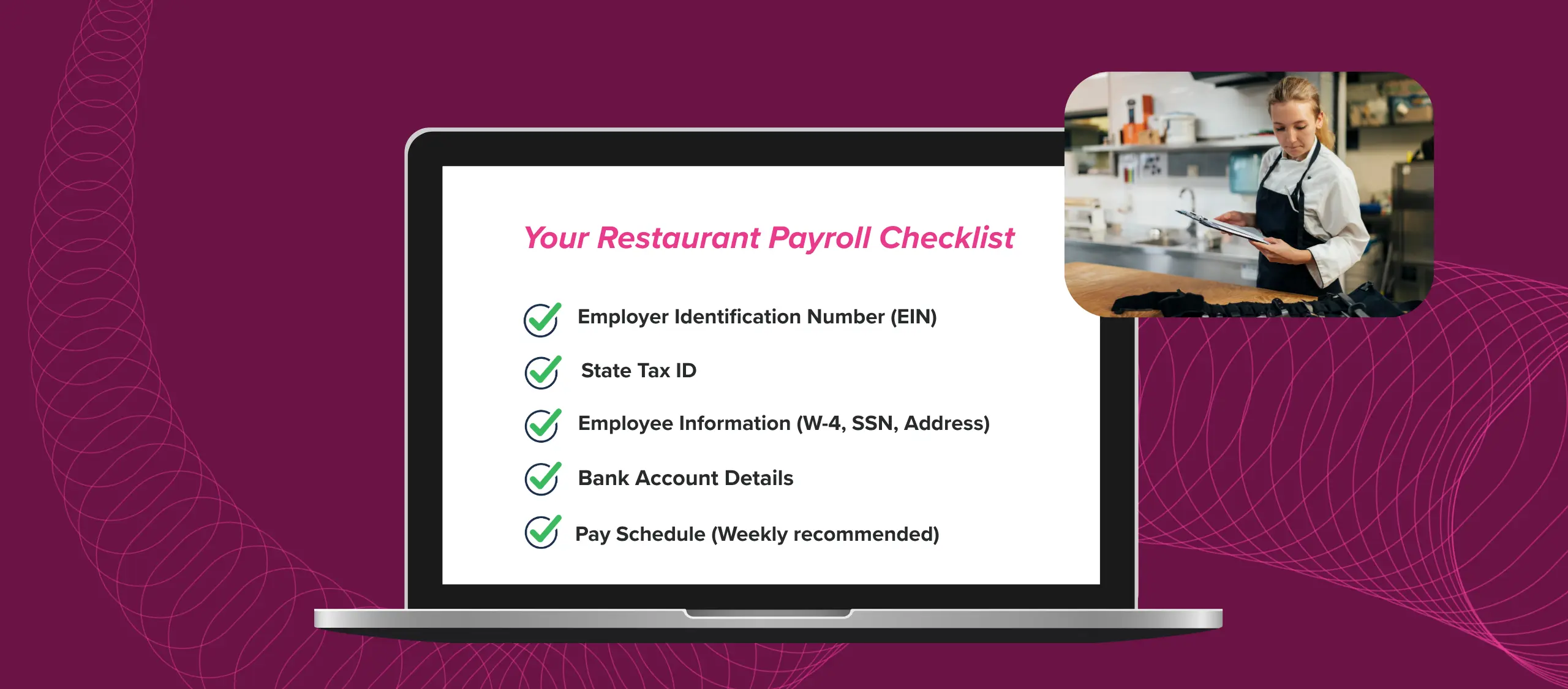
Now it’s time to create your restaurant payroll checklist! Here’s what you need for running a payroll:
Employer Identification Number
The EIN is the key number that links your organization with the IRS tax system. It’s impossible to pay your payroll taxes without the EIN.
State tax ID
Known as the SEIN, this works similar to federal taxes with the IRS…only in this case, this links your restaurant with the state tax platform.
Employee info
For initial payments, you need the following employee information:
- Full legal name (first, middle, last)
- Full street address
- Completed W-4 form for correct tax withholding
- Social Security Number
For employees who have already been paid, it’s a bit easier than setting up their payroll for the first time. All you need is:
Bank information
Your bank account number and routing number to ensure payments are drawn from the correct account.
Pay period
Weekly, bi-weekly, monthly…you need to determine how frequently your employees are paid. We highly recommend a weekly cadence when running a payroll.
Back Office offers a wide variety of restaurant software and related services to help run your restaurant as efficiently as possible. Request a demo for more information.
Best Practices for Managing Restaurant Payroll
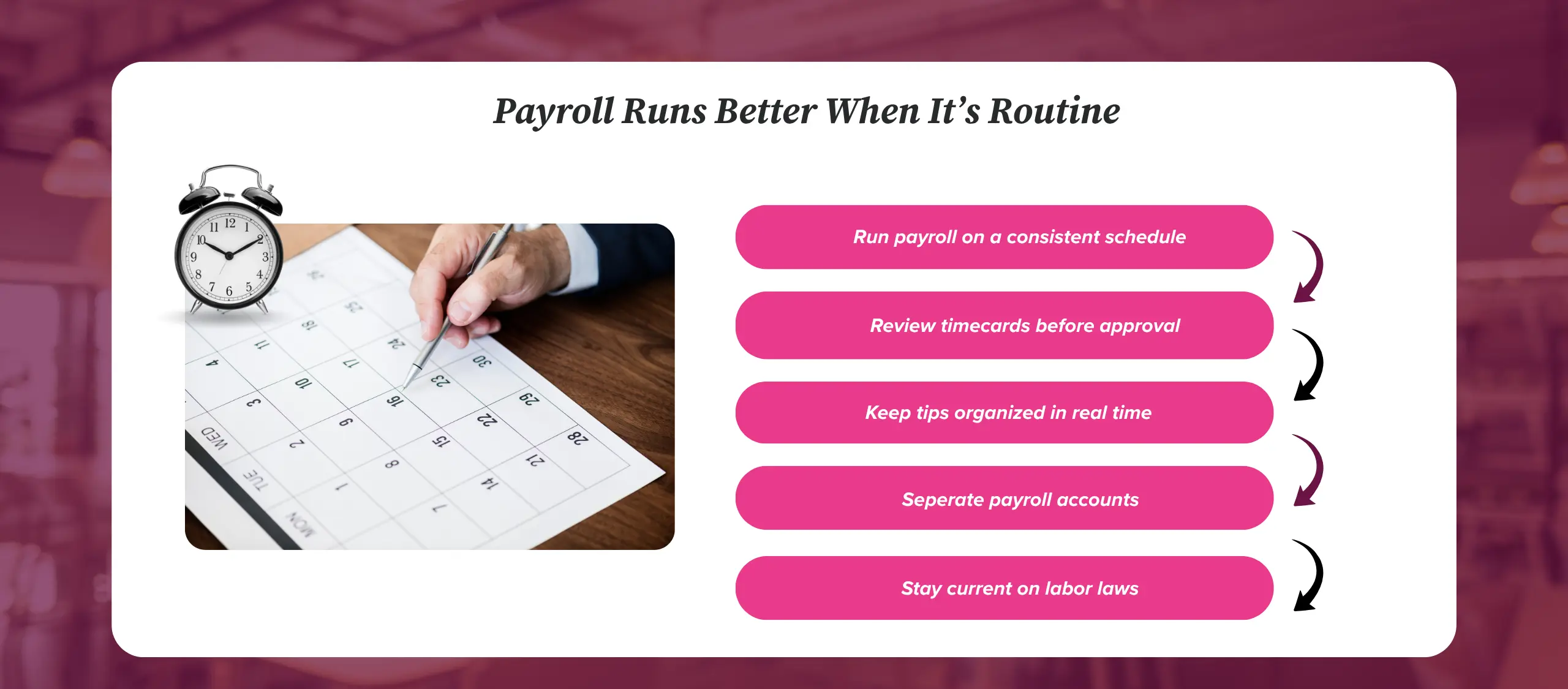
There’s no perfect system, but there are a few things that make payroll way less painful if you stick to them.
- Run it on the same day every time so you’re not chasing it down
- Actually look at timecards before approving them (missed punches happen… a lot)
- Keep tips organized instead of trying to piece them together later
- Use a separate account so payroll doesn’t get mixed in with everything else
- Check in on labor laws every so often because they do change
- Write things down as you go so you’re not digging later when something feels off
Common Restaurant Payroll Mistakes to Avoid
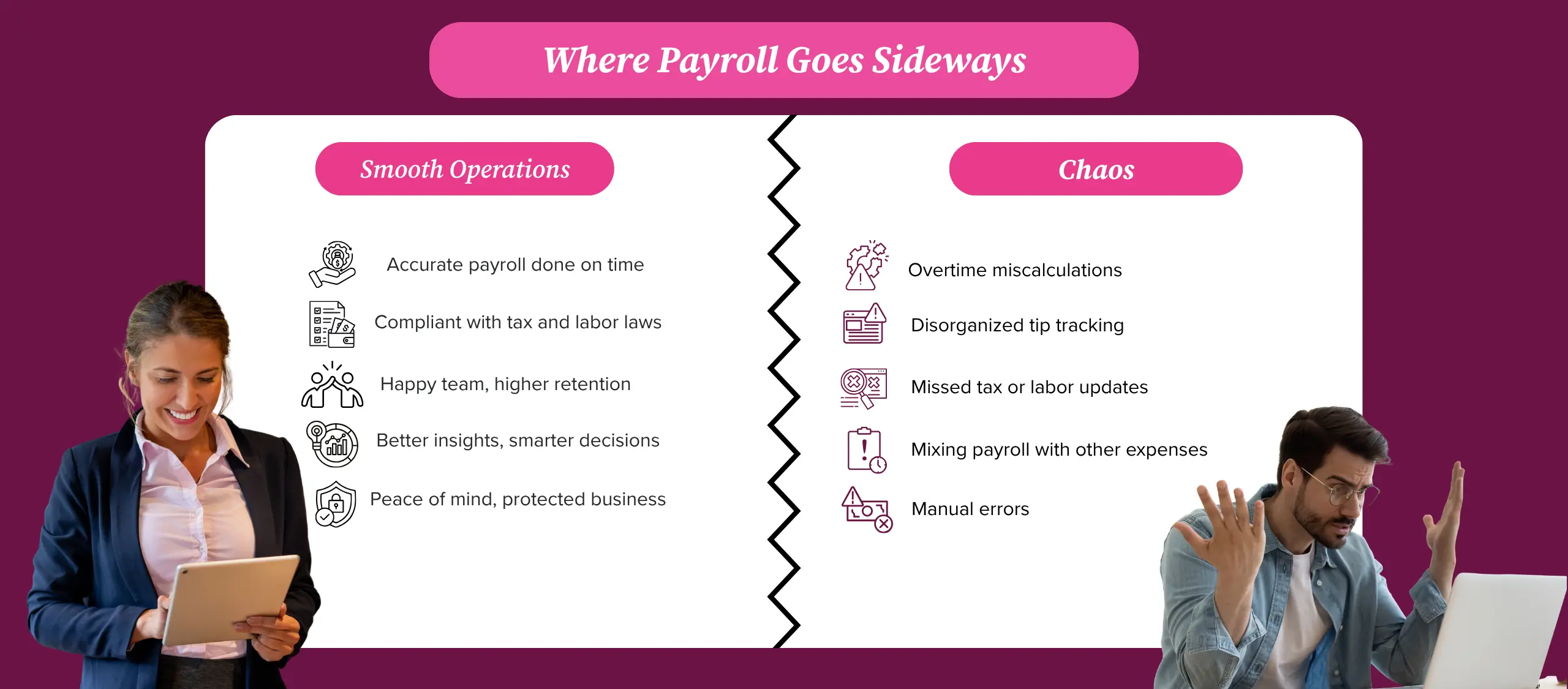
Most payroll problems aren’t dramatic. It’s usually small stuff that slips through and stacks up.
- Overtime getting calculated wrong, especially when roles or rates change
- Tips not being tracked clearly, then turning into a mess at payroll time
- Rushing through payroll just to get it done
- Missing updates on tax or labor rules
- Pulling payroll from the same account as everything else
- Doing everything manually and hoping nothing gets missed
How to Simplify Restaurant Payroll with Software
At some point, doing payroll by hand just slows everything down. Software helps take a lot of that off your plate. It handles the math, keeps records in one place, and cuts down on back-and-forth when something doesn’t add up. Instead of fixing mistakes after the fact, you’re catching things earlier. It’s not about making things fancy, it’s just about making payroll one less thing you have to stress over every week.
Frequently Asked Questions
What is included in restaurant payroll processing?
It’s everything tied to getting your team paid. Hours, pay rates, overtime, tips, taxes, deductions. All of it. You’re pulling from timecards, making sure the math checks out, and handling reporting on the back end. It’s not just cutting checks. It’s making sure nothing gets missed along the way.
How do restaurants calculate payroll for hourly employees?
You start with hours worked. Multiply by their rate. Then factor in overtime if they hit it. Add tips if they’re part of the role, then back out taxes and deductions. On paper it’s straightforward. In reality, once schedules shift or someone picks up extra hours, it takes a second look.
What payroll records should restaurants maintain?
Keep anything tied to pay. Timecards, wages, tax filings, tip logs, employee forms. It might feel like overkill, but it saves you later. If someone has a question or something doesn’t line up, you don’t want to be guessing. You want to be able to pull it up and move on.
How can restaurants stay compliant with payroll regulations?
You don’t have to know everything, but you do have to stay aware. Rules change. Minimum wage, overtime, tax stuff. It’s worth checking in on it regularly instead of assuming it’s the same as last year. Keeping things organized helps too. It’s a lot easier to stay compliant when nothing’s scattered.