


Running a restaurant has never required more precision with fewer resources. Thanks in part to the mainstream rise of AI, the pressure to “do more with less” has intensified across every industry, including foodservice. Costs are rising, labor is harder to predict, and guest expectations continue to climb, yet operators are still expected to protect, or even improve, profitability.
As a result, the most important restaurant technology trends in 2026 are focused on helping operators run smarter, more “tuned-in” operations. From real-time data visibility to AI-powered decision-making, these tools are redefining what it takes to stay competitive while giving operators new ways to take control of their business.
How Restaurant Technology Is Evolving in 2026
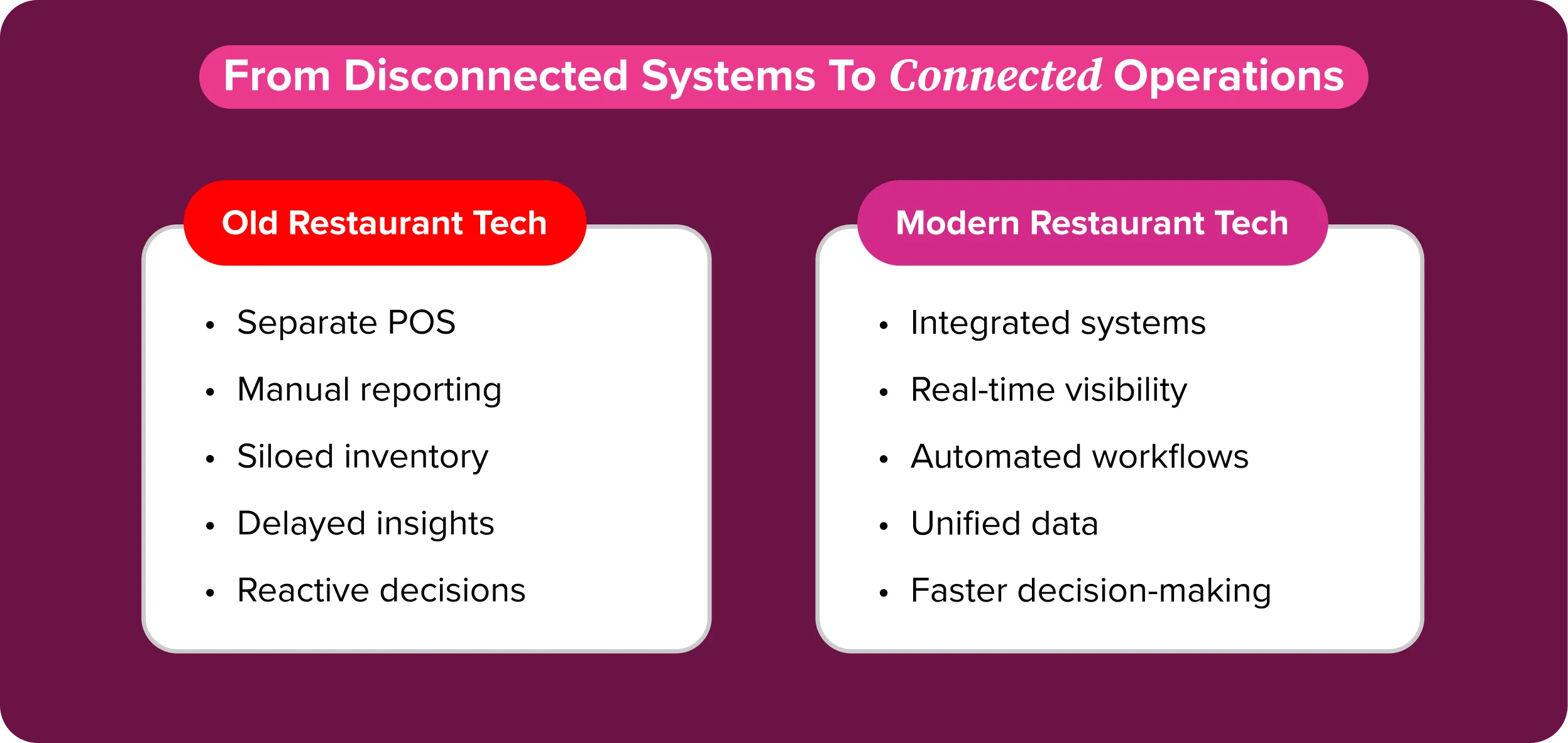
Restaurant technology has evolved from basic digital tools into fully integrated operational ecosystems. Five to ten years ago, most platforms operated in silos with POS, inventory, and labor systems each capturing their own disconnected data. Today, modern technology solutions are interconnected, automated, and adapted to the unique needs of the operation.
With the right technology in place, operators can proactively optimize their operations with purpose-built, end-to-end tools. Even with tighter margins and higher expectations, these systems make it possible to move faster, reduce inefficiencies, and make more confident, data-driven decisions across every part of the business.
Top 7 Restaurant Technology Trends to Watch in 2026
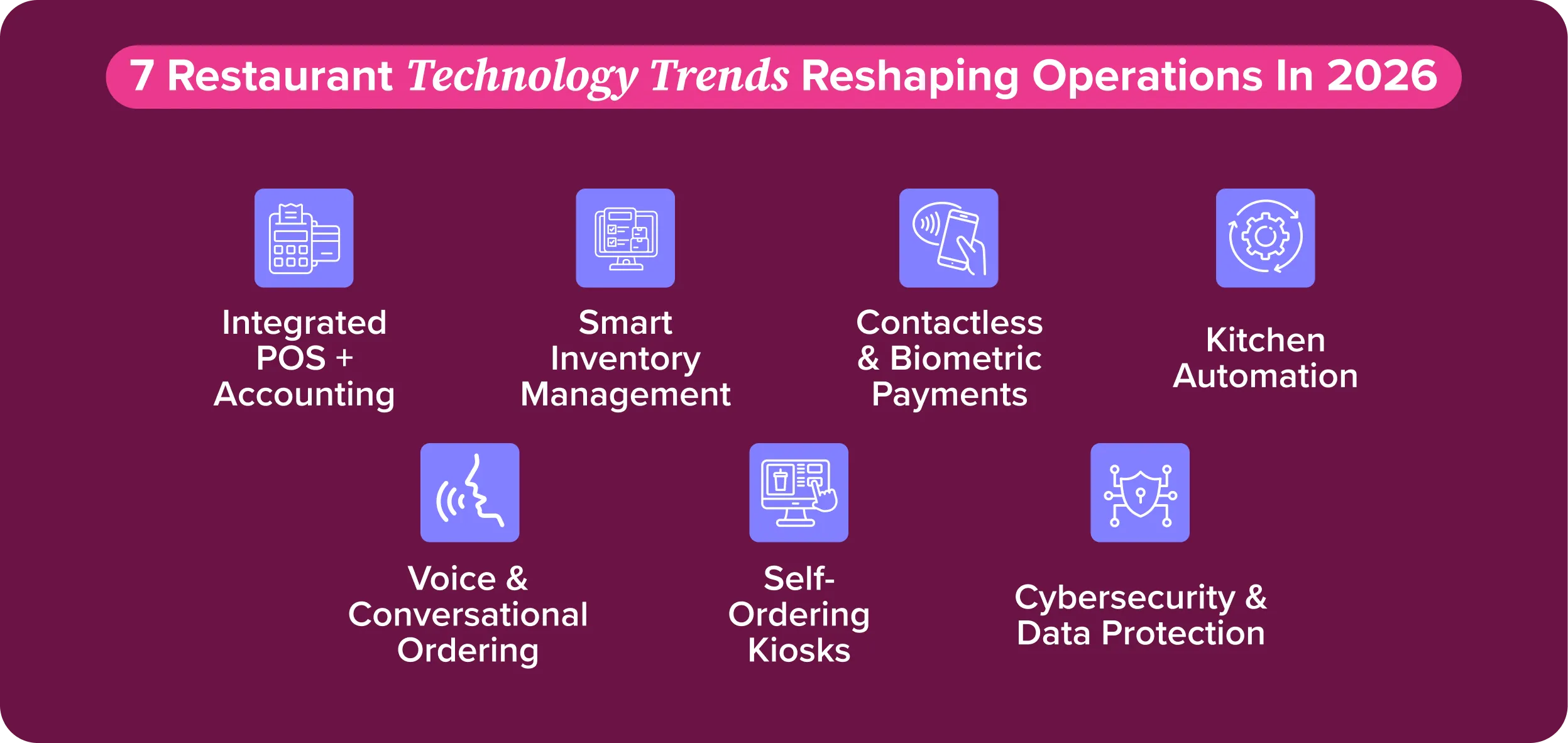
As restaurants move through 2026 and beyond, the focus is shifting from general tool adoption to identifying the integrated restaurant software solutions that deliver the greatest operational impact. The following restaurant technology trends highlight where operators are currently leveraging technology to see the biggest gains in efficiency, cost control, and overall performance.
1. Advanced POS Systems with Integrated Accounting
Restaurants are shifting away from standalone transaction systems toward fully connected financial ecosystems. Modern POS platforms now integrate directly with accounting and back-office tools, automatically syncing sales, expenses, and payment data in real time. This level of integration provides faster financial visibility and reduces manual errors.
2. Smart Inventory Management and Waste Reduction Tools
The industry is moving from reactive inventory tracking to proactive, data-driven inventory optimization. Advanced systems now leverage automation and AI to monitor usage patterns, forecast demand, and flag inefficiencies across purchasing and prep. This shift helps operators reduce waste, control food costs more effectively, and make smarter ordering decisions.
3. Contactless, Mobile, and Biometric Payment Solutions
Payment experiences are evolving from traditional card or cash-based transactions to faster, more secure digital interactions. Modern payment systems support contactless cards, mobile wallets, and emerging biometric technologies that streamline the checkout process. These capabilities improve speed of service, enhance guest convenience, and strengthen payment security without adding operational complexity.
4. Self-Ordering Kiosks and Digital Menu Boards
Restaurants are transitioning from staff-dependent ordering models to more flexible, technology-driven self-service experiences. Kiosks and digital menu boards allow guests to place orders independently while dynamically displaying menus, pricing, and promotions. This shift reduces labor pressure, improves order accuracy, and creates consistent upselling opportunities that can increase average ticket size.
5. Kitchen Automation, Robotics, and Smart Equipment
Back-of-house operations are shifting from manual, labor-intensive processes to more automated workflows. Smart kitchen equipment and robotics can now handle repetitive tasks, such as managing fryer cycles, tracking cook times, or portioning ingredients. Best of all, these technologies are designed as incremental upgrades to existing equipment, improving efficiency and reducing human error without requiring large, high-risk capital investments.
6. Voice-Activated and Conversational Ordering Systems
Ordering channels are expanding beyond traditional interfaces to include voice-driven and AI-powered conversational systems. These tools can take orders, answer menu questions, and guide customers through the ordering process across drive-thrus, phone systems, and web-based platforms. This approach helps restaurants increase order capacity while reducing staff workload.
7. Cybersecurity and Data Protection for Restaurants
As restaurants adopt more contactless payments, mobile ordering, and third-party delivery platform options for customers, the focus is shifting from basic data storage to comprehensive data protection strategies. Modern platforms now safeguard sensitive information such as customer credit card details, home addresses, and personal data through encryption, real-time monitoring, and compliance protocols. Strengthening cybersecurity reduces the risk of costly breaches, protects brand reputation, and builds trust with guests who expect their information to be handled securely.
Restaurant Technologies That Are Becoming Standard in 2026
What once felt like cutting-edge innovation is now the baseline for running a competitive operation. In 2026, these technologies have become table stakes; operators who have not yet adopted them are at a greater risk of losing business to their competitors.
Online Ordering and Delivery Management Systems
Guests increasingly expect the convenience of ordering directly from their phones, and without it, they will often choose a competitor that offers a smoother digital experience. Restaurants can quickly meet this demand by partnering with third-party platforms or enabling online ordering through their POS provider without building a system from scratch.
Automated Inventory and Purchasing Software
Tight margins make it critical to control food costs, and relying on manual inventory processes often leads to waste, over-ordering, and missed opportunities for savings. Operators can adopt automated tools that integrate with their existing systems to track usage, generate orders, and improve cost control with minimal downtime or disruption.
Cloud-Based POS Systems
Real-time access to sales and performance data is essential for making timely decisions, and outdated or locally hosted systems limit visibility and flexibility. Transitioning to a cloud-based POS allows operators to access data from anywhere while unlocking integrations that support a more connected operation.
Digital Menu Management Tools
Static menus make it difficult to respond quickly to price changes, inventory shortages, or promotional opportunities as the market changes. Digital menu tools can be implemented through existing POS or display systems, allowing operators to update menus instantly across all channels.
Basic Reporting and Sales Analytics Dashboards
Without clear visibility into key metrics, operators are forced to make decisions based on instinct rather than data, increasing the risk of inefficiencies and missed profit opportunities. Many modern POS and back-office systems include built-in dashboards that can be activated quickly, providing immediate access to actionable insights without complex setup.
Benefits of Adopting Restaurant Technology in 2026
When technology is implemented strategically, it gives operators greater control over costs, labor, and day-to-day performance, even across multiple locations. Integrated systems also drive operational consistency, from inventory management to the guest experience, while freeing up managers to focus on higher-value decisions instead of manual tasks.
Most importantly, modern restaurant technology turns data into action, allowing operators to respond quickly to changing conditions. With more connected, “tuned in” operations, managers can identify issues earlier and make smarter decisions that support long-term growth.
How to Choose the Right Restaurant Technology for Your Business
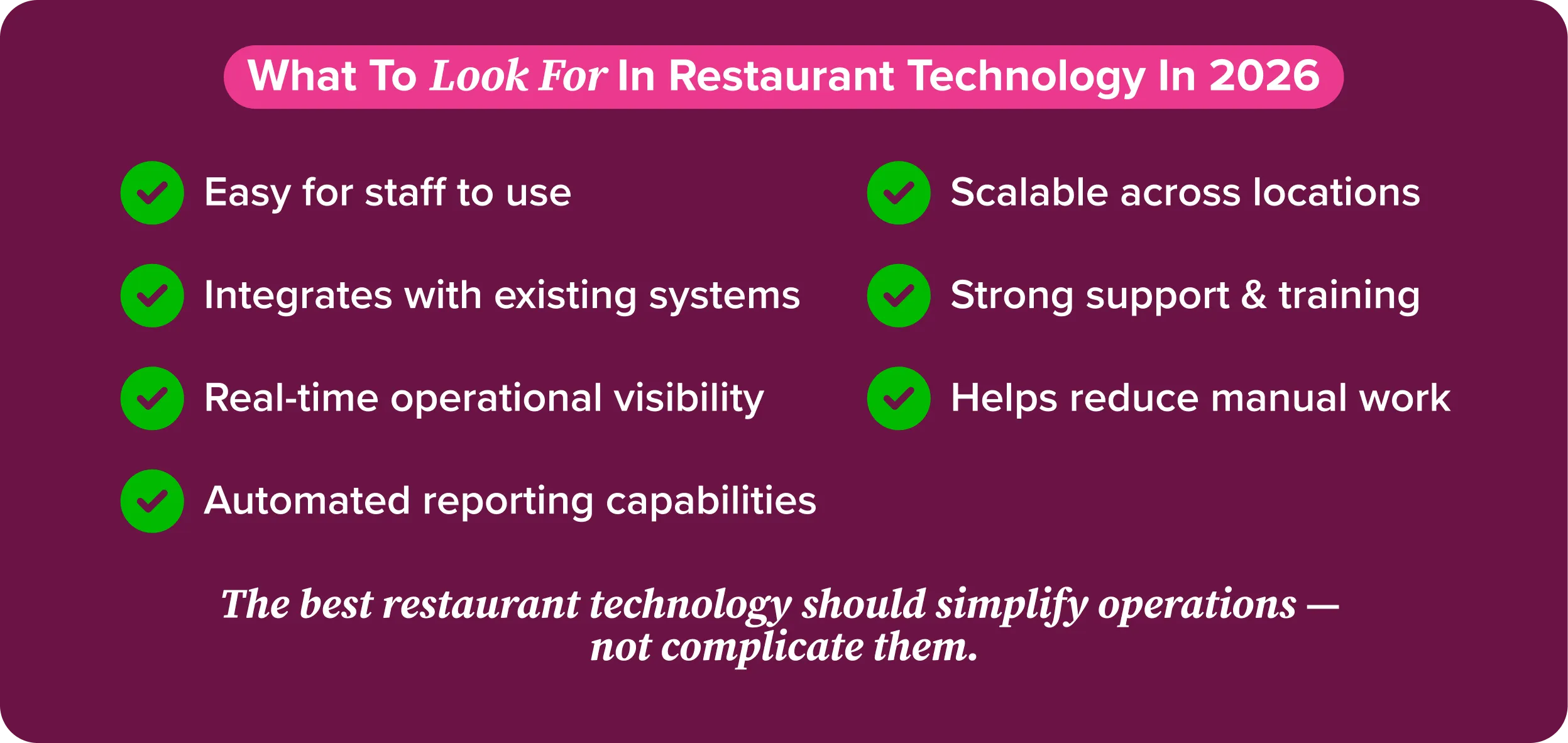
Building the right technology stack starts with choosing solutions that take advantage of important trends while fitting seamlessly into your current operation. The goal is to invest in tools your team will actually use and that deliver measurable value.
- Ease of Use for Owners, Managers, and Staff: Look for intuitive interfaces, simple workflows, and minimal training requirements. Technology should reduce friction, not add complexity, so managers and staff can adopt it quickly and consistently across daily operations.
- Compatibility With POS, Inventory, and Accounting Systems: Ensure new solutions integrate seamlessly with your existing POS, inventory, and accounting platforms. This eliminates duplicate data entry, improves accuracy, and creates a single source of truth for your operational data.
- Ongoing Costs, Support, and Training Requirements: Beyond upfront pricing, evaluate the total cost of ownership, including subscription fees, implementation costs, and ongoing support. Strong vendor support and accessible training resources are critical for long-term success, and the right technology partner will help ensure your systems continue delivering value as your business evolves.
The Future of Restaurant Technology Beyond 2026
Success in today’s restaurant environment increasingly depends on how effectively you leverage technology to control and optimize your operation. Successful operators strategically use connected technology systems to actively monitor and automate key areas of their business.
Looking ahead, AI integrations will continue to expand in new and meaningful ways, helping operators run more responsive and sustainable operations. From predictive ordering to smarter labor planning, a well-built technology stack enables faster decisions, fewer inefficiencies, and stronger financial outcomes.
Now is the time to assess your current systems and identify opportunities to strengthen your technology stack. Exploring the right restaurant technology solutions today can position your business for greater profitability in 2026 and beyond. Connect with the Back Office team to start identifying the solutions that will move your operation forward.
FAQ’s
What restaurant technology trends are helping operators save the most time?
A lot of the restaurant technology getting traction right now is focused on eliminating the small manual tasks that quietly eat up hours every week. Operators are frustrated with spending time entering invoices by hand, adjusting pack sizes manually, chasing inventory counts, or pulling information from multiple disconnected systems just to understand food costs or profitability.
That’s why more restaurants are moving toward integrated back-office platforms, automated invoice processing, real-time inventory tools, and cloud-based reporting systems. In many cases, the biggest operational improvements are coming from technology that removes repetitive admin work behind the scenes. Some operators are cutting inventory processes down from weeks to just a few hours once manual entry and reporting bottlenecks are eliminated. The biggest time-savers usually are not flashy features. They’re the tools that help managers spend less time buried in spreadsheets and more time actually running the restaurant.
What are the biggest restaurant technology trends operators are talking about right now?
Operators are increasingly focused on technology that helps them run tighter, more connected operations without adding more administrative work for already stretched teams. One of the biggest frustrations restaurant teams face is having important business information scattered across multiple systems, forcing managers to manually pull reports, reconcile numbers, or rely on gut instinct to understand profitability and performance.
That’s why integrated platforms that connect POS data, inventory, payroll, scheduling, accounting, and reporting are getting so much attention right now. Real-time inventory tracking, automated reporting, AI-driven forecasting, and cloud-based visibility tools are helping operators make faster decisions without spending hours buried in spreadsheets. Multi-unit restaurant groups are especially prioritizing systems that reduce manual oversight while still giving General Managers the visibility and ownership needed to run their locations effectively. Most operators are not looking for more technology just to have it. They’re looking for tools that make the business easier to manage day to day and help them respond faster when margins start tightening.
What should restaurants look at before investing in new technology?
Most restaurant operators are not looking for the platform with the longest feature list anymore. They’re trying to avoid buying technology that creates even more work for managers already juggling scheduling, inventory, invoices, staffing issues, and day-to-day operations. A system might look polished during a demo, but if managers still have to manually reconcile numbers, enter duplicate information, or jump between multiple dashboards to find answers, frustration usually sets in pretty quickly.
Before investing, restaurants should look closely at how well the technology integrates with existing systems, how easy it is for staff to actually use during a busy shift, and whether the reporting gives clear, actionable insights instead of just more data. Training, onboarding support, and long-term service matter too, especially for operators with lean teams that do not have dedicated IT resources. The best restaurant technology usually feels less like “another system to manage” and more like a tool that quietly removes operational headaches behind the scenes so managers can spend more time focused on the business itself.
Where do restaurant operators usually hear about new technology trends?
Restaurant operators usually hear about new technology trends from other operators who are dealing with the same day-to-day challenges. Conversations at trade shows, restaurant conferences, vendor meetings, and networking events often drive more attention than the technology itself because operators want to know what is actually working inside real restaurants. Most trends gain traction when operators hear that another restaurant group found a better way to manage food costs, speed up reporting, reduce administrative work, or improve visibility into the business. Industry publications, webinars, and social media help spark awareness too, but in foodservice, word of mouth still carries a lot of weight because operators trust real operational experiences more than flashy product pitches.
Are restaurants replacing staff with technology?
Restaurants are not replacing staff with technology as much as they are trying to help lean teams operate more efficiently. Most operators are dealing with managers and employees who are already stretched thin, especially with ongoing labor challenges and rising operational demands. That’s why much of the restaurant technology gaining traction right now is focused on reducing repetitive administrative work that pulls teams away from guests and daily operations. Automated reporting, inventory tracking, invoice processing, payroll integrations, and food cost management tools are helping restaurant teams spend less time buried in manual tasks and more time focused on running a smoother, more profitable operation.