

When it comes to building or growing a restaurant, few decisions are as financially significant as how you acquire your kitchen equipment. Whether you’re opening your first unit, renovating an aging location, or expanding into a multi-unit operation, choosing between restaurant equipment leasing or purchasing is more than a budgeting call — it’s a strategic decision that affects your cash flow, tax planning, financial statements, and long-term growth.
Restaurant equipment, like combi ovens, walk-in refrigerators, dishwashers, and cooking suites, doesn’t come cheap. So, should you lease or buy? Or maybe even consider purchasing used? Let’s break down what every operator needs to know before signing on the dotted line.
The Strategic Impact of Lease vs. Buy Decisions
For operators already wearing multiple hats, financial strategy often comes second to daily operations. But how you acquire equipment shows up across your profit and loss (P&L) statement, balance sheet, and cash flow statement and ultimately impacts your restaurant’s value and long-term sustainability.
According to the National Restaurant Association, 47% of restaurant operators believe that using technology to solve financial and labor challenges will become increasingly important in their segment. Additionally, a recent Deloitte survey reveals that 82% of restaurant executives plan to increase investments in AI and technology in the next fiscal year, highlighting a clear industry move toward smarter, more data-driven operations.
Operators rarely think twice about investing in POS systems — it’s seen as a must-have. But when it comes to equipment like combi ovens or walk-in coolers, the decision often gets delayed until failure strikes. That hesitation can be costly. A strong back-office system helps bridge that gap, giving you the financial visibility to plan ahead, weigh leasing versus buying, and act quickly when the unexpected hits. Just like your POS, equipment is core to daily operations — and it deserves the same level of proactive investment.
Leasing Restaurant Equipment: Pros and Cons
Pros:
-
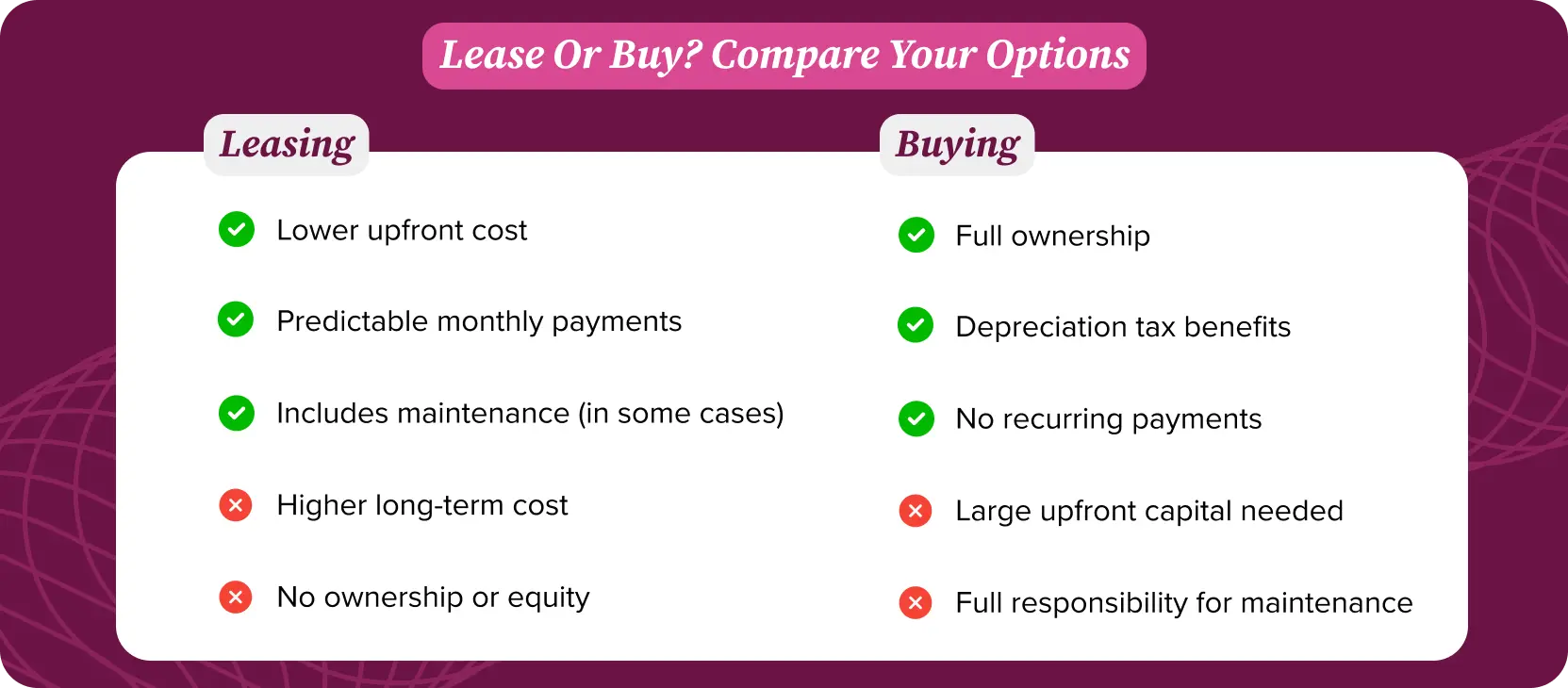
Lower upfront costs: Leasing preserves cash, making it easier to get started or manage expansion without a large capital outlay.
-
Predictable monthly payments: Leases make budgeting simpler by spreading equipment costs into fixed monthly payments.
-
Built-in maintenance options: Some leases include service and maintenance, reducing unexpected repair expenses.
-
Tax benefits: In many cases, lease payments are fully deductible as business expenses.
-
Upgraded equipment: Leasing allows you to stay current with the latest technology by upgrading at the end of your lease term.
Cons:
-
Higher long-term cost: Leasing tends to cost more over time compared to outright ownership.
-
No asset ownership: You don’t build equity in the equipment, and it won’t appear as an owned asset on your balance sheet.
-
Limited customization: You may be limited in how you can modify or install leased equipment.
Leasing is a great option for operators with limited upfront capital, new restaurant owners, or those planning to upgrade equipment frequently.
Buying Restaurant Equipment: Pros and Cons
Pros:
-
Full ownership: The equipment becomes an asset that adds value to your business.
-
Depreciation tax advantages: Purchased equipment is eligible for depreciation, which can offer significant tax deductions over time. Learn more about equipment depreciation.
-
No ongoing payments: Once paid off, there are no recurring costs, freeing up future cash flow.
-
Freedom to customize: Ownership allows for more flexibility in setup and usage.
Cons:
-
Higher upfront costs: Large capital expenses can strain your working capital or require financing.
-
Maintenance costs: Repairs and servicing are your responsibility. Skipping basic upkeep might seem ok at first, but grease and wear add up fast. Stay ahead and invest in regular checks.
-
Outdated equipment risk: You may be stuck with aging equipment longer than desired.
Purchasing works well for well-capitalized operators or established restaurants looking to reduce long-term costs and build equity.
Bonus Option: Buying Used Equipment
Buying high-quality used equipment, especially for expensive items, like walk-in coolers or commercial cook lines, can offer a best-of-both-worlds solution. While it may not come with a warranty, used equipment often costs much less than new equipment and may still qualify for depreciation deductions.
That said, due diligence is key. Always inspect used equipment for wear, ask about service history, and confirm compatibility with your space. Used equipment can be an excellent value, particularly for back-of-house items that don’t need to impress front-of-house guests.
How Equipment Decisions Can Impact Your Financials
Profit and Loss
-
Lease payments show up as operating expenses, reducing taxable income.
-
Purchased equipment appears on the P&L only through depreciation and repair costs.
Balance Sheet
-
Leased equipment generally doesn’t appear as an asset unless it’s a capital lease.
-
Purchased equipment increases total assets and affects equity depending on how it’s financed.
Cash Flow Statement
-
Leasing provides more predictable operating cash outflows.
-
Buying results in larger investing cash outflows upfront but reduces future expenses.
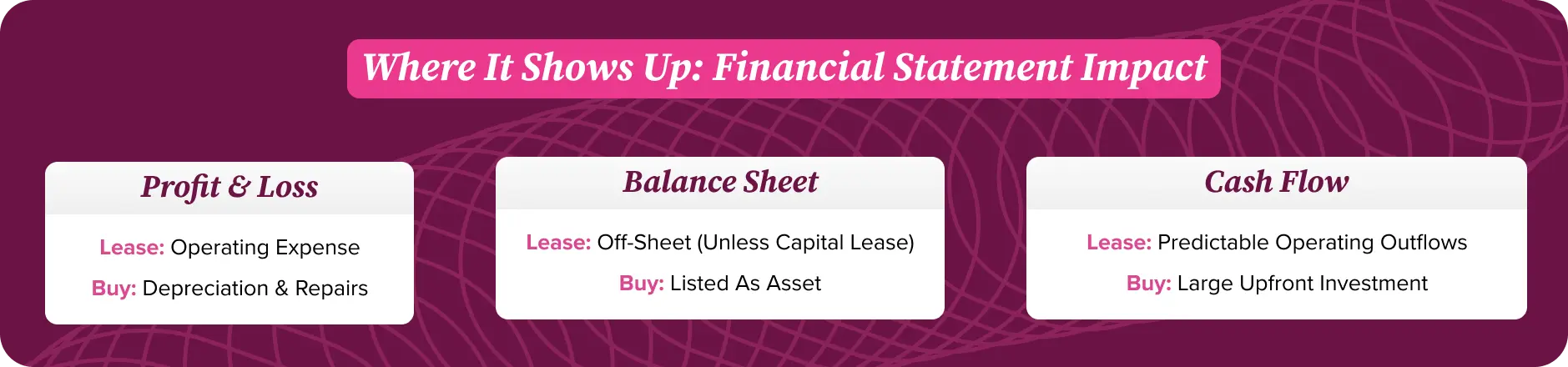
Understanding how your decisions appear on each financial statement can help you better communicate with lenders, investors, and tax professionals.
Evaluating What’s Right for Your Restaurant
Before leasing or buying any equipment, your leadership and financial team should coordinate on the following:
-
What’s your available capital right now?
-
How long do you plan to keep the equipment?
-
Are you expanding or stabilizing operations?
-
Do you expect sales volume to change significantly in the next few years?
-
How critical is the latest technology to your kitchen’s performance? Using restaurant management software that integrates with your accounting platform can help you answer these questions in real time, factoring in labor costs, cash flow trends, and performance benchmarks.
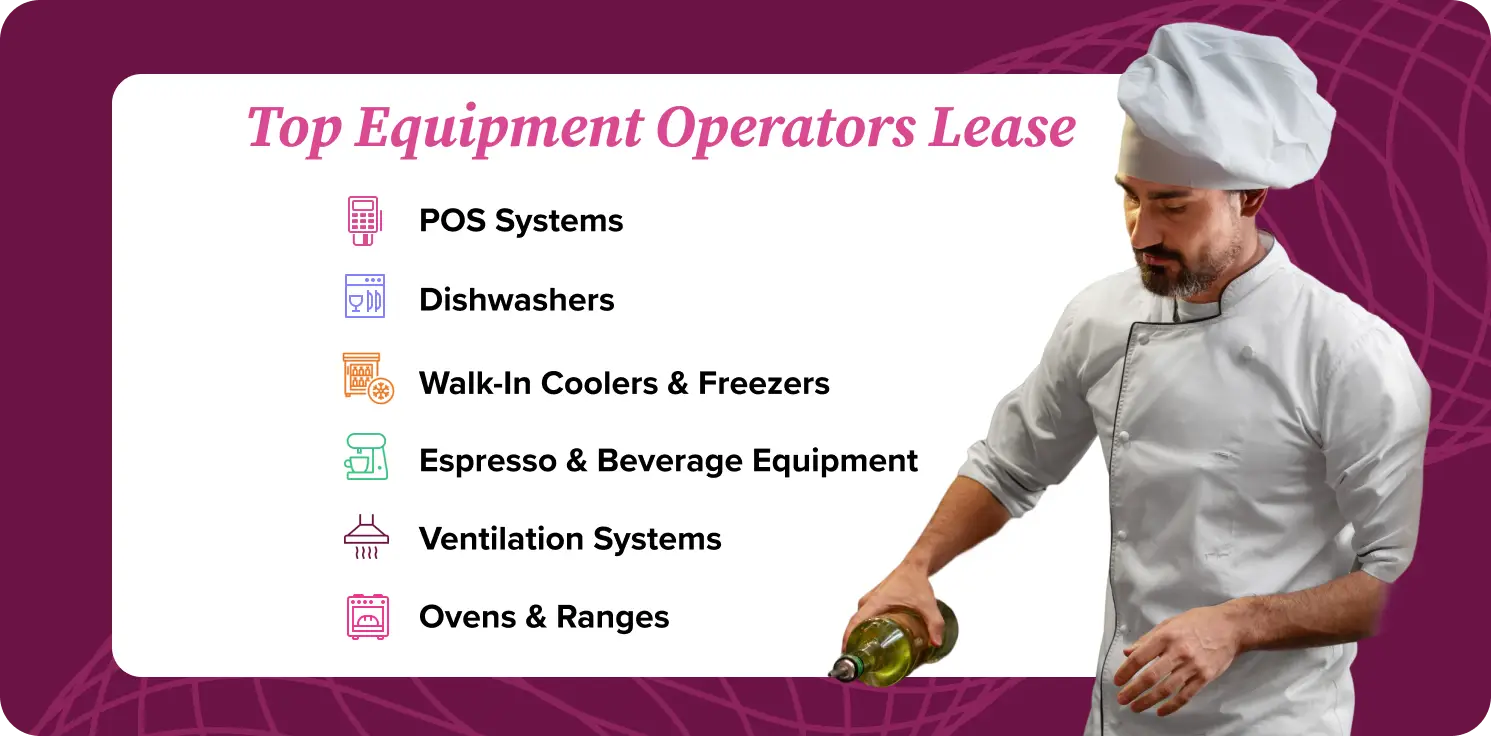
Most Commonly Leased Restaurant Equipment
If you’re considering restaurant equipment leasing, you’re in good company. Many operators lease equipment that depreciates quickly or becomes outdated fast, including:
-
POS systems and kiosks
-
Dishwashers and ice machines
-
Walk-in coolers and freezers
-
Espresso machines and beverage equipment
-
Ventilation systems and hoods
-
Ovens, griddles, and ranges
Equipment with high maintenance costs and rapidly evolving technology (like POS systems) are often more economical to lease, while longer-life, stainless steel pieces (like prep tables and sinks) may be better to buy.
Actionable Next Steps for Restaurant Operators
-
Work with your accountant. Determine the best tax advantage between depreciation (buying) and deductible payments (leasing).
-
Compare financing options. If buying, compare interest rates and terms on loans versus lease contracts.
-
Forecast ROI. Use restaurant management software to project how the equipment will impact labor efficiency, ticket time, or food waste.
-
Negotiate smartly. Whether leasing or buying, negotiate service terms, warranties, and payment structures.
-
Plan for growth. If expansion is on the horizon, consider whether flexible leasing terms or ownership will best support scaling.
Restaurant equipment leasing versus buying isn’t a one-size-fits-all decision. Each approach comes with trade-offs, but when viewed through the lens of long-term business health and financial visibility, it’s a decision that deserves your time and attention.
With the right tools and strategic insight, you can make the best call for your operation, preserving cash when you need it most, claiming tax benefits where applicable, and ultimately driving stronger financial performance.