


AI for restaurants is no longer a futuristic concept reserved for large chains — it’s a practical tool transforming how restaurants operate every day. From smarter scheduling and forecasting to inventory management and guest engagement, AI is reshaping both back-office operations and front-of-house strategies.
What was once considered a luxury is now accessible to independent operators ready to work smarter, not harder. Here are some of the practical, financially impactful ways AI is helping restaurants streamline operations, reduce waste, and refocus on what matters most: hospitality and profitability.
What Is AI for Restaurants?
In simple terms, AI for restaurants combines machine learning, data analytics, and automation to make sense of your restaurant’s data (sales, labor, inventory, and customer behavior) and use it to make better decisions.
AI doesn’t replace managers or staff; it supports them. The goal is efficiency, accuracy, and time savings. For example, AI can predict your inventory needs by analyzing historical sales, weather patterns, holidays, and even local events. It’s like having a data analyst working behind the scenes 24/7, but it’s faster and removes the guesswork.
Why AI Matters in 2025 and Beyond
Today’s operators are facing many challenges: labor shortages, higher food costs, and shifting consumer expectations. The pressure to do more with less has never been greater, and that’s where AI shines.
AI tools help manage these challenges by automating repetitive tasks, improving forecasting, and identifying inefficiencies before they become expensive problems. More importantly, they free your team from the daily grind so they can refocus on what restaurants do best: creating memorable guest experiences.
AI isn’t just another tech trend, it’s becoming the operational backbone for data-driven restaurants that want to stay agile and profitable in an increasingly tighter market.
Key Benefits of Restaurant AI
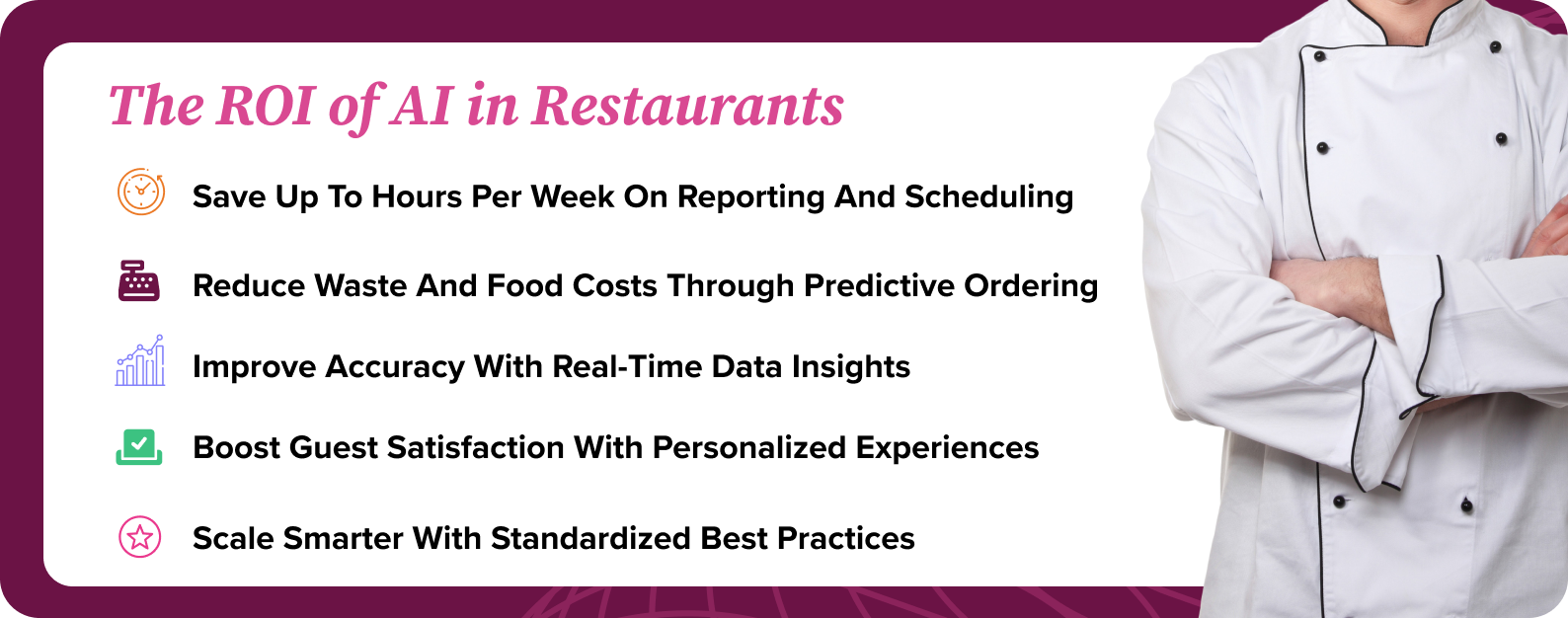
When used strategically, AI helps restaurants:
- Reduce food waste and control costs through predictive ordering and smart inventory tracking.
- Align labor with demand using scheduling tools that learn from sales trends.
- Eliminate manual reporting with automated, real-time financial dashboards.
- Improve customer experience through faster, more personalized service.
- Scale smarter by standardizing best practices across multiple locations.
The result is a more efficient operation that spends less time reacting and more time optimizing.
10 Practical AI Applications Operators Use Today
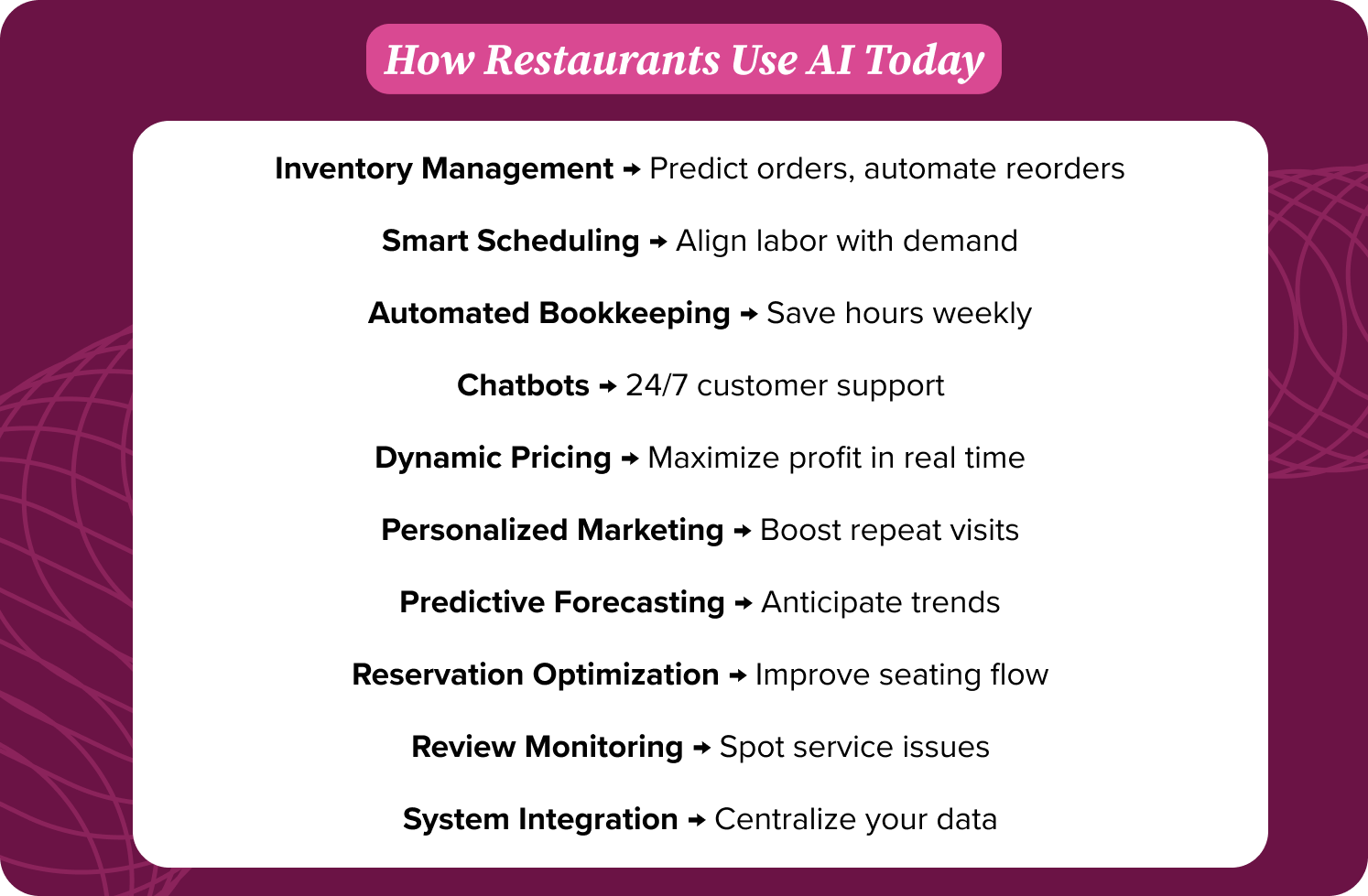
Here are ten ways AI is already transforming restaurant operations in 2025:
- Smarter inventory management: Forecast purchasing, automate reorders, and reduce spoilage with predictive analytics that balance cost control and supply reliability.
- AI-driven staffing and smart scheduling: Forecast demand and automatically build schedules to reduce overtime and prevent understaffing during peak periods.
- Automated bookkeeping and reporting: AI can reconcile transactions, generate financial summaries, and flag anomalies, saving your managers hours each week.
- Customer support automation: Chatbots and virtual assistants handle online inquiries, reservations, and guest feedback around the clock, improving responsiveness without increasing labor.
- Dynamic pricing and menu optimization: Analyze menu performance and market data to highlight high-margin dishes or adjust prices in real time to maximize profit.
- Personalized marketing campaigns: Segment customers based on behavior and frequency to deliver targeted offers and loyalty rewards that drive repeat visits.
- Predictive sales forecasting: Anticipate sales trends by factoring in weather, holidays, and local events to plan labor and purchasing with precision.
- Reservation optimization: Use AI-based systems to improve seating flow, reduce no-shows, and enhance guest turnover efficiency.
- Review sentiment analysis: Monitor online reviews automatically, identify recurring feedback, and spot service issues before they escalate.
- End-to-end system integration: Unify payroll, accounting, and inventory data so that reports update instantly and decisions are based on real numbers, not spreadsheets.
Each of these tools can deliver measurable improvements, from fewer wasted hours to higher margins, when implemented with the right strategy and systems in place.
Is AI Overhyped or a True Game-Changer?
AI can sound overhyped because it’s often portrayed as a one-click fix for every restaurant problem. In reality, its success depends on the quality of the data it’s fed and how it’s used.
For operators who start small and focus on specific, measurable goals, like automating scheduling or improving inventory control, the impact can be immediate and tangible. AI enhances human decision-making rather than replacing it, allowing your team to operate smarter and focus on service, creativity, and growth.
Common Challenges and How to Overcome Them
AI adoption isn’t without hurdles. Too many operators skip the crucial step of backend planning, ending up with a disconnected system that barely moves the needle on efficiency. Here are some common hurdles and how forward-thinking operators tackle them:
- Integration issues: Many restaurants still rely on legacy systems that don’t communicate well with modern tools. Start by connecting the essentials (POS, payroll, and accounting) and expand from there.
- Cost perception: Cloud-based AI solutions now make entry-level adoption affordable, even for single-unit operators.
- Training needs: Select intuitive tools that minimize onboarding and encourage staff buy-in through transparency and ease of use.
- Data quality: Remember the rule: garbage in, garbage out. Reliable, consistent data ensures accurate AI insights.
Operators who plan their rollout and communicate its purpose clearly to staff see the fastest returns and the least resistance.
The Future of AI in Restaurants
The next generation of AI will go beyond automation to deliver predictive operational orchestration, where systems talk to each other, anticipate needs, and make adjustments before managers intervene.
Imagine AI suggesting next week’s schedule, reordering key ingredients, and projecting sales based on a local festival, all before you pull that first shot of espresso. As tools become more intuitive and connected, AI will no longer feel like “new tech.” Instead, it will simply become part of how restaurants operate day to day.
The future of AI isn’t sterile or impersonal. It’s operational intelligence with a human touch, empowering you to make smarter decisions while keeping your focus on your guests, where it belongs.
Seamless Integration, Smarter Operations
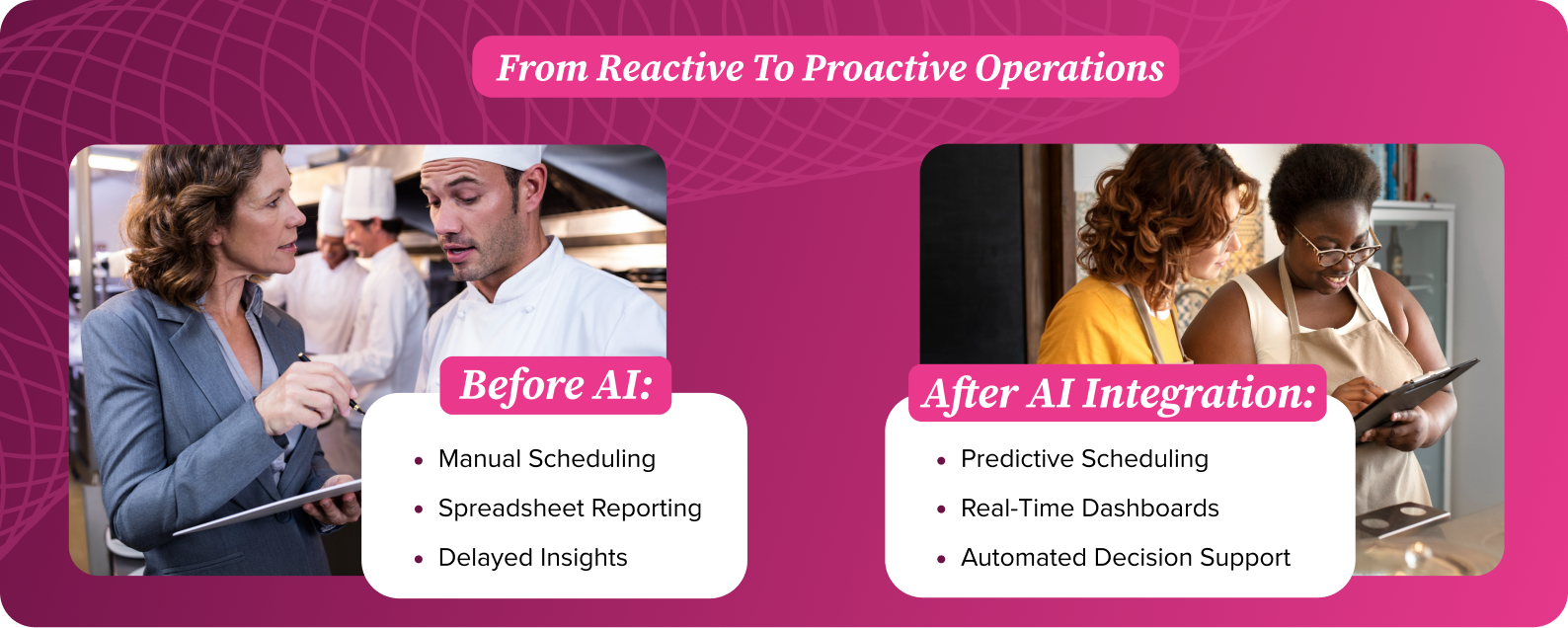
AI is transforming restaurant operations from reactive to proactive, empowering operators to boost accuracy, reduce waste, and reclaim time.
The most effective way forward is integration — connecting payroll, analytics, inventory, and operations under one ecosystem. When your data flows freely, your restaurant does too.
Start exploring solutions that simplify data, automate repetitive tasks, and keep your team focused on what defines true hospitality: the guest experience.