


Not long ago, restaurant operators relied mostly on intuition to navigate challenges like rising costs, unpredictable labor markets, and late-night reconciliations. Those instincts still matter, but data and automation are also now critical to success.
Today’s most successful restaurants use smart systems to connect the dots between the kitchen, front of house, and back office. Restaurant management software serves as the digital backbone of modern operations, helping owners and managers handle inventory, labor, accounting, and much more from one dashboard. The right software streamlines tasks, improves restaurant efficiency, reduces waste, and provides real-time insights that drive profitability.
Here, we break down 13 of the most valuable restaurant management software features and show how each one strengthens operations and protects margins.
Core Restaurant Management Software Features
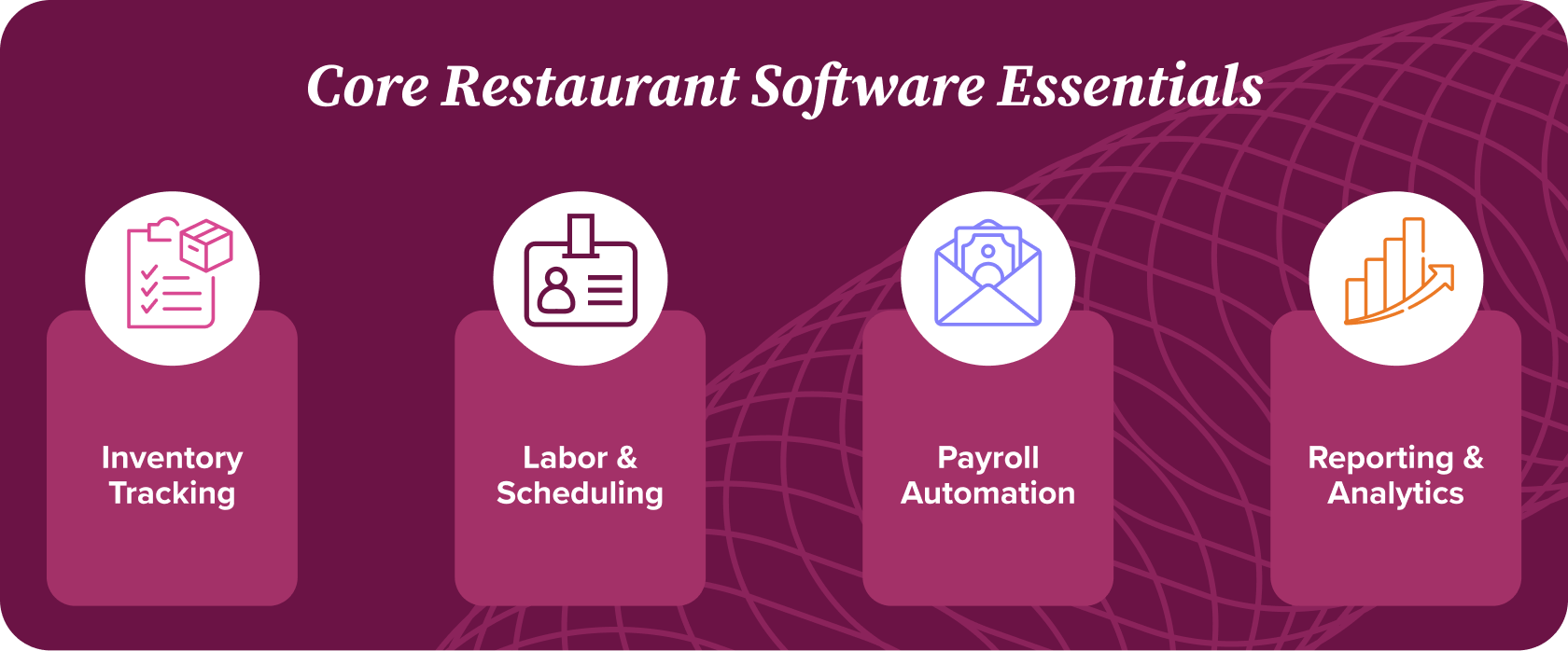
Routine administrative tasks can easily become overwhelming for busy restaurant managers. To maximize software performance, operators should first focus on fundamentals such as labor, payroll, inventory, and reporting.
These core restaurant management software features connect your back office, automate repetitive tasks, and help you stay on top of costs in real time. They also align teams and turn raw data into actionable insights. This way, you can spend less time putting out administrative fires and more time improving how the restaurant runs.
1. Inventory Management and Stock Control
For many operators, food cost management is the holy grail of profit potential. With digital inventory and stock control, you can track every ingredient in real time, set par levels, and monitor variance between theoretical and actual usage. This visibility helps reduce waste, optimize purchasing, and simplify audits.

Pairing inventory management with tools like automated reordering and invoice scanning makes it easier to spot supply trends and maintain consistent profitability.
2. Order and Menu Management
Menu management software brings recipes, ingredients, and pricing together in one system. When you update a menu item, your recipe costs and inventory levels adjust automatically, which helps ensure accurate margins and consistent food quality.
It’s also a key tool for menu engineering. By analyzing what sells (and what doesn’t), and which dishes drive profit, operators can make data-driven updates that directly impact the bottom line.
3. Billing and Payment Processing
Billing features automate the flow of transactions from the front of house to the back office. Integrated payment processing reduces manual entry and reconciliation time, ensuring your sales, deposits, and reports always line up. The result? Fewer errors, faster closeouts, and easier accounting at the end of the month.
4. Reporting and Analytics
Comprehensive reporting is one of the most powerful restaurant management software features available today. Digital dashboards can display real-time data, such as food cost percentage, restaurant labor costs, and sales across locations, enabling operators to make informed, on-the-fly adjustments.
For operators looking to improve restaurant efficiency, analytics can also reveal hidden opportunities like slow-moving inventory or overstaffed shifts. With every report, operators gain a deeper understanding of the restaurant’s financial health. Modern analytics tools even allow operators to set custom KPIs and receive alerts when performance drifts, helping teams stay proactive instead of reactive.
5. Employee Scheduling and Labor Management
Labor is often a restaurant’s largest controllable expense. Software-driven scheduling allows managers to build shifts based on forecasted demand, easily track overtime, and approve swaps without the chaos of paper schedules.
This transparency keeps employees happier and helps prevent burnout, while automated wage and hour compliance features protect your business from costly mistakes.
6. Payroll Management
Payroll management features simplify what’s historically been one of the most complex and time-consuming parts of restaurant operations. Automated payroll syncs with scheduling and time tracking, ensuring accurate pay and tax calculations every time.
With integrated payroll, operators can also manage tip reporting, deductions, and compliance effortlessly, saving hours each week.
7. Table and Reservation Management
While not every operator depends on reservations, this feature improves the guest experience by coordinating seating and service flow. Centralized table management helps reduce wait times, balance sections, and improve guest satisfaction.
Advanced Features That Improve Efficiency
Once the basics are in place, advanced tools take your operation from organized to optimized. These features build on the core systems by introducing automation, integration, and data-driven intelligence that help keep the operation smart, lean, and profitable.
From supplier management and multi-location dashboards to accounting integrations and mobile access, these capabilities improve restaurant operations at scale. They allow operators to anticipate needs instead of reacting to problems, streamline communication across teams, and protect sensitive data, which are all key components of long-term growth.
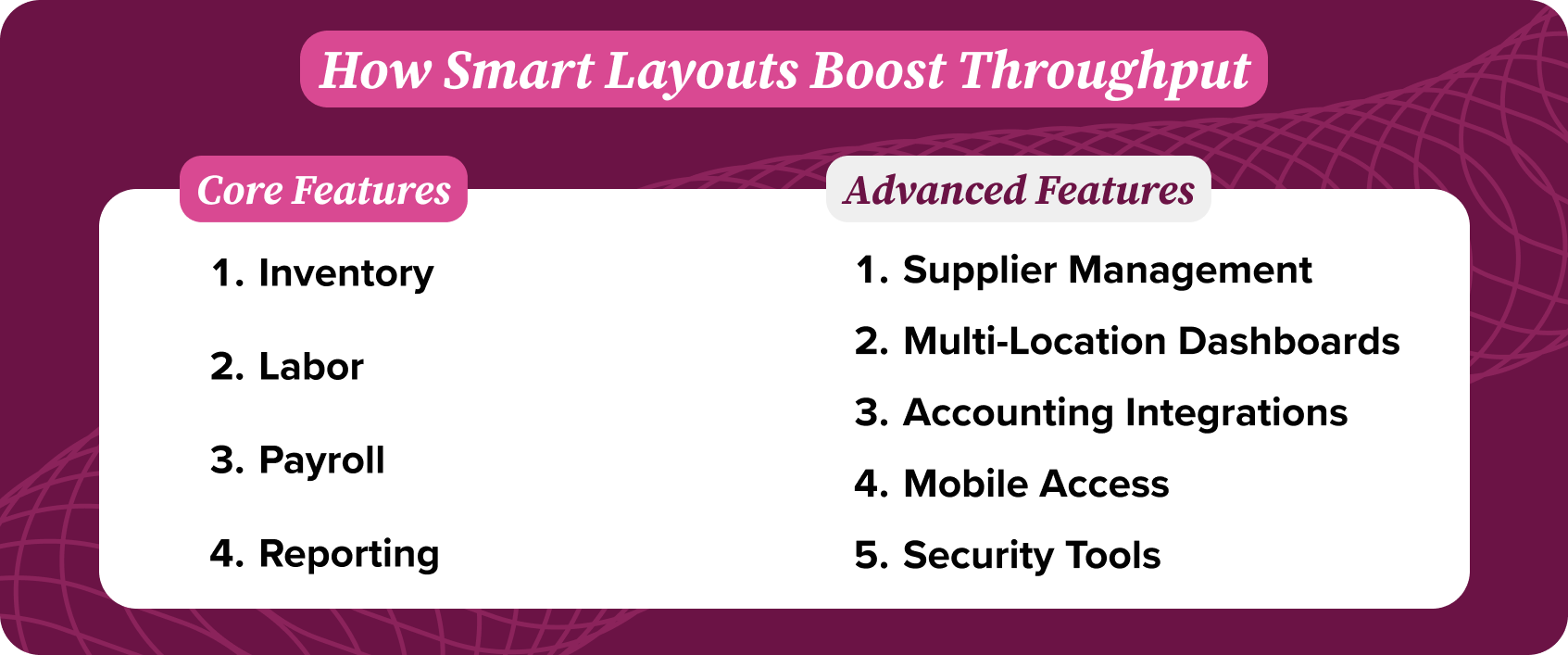
In short, advanced features are what turn restaurant software from a digital filing cabinet into a full-fledged management partner.
8. Automated Reordering and Supplier Management
Automating your purchasing process is one of the easiest ways to improve restaurant efficiency. When inventory levels hit preset par points, the system generates purchase orders automatically. This reduces the chance of overordering or running out of key ingredients.
Supplier management tools also streamline communication and help operators compare pricing, track deliveries, and reconcile invoices — all within the software.
9. Multi-Location Management
For growing brands, multi-location visibility is a game changer. The ability to view performance across all units from a single dashboard means you can spot trends, share resources, and maintain consistency in costs and recipes.
Centralized purchasing and standardized reporting also help multi-unit operators plan expansion with confidence. By consolidating key data streams, operators can benchmark performance across stores and identify best practices that drive profitability system-wide.
10. Loyalty Programs and Promotions
Not every restaurant management system includes customer loyalty tools, but for those that do, integration-ready software makes it easy to connect third-party platforms. Promotions and rewards help retain customers and boost average check size, turning first-time visitors into regulars.
11. Integration With Accounting Software
Seamless integration between your POS, accounting, and restaurant management systems eliminates human errors and improves accuracy. Data automatically flows from daily sales reports to the general ledger, making bookkeeping and reconciliation much faster.
For operators who want to improve restaurant efficiency, integration is essential. It’s the glue that holds financial, operational, and administrative data together.
12. Mobile Access and Cloud Integration
Cloud-based systems give you complete visibility whether you’re in the kitchen or scouting real estate across the country. Mobile dashboards let operators monitor sales, inventory, and labor metrics in real time, providing flexibility and control from anywhere in the world.
13. Security and Data Protection
With so much sensitive information in one place, data protection is paramount. Restaurant management software should offer role-based access, data encryption, and secure cloud storage. These safeguards ensure your financial and employee data stays secure while maintaining compliance with evolving privacy regulations.
It’s also worth confirming that your provider offers regular backups, system monitoring, and disaster recovery capabilities. All are critical protections in an age of increasing cyber threats.
Back Office Software Brings It All Together
The most effective restaurant management software features work together to create a unified, smarter operation. Back Office’s integrated platform connects accounting, payroll, and food cost management in one place, where operators can monitor performance and control costs with precision.
Whether you run one location or dozens, Back Office gives you the tools to make fast, informed decisions that make business run smoothly.
Smart Systems Build Strong Restaurants
Adopting restaurant management software is essential to stay competitive. By embracing these core and advanced tools, operators can finally see the full picture of their business, identify inefficiencies, and act on data instead of gut feelings.
Software can’t replace experience, but it can certainly enhance it. When operators pair industry intuition with reliable data, they gain a decisive advantage in managing costs, training teams, and delivering consistent guest experiences.
Ready to improve your restaurant operations with smarter systems? Explore the Back Office blog or book a demo today.