
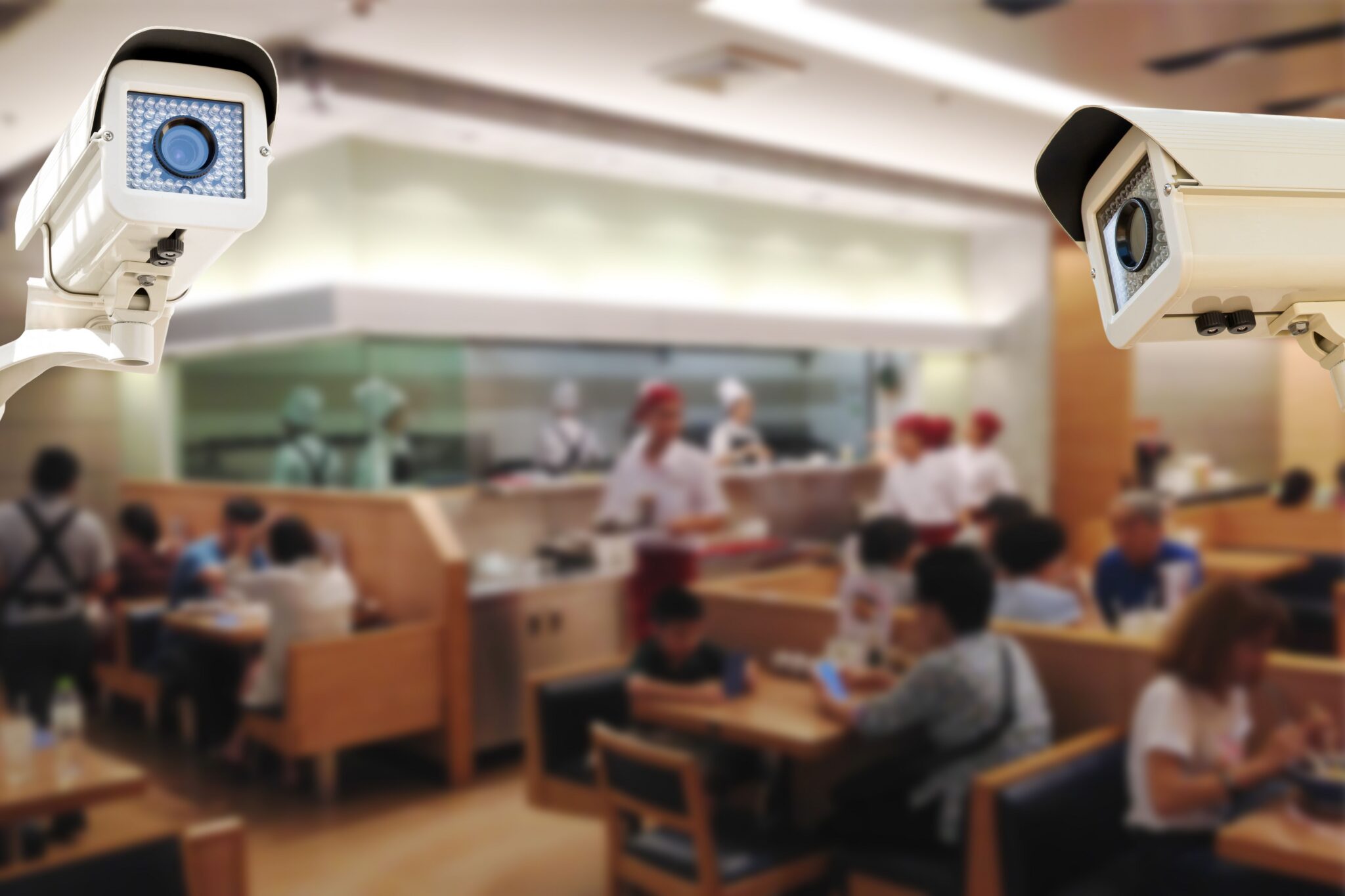
Internal and external theft in restaurants is a serious issue. Not only does it create financial loss, it disrupts operations. While some losses stem from employee actions, others come from customers, vendors, or organized criminal activity. Even small inconsistencies in cash handling, inventory tracking, or transaction reporting can add up over time.
Preventing theft starts with stronger operational visibility and processes that help operators identify unusual activity before losses grow larger. In the past, many critical managerial activities like inventory, cash reconciliation, and invoice matching were done by hand, leaving a lot of room for human error. Today, technology empowers operators to be proactive when it comes to loss prevention.
Internal vs External Theft in Restaurants: What’s the Difference?
Internal and external theft in restaurants involves different sources of loss. While, internal theft originates from employees or staff members through actions such as cash skimming, inventory theft, or payroll fraud. External theft comes from outside parties like customers, vendors, or organized retail crime groups. Both can impact day-to-day operations and long-term profitability. Understanding the difference helps operators put in place prevention strategies that address both operational and customer-facing risks.
Common Types of Internal Theft in Restaurants
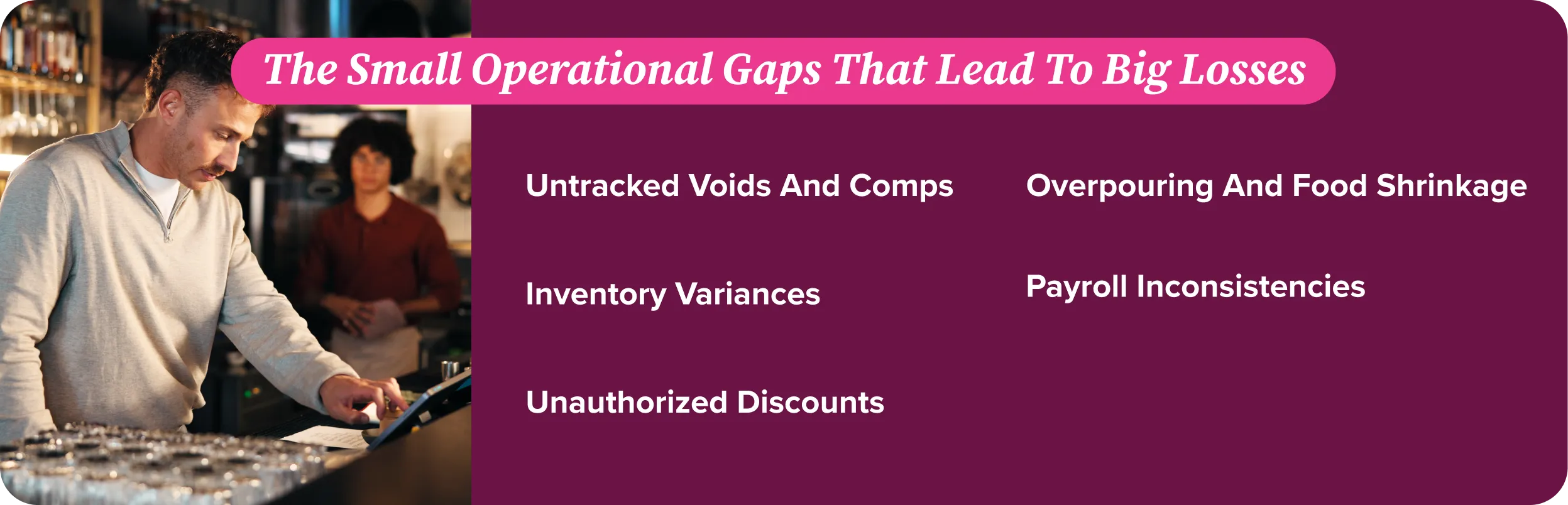
Internal theft often happens gradually through everyday operational processes that are difficult to monitor consistently.
Cash Theft
Cash theft can occur through skimming, unrecorded sales, manipulated voids, or stolen cash deposits. These issues are more common in restaurants with inconsistent cash-handling procedures or limited oversight. Regular POS audits, shift reporting, and restricted register access can help operators identify discrepancies early on.
Food and Inventory Theft
Examples of inventory theft include employees taking food products, underreporting waste, or improperly tracking meals and ingredients. Small losses can compound quickly when inventory counts are inconsistent. Strong inventory controls and regular variance reviews help operators maintain accurate food cost reporting and reduce unnecessary shrinkage.
Alcohol Theft and Overpouring
Alcohol loss occurs through unauthorized drinks, free pours, or intentional overpouring. Because beverage margins are closely tied to portion consistency, even minor discrepancies can affect profitability. Monitoring pour costs, tracking inventory regularly, and using standardized recipes helps reduce beverage loss.
Time Theft and Payroll Fraud
Time theft includes buddy punching, extended breaks, early clock-ins, and other inaccurate time reporting. These issues increase labor costs without improving productivity. Regularly reviewing payroll reports and limiting timekeeping permissions can help operators identify unusual patterns before they become recurring problems.
Unauthorized Discounts, Comps, and Promotions
Unauthorized discounts and comps reduce revenue when employees apply promotions outside approved policies. Staff members may issue refunds or discounts to friends or process fake transactions. POS permissions, manager approvals, and exception reporting improve accountability.
Common Types of External Theft in Restaurants
External theft comes from outside the organization and typically targets payment systems, inventory, or physical property.
Dine-and-Dash and Customer Theft
Dine-and-dash incidents and customer theft directly reduce revenue. It also places pressure on staff. These situations typically involve unpaid tabs, stolen merchandise, and other intentional attempts to avoid payment. Clear service procedures and stronger payment verification processes help reduce recurring customer-related losses.
Credit Card Fraud and Chargebacks
Fraudulent card activity and chargebacks create financial losses and additional administrative work. Restaurants may face disputes related to stolen cards, online ordering fraud, or inaccurate transaction records. Maintaining detailed receipts and secure payment systems can help reduce the risk of chargebacks.
Vendor Fraud and Invoice Manipulation
Vendor fraud involves duplicate invoices, inflated pricing, or billing discrepancies that go undetected over time. Without regular invoice reviews, restaurants may overpay for products or services. Matching invoices against purchase orders and delivery records should be non-negotiable.
Shoplifting, Robbery, and Break-Ins
Restaurants may experience theft through stolen merchandise, robberies, or after-hours break-ins. These incidents create operational disruptions in addition to direct financial losses. Security cameras, controlled access points, and cash handling procedures reduce these physical security risks.
Organized Retail Crime (ORC)
Organized retail crime (ORC) involves coordinated theft activity that targets restaurant or retail operations. Criminal groups can exploit online ordering systems, steal high-value inventory, or commit large-scale fraud across multiple locations. Strong transaction monitoring and reporting systems help operators identify suspicious activity more quickly.
How Internal and External Theft Impacts Restaurant Profitability
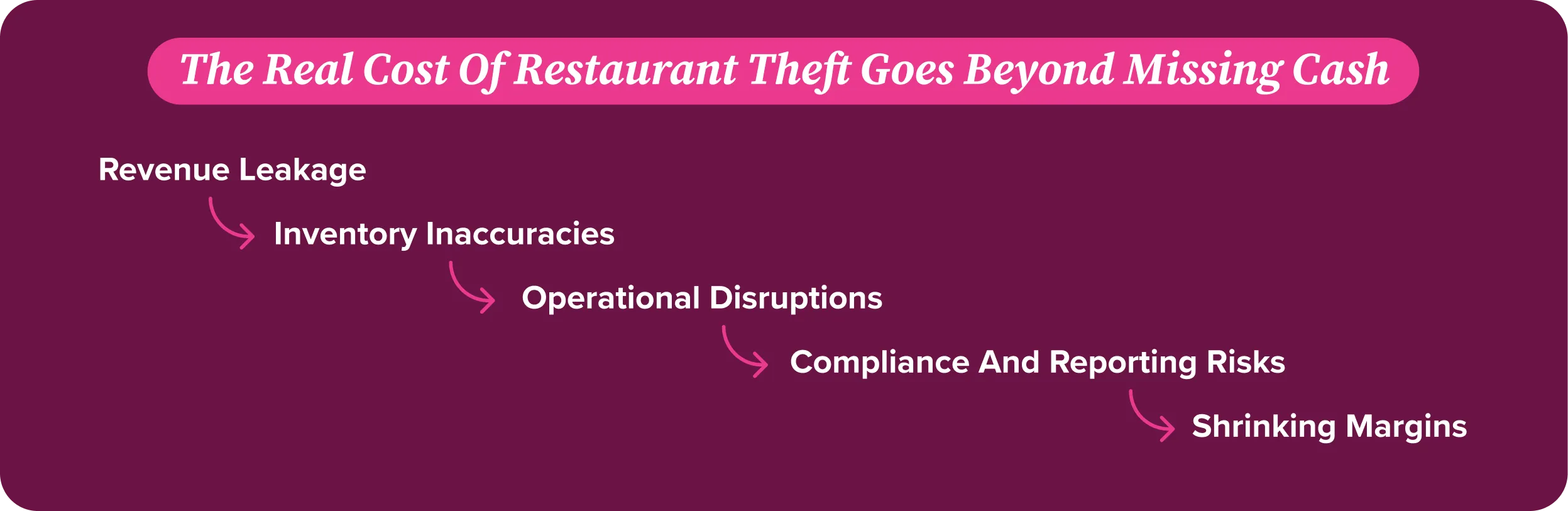
Internal and external theft in restaurants can create operational inefficiencies that extend far beyond the initial financial loss.
Revenue Leakage and Shrinking Margins
Small losses can accumulate quickly across multiple transactions, shifts, or locations. Untracked theft contributes to losses that may not appear immediately. Reviewing financial performance regularly, including P&L statements, helps operators identify inconsistencies and respond earlier.
Inventory Inaccuracy and Cost Inflation
Inventory theft and reporting inconsistencies make it harder to maintain accurate food and beverage cost data. When counts are unreliable, operators may overorder products or miscalculate purchasing needs. Over time, these issues contribute to higher operating costs and reduced visibility into inventory performance.
Operational Disruptions and Staff Morale Issues
Theft can create tension among employees, increase management oversight demands, and disrupt day-to-day workflows. Teams may lose trust when accountability standards are inconsistent or unresolved issues continue over time. Clear operational policies and a transparent work environment are essential.
Compliance, Legal, and Tax Risks
Inaccurate reporting and fraudulent transactions can create bigger problems than a few missing dollars. Payroll discrepancies, inconsistent records, or untracked cash activity may lead to audit issues and make financial reporting less reliable overall. Clear documentation and consistent reporting processes help operators maintain day-to-day visibility into performance in addition to reducing compliance risks.
How to Prevent Internal Theft in Restaurants
- Limit POS access and permissions based on employee roles and responsibilities.
- Review voids, comps, discounts, and refunds regularly through exception reporting.
- Conduct routine inventory counts to identify unusual food or beverage variances.
- Create standardized cash-handling procedures for every shift.
- Monitor labor reporting for unusual overtime, missed punches, or schedule inconsistencies.
- Train managers to identify operational patterns that may indicate internal theft.
How to Prevent External Theft in Restaurants
- Use secure payment processing systems for in-person and online transactions.
- Install security cameras in entryways, storage areas, and cash-handling stations.
- Verify invoices and deliveries before approving vendor payments.
- Require payment verification procedures for large or suspicious orders.
- Improve lighting and visibility around entrances, exits, and parking areas.
- Develop clear protocols for handling dine-and-dash incidents and suspicious activity.
Best Practices to Reduce Internal and External Theft Long-Term
- Perform regular financial and operational audits to identify inconsistencies earlier.
- Standardize inventory tracking procedures across shifts and locations.
- Use restaurant inventory management systems to improve reporting accuracy and visibility.
- Review purchasing, payroll, and transaction data consistently instead of reactively.
- Establish clear accountability standards for managers and employees.
- Create operational workflows that prioritize visibility, reporting accuracy, and process consistency.

How BEP Back Office Helps Restaurants Prevent Theft
Preventing internal and external theft in restaurants requires more than siloed security measures. Operators need clear visibility into daily operations, especially around purchasing, inventory, and labor.
Reach out to the Back Office team to learn how restaurants can centralize reporting and surface inconsistencies that contribute to long-term losses. This visibility gives operators a stronger footing to protect profitability.
FAQ’s
How can restaurants identify theft before it becomes a larger problem?
Restaurants can identify theft earlier by consistently reviewing POS activity, inventory variances, labor reports, and vendor invoices. Small inconsistencies often appear long before larger losses become obvious. Strong operational visibility helps operators catch unusual patterns before they impact profitability.
What are the most common signs of internal theft in restaurants?
Some of the most common warning signs include excessive voids or refunds, inventory shortages, unexplained labor costs, inconsistent cash deposits, and unusual discount activity. Reviewing operational reports regularly can help managers identify trends that may require additional investigation.
How does restaurant technology help prevent theft?
Restaurant technology helps centralize reporting across purchasing, inventory, payroll, and sales data so operators can spot discrepancies faster. Automated reporting and real-time visibility reduce reliance on manual processes and make it easier to identify unusual activity across locations.
What operational areas should restaurants review regularly to reduce theft risk?
Restaurants should regularly review cash handling procedures, inventory counts, payroll activity, vendor invoices, and POS reporting. Conducting consistent operational reviews and audits can help uncover issues before they turn into larger financial losses. For a deeper breakdown of what operators should review, read our blog on restaurant audits and operational reviews.
Why is operational visibility important for multi-location restaurants?
Multi-location restaurants often deal with inconsistent processes, reporting gaps, and limited visibility between locations. Centralized operational reporting helps leadership teams compare performance, identify unusual activity faster, and maintain stronger accountability across the organization.