


Restaurant portion sizes directly affect operational aspects of the kitchen, like food cost, inventory accuracy, and recipe consistency. Even small portion mistakes can reduce margins over time. Learning how to calculate portion size helps restaurants control spending and maintain consistent kitchen operations across shifts and locations.
Inputs Required to Calculate Portion Size
First things first: Before calculating portion sizes, operators must have accurate recipe data. This includes total recipe yield, usable product weight, and ingredient loss during prep or cooking. Without accurate recipe information, even well-designed portion systems can suffer from inconsistent food cost calculations and inventory counts.
Listing Ingredients and Total Recipe Quantity
Start by listing every ingredient used in the recipe. Include proteins, sauces, oils, toppings, garnishes, and side items. Small ingredients, which are often overlooked, still affect total recipe cost, especially at scale.
For example, a chicken pasta recipe may include:
- 8 pounds cooked pasta
- 3 pounds grilled chicken
- 2 quarts alfredo sauce
- 1 pound parmesan cheese
The full recipe quantity creates the foundation for portion calculations.
Clear recipe documentation also improves consistency across shifts and locations. Restaurants that don’t accurately track ingredient quantities often struggle with inconsistent margins and inventory counts, not to mention guest satisfaction. Few things are more frustrating for hungry consumers than ordering their favorite menu item only to have it taste differently than usual.
Understanding Recipe Yield From Raw to Cooked
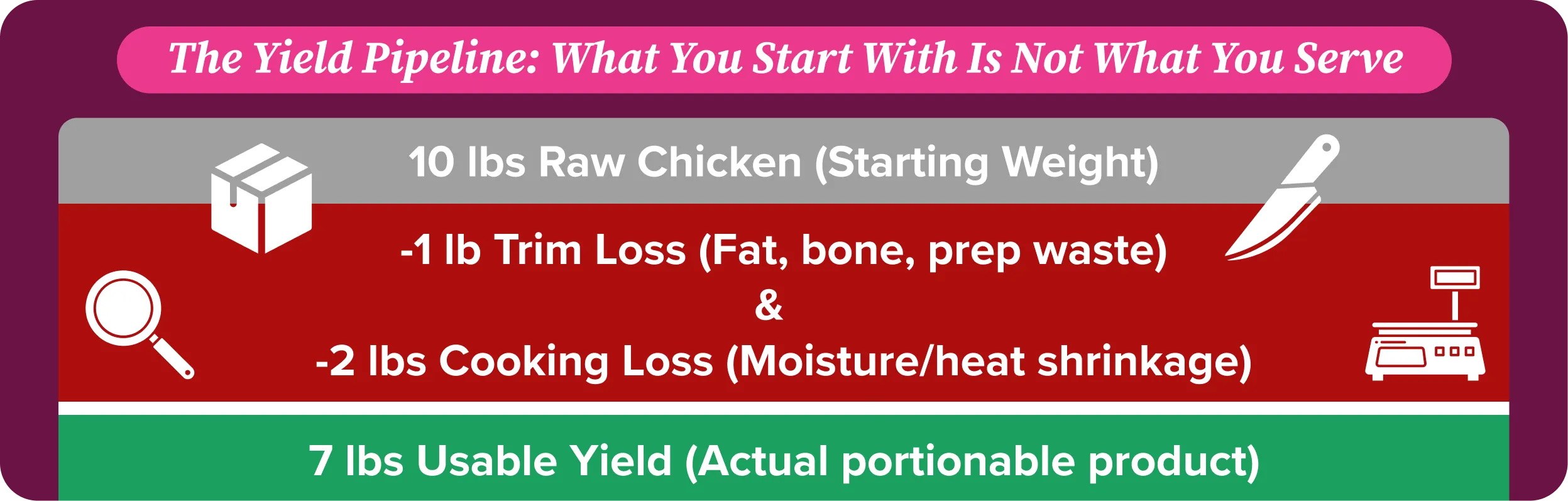
Raw product weight rarely matches cooked yield. Proteins shrink during cooking. Vegetables lose moisture during prep. Rice and pasta expand after cooking. All of these things must be taken into account.
For example:
- 10 pounds raw chicken
- 1 pound trim loss
- 2 pounds cooking loss
- 7 pounds usable cooked product
Portioning meals based on raw weight underestimates food cost and oversells available inventory. Always use the final usable yield, not the raw ingredient weight.
Accounting for Waste, Shrinkage, and Trim Loss
Waste changes the amount of product available for service. Before calculating portions, account for trim loss, spoilage, and cooking shrinkage.
Common examples include:
- Fat trimmed from meat
- Vegetable peels
- Burned product
- Spoiled ingredients
- Overproduced prep
Ignoring waste creates inaccurate food cost calculations and unrealistic inventory expectations. Tracking shrinkage over time can also help managers identify prep issues, inconsistent training, or unnecessary food waste.
Standardizing Units and Measurements Across Recipes
It may sound like common sense, but recipes should use consistent measurements. Switching between ounces, cups, pounds, or visual estimates creates confusion during both prep and service.
Most restaurants standardize portioning with:
- Digital scales
- Portion scoops
- Ladles
- Measuring cups
- Recipe cards
Clear measurement systems help staff portion recipes consistently during busy shifts. Standardized measurements also simplify training and improve inventory accuracy across multiple kitchen teams or locations.
How to Calculate Portion Size
Restaurants should use the same process for every recipe.
Step 1: Determine Total Recipe Yield After Cooking
Calculate the final usable yield after prep loss and cooking shrinkage. Use cooked weight instead of raw ingredient weight.
Step 2: Adjust for Waste and Usable Quantity
Subtract trim loss, spoilage, or unusable product from the total recipe quantity to determine the true usable inventory available for service.
Step 3: Apply the Portion Size Formula
Use this formula:
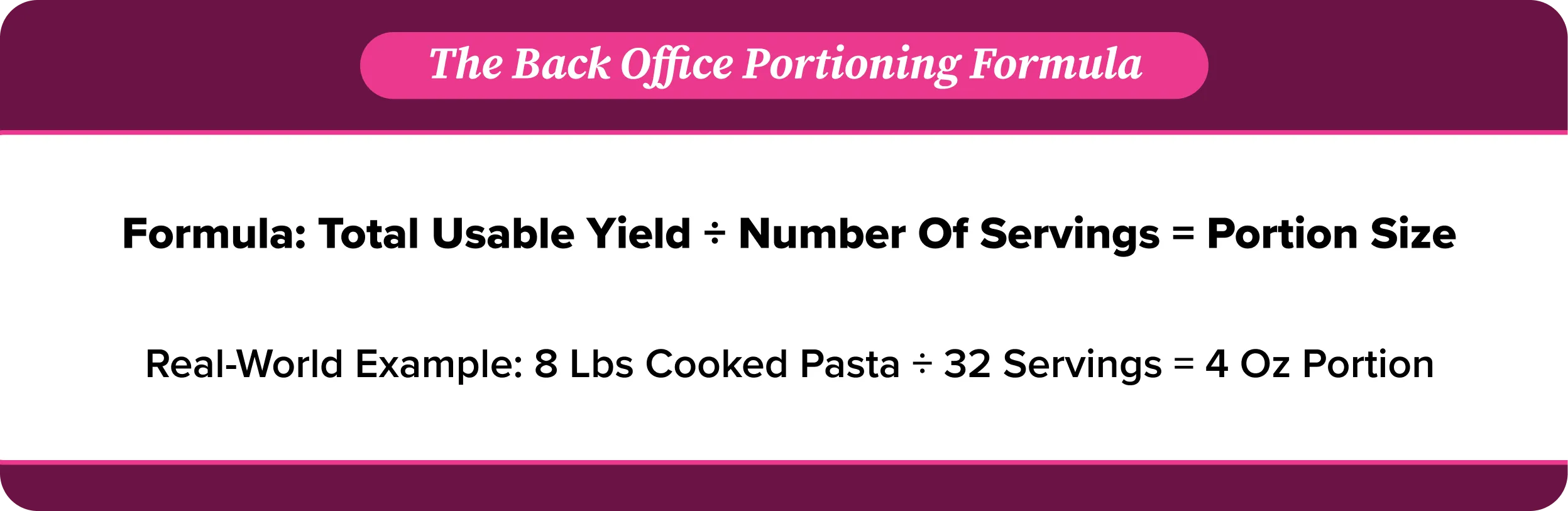
Total usable yield ÷ Number of servings = Portion size
Example:
8 pounds cooked pasta ÷ 32 servings = 4-ounce portions
Step 4: Divide the Total Yield by the Number of Portions
Once the usable yield is confirmed, divide the recipe evenly across the planned servings.
For example:
- 20 pounds chili
- 40 servings
- 8-ounce portions
Step 5: Convert Portion Size Into Standard Units
Use measurements that staff can quickly follow during service.
Examples include:
- 6-ounce salmon filet
- 4-ounce burger patty
- 2-ounce sauce portion
- 1-cup soup serving
Standard measurements are critical to providing consistency across shifts. They also reduce portioning mistakes during high-volume service.
How Portion Size Affects Food Cost and Pricing
Portion size directly affects food cost percentages. Even slight overportioning can increase plate cost over time, especially for high-volume menu items or expensive proteins.
A kitchen that serves an 8-ounce steak instead of a 6-ounce steak may not notice the difference on one plate. Across hundreds of orders each week, though, that overportioning can create serious inventory shortages and unexpected food cost increases.
Portion consistency also affects recipe costing. If cooks serve larger portions than the recipe assumes, menu pricing may no longer reflect the actual cost of the dish.
Restaurants with strong portion control systems typically benefit from:
- More accurate inventory counts
- Better food cost control
- Faster kitchen training
- More consistent recipes
- More predictable purchasing
Consistent portions also improve the guest experience. Customers expect meals to look and feel consistent between visits. Large variations between plates can create complaints and confusion across shifts.
Common Portion Size Calculation Mistakes
Even experienced kitchens can struggle with portion consistency when systems are unclear.
Ignoring Yield and Cooking Loss
Many restaurants calculate portions using raw product weight instead of cooked yield. For example, a 10-ounce raw steak may only produce an 8-ounce cooked portion after shrinkage. Ignoring that loss creates inaccurate food cost calculations and inventory projections.
The problem becomes even more expensive with proteins like brisket, wings, and seafood, where cooking loss can vary significantly depending on prep methods and cook times.
Estimating Portions Instead of Measuring Accurately
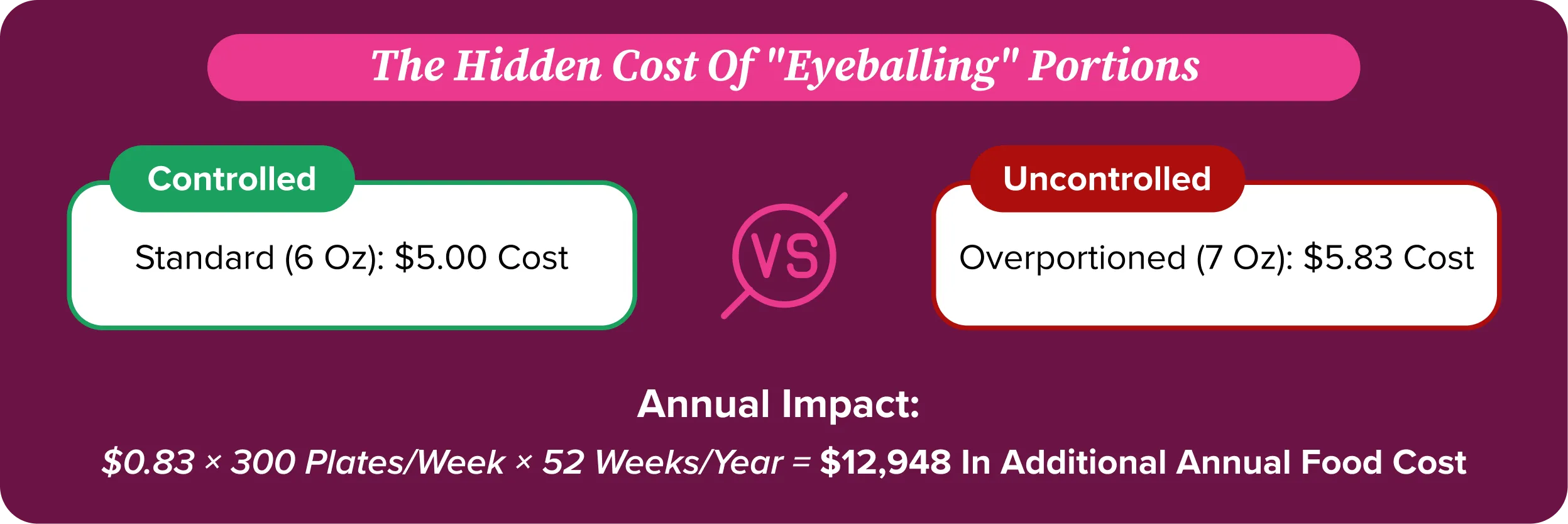
Visual estimates create inconsistent portion sizes across staff members. One cook may serve 5 ounces while another serves 7 ounces.
Always use scales and portion tools to maintain consistency, even during busy service periods. This should be made clear on day one of training. Small overportioning mistakes repeated across hundreds of meals each week can quietly drive up food cost percentages.
Not Standardizing Units Across Recipes
Different measurement systems create confusion during prep.
For example:
- One recipe uses ounces
- Another uses cups
- Another relies on visual estimates
Standardized measurements simplify training and reduce mistakes. They also help kitchens scale recipes more accurately during high-volume service periods or catering production.
Failing to Account for Waste and Trim Loss
Ignoring waste creates unrealistic recipe yields and inaccurate purchasing forecasts.
Restaurants should regularly track:
- Prep waste
- Spoilage
- Trim loss
- Cooking shrinkage
These losses directly affect usable inventory and menu profitability. Tracking waste consistently can also help operators identify training gaps, prep inefficiencies, or recurring inventory problems.
Not Updating Portion Sizes When Ingredient Costs Change
Ingredient prices change constantly. Restaurants that never reevaluate portions may damage margins during periods of inflation.
Operators should regularly review:
- Protein costs
- Produce pricing
- Supplier changes
- Menu profitability
Small portion adjustments can sometimes offset rising ingredient costs without dramatically changing menu pricing. Regular recipe reviews also help restaurants respond faster to supply chain disruptions or seasonal price fluctuations.
Inconsistent Portioning Across Staff or Shifts
Different employees often portion recipes differently without clear standards.
Restaurants can improve consistency with:
- Portion training
- Recipe cards
- Prep guides
- Standard serving tools
- Kitchen audits
Strong systems help maintain consistency during high-volume service. Clear standards also reduce confusion between shifts and help new employees learn recipes more quickly.
Better Portion Control Starts With Better Systems
Portion sizes aren’t the most exciting part of the restaurant industry, but they play an important role in profitability. Small inconsistencies add up quickly across hundreds of plates each week, making accurate portioning a critical part of daily kitchen operations.
Strong systems also make life easier for the entire staff. Clear recipes, standardized tools, and consistent training reduce confusion during service while helping restaurants deliver a more reliable guest experience.
Better systems lead to better results. Reach out to the Back Office team to explore strategies and tools that help your kitchen operate more efficiently while maintaining consistency on every plate.
FAQ’S
How do you calculate portion size for a recipe?
Calculate portion size by dividing the total usable yield after prep and cooking by the total number of planned servings.
What is the formula for calculating portion size?
Use this formula: Total usable yield ÷ Number of servings = Portion size. It keeps recipes consistent and food costs accurate.
How do you calculate portion size after cooking loss?
First determine the final cooked yield after trim loss and shrinkage, then divide that usable amount by the number of servings.
How does the recipe yield impact portion size calculations?
Recipe yield determines how much product is actually available for service, which directly affects portion accuracy, inventory, and food cost.
What is a standard portion size in restaurants?
A standard portion size is the exact amount served for a menu item, measured consistently using scales, scoops, ladles, or cups.
How does portion size affect food cost?
Portion size directly impacts plate cost. Even small overages can raise food costs, reduce margins, and throw off inventory counts.
How can restaurants control portion sizes effectively?
Restaurants can control portion sizes with clear recipe cards, digital scales, standard serving tools, staff training, and regular kitchen audits.