

The dinner rush is over, but your reporting deadline hasn’t moved. Running a restaurant franchise means keeping the day-to-day business moving while giving your franchisor accurate, consistent financial information. That’s easier when you know what’s due, how it should look, and which records need to go with it. This franchise reporting requirements checklist brings those steps together, so you can build a repeatable routine, spend less time chasing paperwork, and get back to running your restaurant with much more confidence.
The challenge isn’t just pulling numbers from your POS or accounting software; it’s understanding how daily restaurant activity translates into the reports your franchisor expects. Delivery-platform payouts may arrive with fees already deducted, payroll periods may cross reporting cutoffs, and sales totals may need to be reconciled with bank deposits. Addressing those differences before you submit helps keep revenue and expenses in the correct reporting period, reduces follow-up questions, and gives both you and your franchisor a clearer picture of the restaurant’s performance.
What Is Franchise Financial Reporting Requirements?
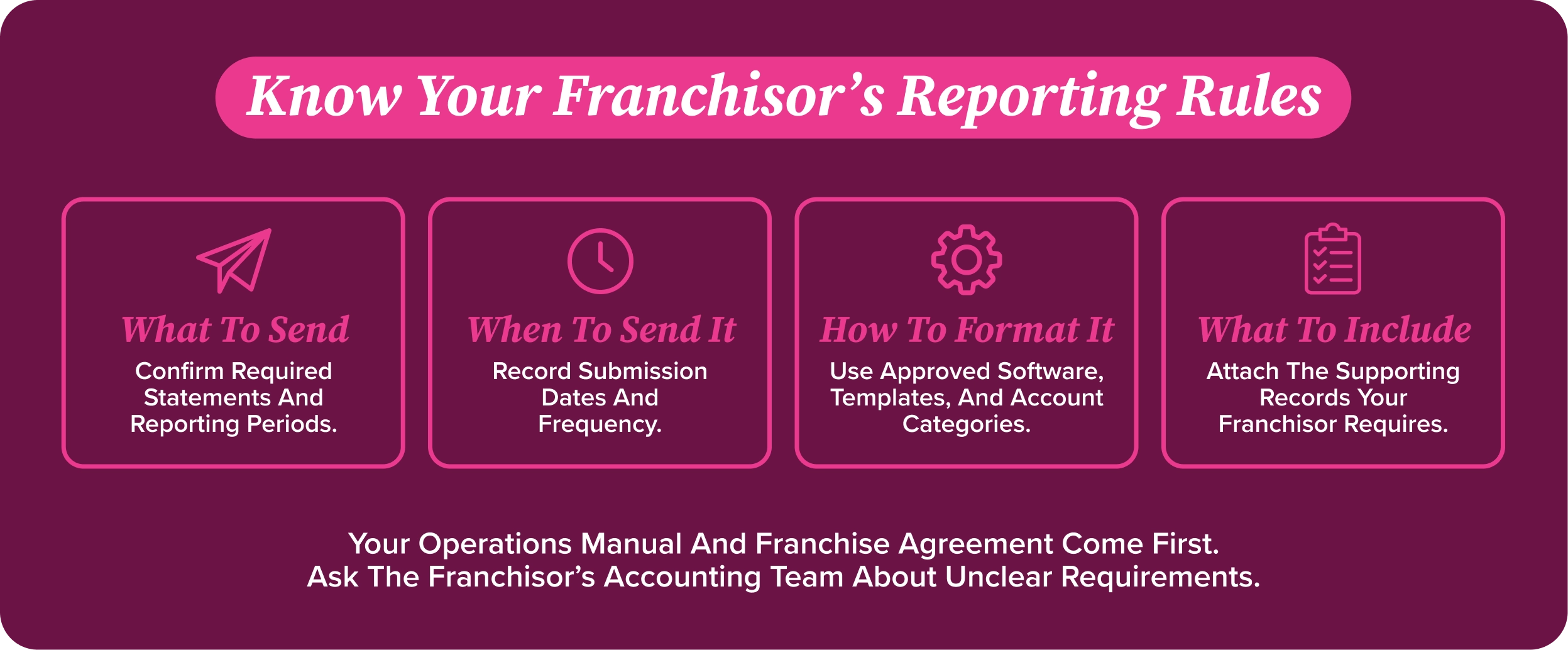
Franchise financial reporting requirements are the accounting rules your franchisor sets for sharing your restaurant’s financial information. They cover which reports you submit, when they’re due, how expenses are categorized, and what supporting documentation you provide. Your franchisor may also require specific accounting software and financial statement templates. The idea is consistency: every location follows the same reporting structure so the franchisor can review financial performance across the network. Start with your franchise operations manual and agreement, then ask the accounting team about anything unclear. Your franchise reporting requirements checklist should reflect those instructions, rather than a generic reporting schedule.
Why Franchise Reporting Compliance Matters
Reporting compliance isn’t just another task to squeeze in after service. Your franchisor needs clear, consistent numbers to understand how locations are performing and where support may be needed. Standardized reports make that review possible, even when restaurants have different sales patterns and operating needs.
For you, the same discipline helps keep financial information organized and easier to review. A reliable P&L can highlight rising costs, while a cash flow statement helps you understand whether cash is available to cover upcoming obligations.
There’s the agreement to consider. Franchisors define consequences for reporting non-compliance, so missed deadlines or incomplete submissions may mean penalties. Following your franchise reporting requirements checklist helps you stay on schedule, maintain supporting records, and keep conversations with your franchisor focused on the business rather than missing paperwork.
Guidelines for Franchisee Financial Reporting (What Franchisors Require)
Franchisors typically set these requirements for every franchisee:
- Provide a detailed standardized chart of accounts and make it mandatory for all franchisees.
- Set deadlines for the submission of required financial reporting, specifying the type and frequency of reports.
- Provide templates for required financial statements to ensure consistency in formatting and content across all franchisees.
- Specify clear guidelines on acceptable accounting practices and include them in the franchise operations manual.
- Regulate the use of accounting software to ensure imported data will integrate with your system.
- Create a designated list of expense categories, restrict franchisees to only the provided categories, and provide examples of how to record expenses.
- Conduct regular audits and reviews of franchisee financial reports to ensure compliance and proactively identify any accounting errors or issues.
- Define consequences for non-compliance with reporting guidelines and include them in the franchise agreement.
The Franchise Reporting Requirements Checklist (For Franchisees)
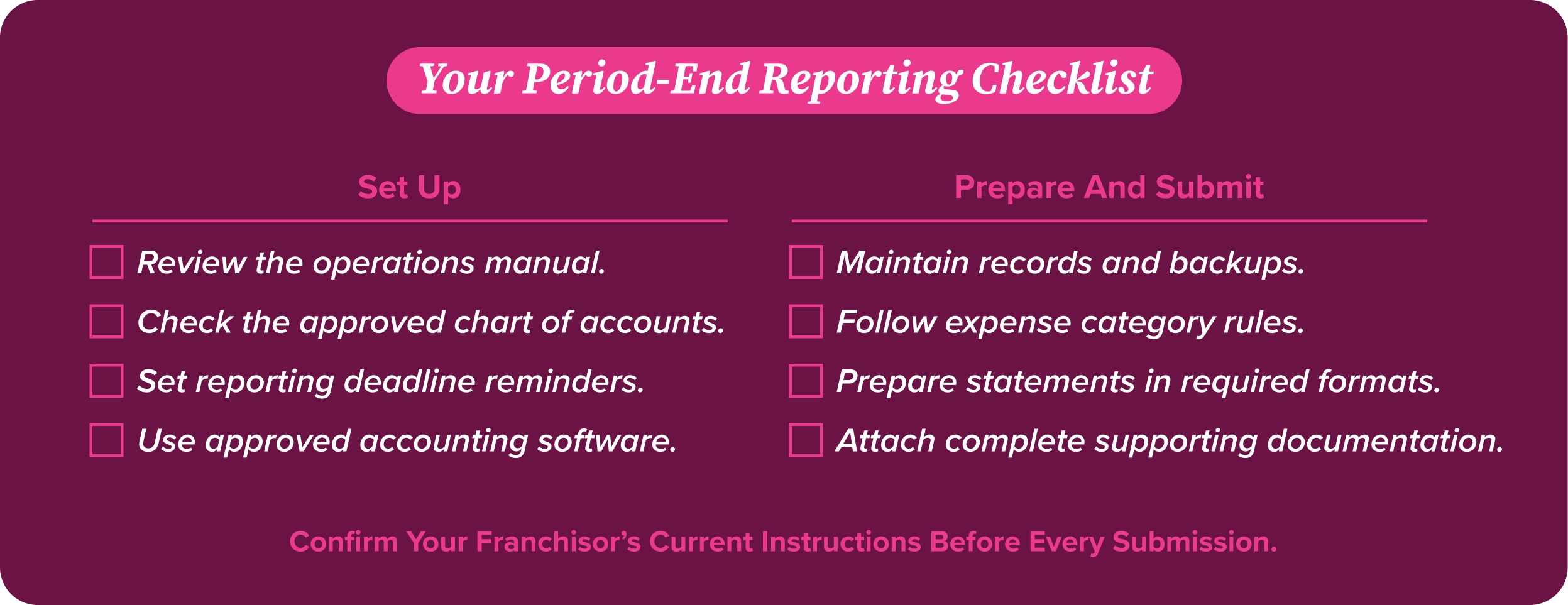
Keep this franchise reporting requirements checklist handy for each reporting period. These steps come directly from our restaurant accounting guide:
- Obtain and review the franchise operations manual, taking note of key deadlines, formatting requirements, and documentation guidelines.
- Learn how to access and review the standardized chart of accounts your franchisor provides.
- Add calendar reminders for all reporting deadlines to ensure timely submissions.
- Use only approved accounting software to avoid any integration errors.
- Maintain detailed records, including backups.
- Follow expense categorization guidelines and ask for clarification when necessary.
- Prepare period-ending financial statements that align with franchisor formatting requirements.
- Provide comprehensive supporting documentation for all financial statements.
Key Metrics Franchisors Want Reported
Start with your franchisor’s reporting instructions, not someone else’s KPI list. Requirements vary, and the guide doesn’t prescribe one mandatory set of metrics for every franchise. It does identify financial information worth reviewing: revenue and sales growth, Cost of Goods Sold (COGS), labor cost percentage, operating expenses, and gross and net profit margins.
Your franchisor may review these figures through your P&L, alongside balance sheets and cash flow statements. Royalty payments, marketing contributions, and relevant compliance payments also need clear tracking and documentation.
Use the requested reporting periods and approved expense categories so those numbers remain consistent. Where budgeting and forecasting are part of the process, compare actual performance with projections and revise as needed. Confirm which metrics, calculations, and supporting records your franchisor expects before you prepare the submission.
Common Franchise Reporting Mistakes to Avoid
A report can have the right numbers and still miss the requirements. Using your own expense categories, changing the statement template, or exporting from unapproved software can leave your submission out of step with the franchisor’s system. Stick with the provided structure, and ask before making changes.
Another mistake is treating supporting documentation as something to gather later. Keep receipts, bank statements, payroll reports, and payment records organized as you go. Your financial statements need a paper trail, including documentation of royalties and marketing contributions.
Don’t leave reconciliation or questions until the deadline, either. A consistent accounting routine gives you time to resolve discrepancies and clarify unfamiliar requirements with the franchisor’s accounting team.
Don’t assume last period’s habits cover every obligation. Check your operations manual, use calendar reminders, and work through your franchise reporting requirements checklist before submitting. Complete, consistent, timely reporting is the goal—not simply getting a file sent.

How to Automate Reporting & Stay Compliant
Even with your franchisor’s specific accounting requirements, you can achieve greater financial control and operational efficiency by adopting a few strategic steps:
- Establish a consistent accounting routine for recording transactions, reconciling receipts, and submitting reports to ensure all your obligations are met on time.
- Use Back Office’s reporting features to automate generating required financial reports for your franchisor, minimizing effort and ensuring timely submissions.
Back Office helps franchisees stay compliant with franchisor reporting by aligning your Chart of Accounts, automating financial reports, and ensuring your submissions always meet formatting and timing standards.
FAQ’s
What financial reports do franchisees have to submit?
Period-ending financial statements that align with franchisor formatting requirements, with comprehensive supporting documentation for all financial statements. Your operations manual specifies exact types, formats, and frequency.
How often are franchise financial reports due?
Franchisors set deadlines for the submission of required financial reporting, specifying the type and frequency of reports – check your operations manual and add calendar reminders.
What happens if you miss franchise reporting deadlines?
Franchisors define consequences for non-compliance with reporting guidelines and include them in the franchise agreement, so late reports can carry penalties.
Do franchisees have to use specific accounting software?
Usually yes – use only approved accounting software to avoid any integration errors.
What is a standardized chart of accounts in franchising?
It’s a mandated account structure the franchisor provides so every location reports the same way; franchisors provide a detailed standardized chart of accounts and make it mandatory for all franchisees.