
Behind every well-run restaurant are the not-so-glamorous systems that keep labor in check, inventory flowing, and finances on track. Operations management in a restaurant connects these moving parts so the business runs smoothly. Having consistent processes around staffing, purchasing, compliance, and performance tracking creates a strong business foundation that supports growth and long-term profitability.
What Is Operations Management in a Restaurant?
Operations management in a restaurant is the foundation that keeps the business running smoothly day to day. It encompasses everything from inventory tracking and staff scheduling to vendor coordination and financial oversight. Strong operations ensure food quality remains consistent, labor costs stay controlled, and service standards are upheld.
In practice, it’s the system operators rely on to turn data into action. It informs what to order, how much to prep, when to schedule staff, and where to adjust in real time. When these elements work together, operators gain better visibility into performance and can make more informed decisions.
Key Objectives of Restaurant Operations Management
At its core, operations management is about driving efficiency and profitability through well-designed systems. Aligning daily activities with clear operational goals reduces friction points, which frees up time to focus on the guest experience.
It also creates a repeatable way to run the business so operators are not constantly reacting in the moment, but instead improving performance over time.
Profitability
Profitability depends on having clear visibility into both costs and revenue, and the ability to act on that insight. Strong operations management equips restaurant operators to monitor performance in real time, reduce waste, and align purchasing with actual demand.
With deeper financial visibility, restaurants can make more confident strategic investments, from upgrading equipment and refining menus to negotiating better supplier terms and optimizing labor models. These decisions not only elevate the guest experience but also drive long-term growth while keeping margins healthy and sustainable.
Efficiency
Clear procedures, organized inventory systems, and well-structured schedules help teams move quickly without sacrificing accuracy. When operations run efficiently, staff can focus more energy on hospitality instead of troubleshooting operational gaps in the moment.
Over time, these efficiencies compound, reducing bottlenecks, improving throughput, and making it easier to scale without adding unnecessary complexity or cost.
Consistency and Customer Satisfaction
Guests expect the same great experience every time they visit, and delivering on that expectation requires strong operational discipline. Clear, standardized systems for training, food preparation, and purchasing ensure consistency in both quality and service, even amid staff turnover or rapid growth.
When operations run smoothly behind the scenes, the guest experience follows. Orders are accurate, service is timely, and every dish meets expectations. That reliability builds trust over time, turning satisfied customers into loyal ones who return again and again.
Core Components of Restaurant Operations Management
Restaurant operations management covers several interconnected areas. Each component plays a role in maintaining the financial health and overall efficiency of the restaurant.
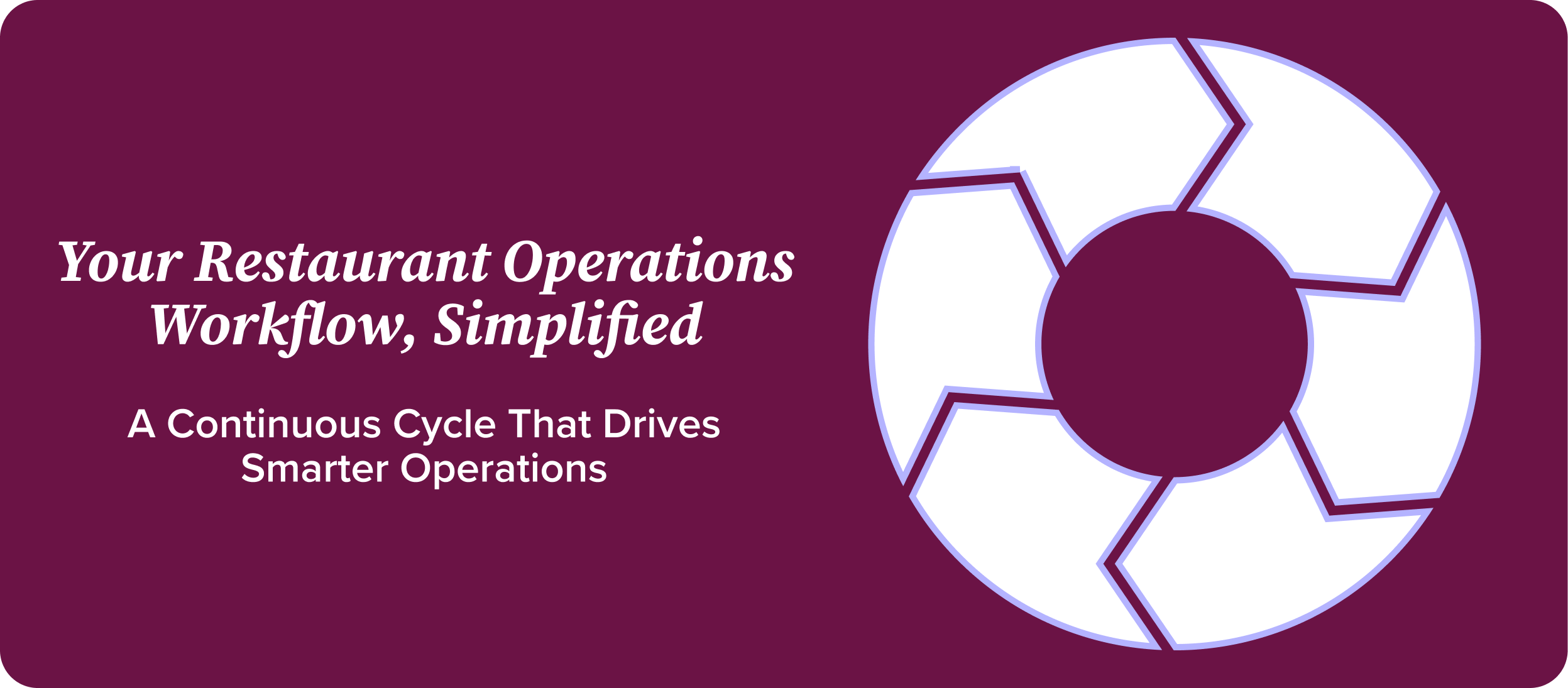
Together, these components form a continuous operational workflow that operators can actively manage and improve: forecast demand → order inventory → receive and verify → track usage → report on performance → adjust decisions.
Inventory Management and Procurement
Inventory management ensures restaurants maintain the right ingredients without overstocking or running short. Accurate inventory tracking allows operators to understand usage patterns, reduce spoilage, and plan purchases more strategically. Procurement systems that align ordering with real demand help stabilize food costs and support consistent menu execution.
This is where the workflow begins, using sales and usage data to forecast demand and place more precise orders.
Food Cost and Waste Control
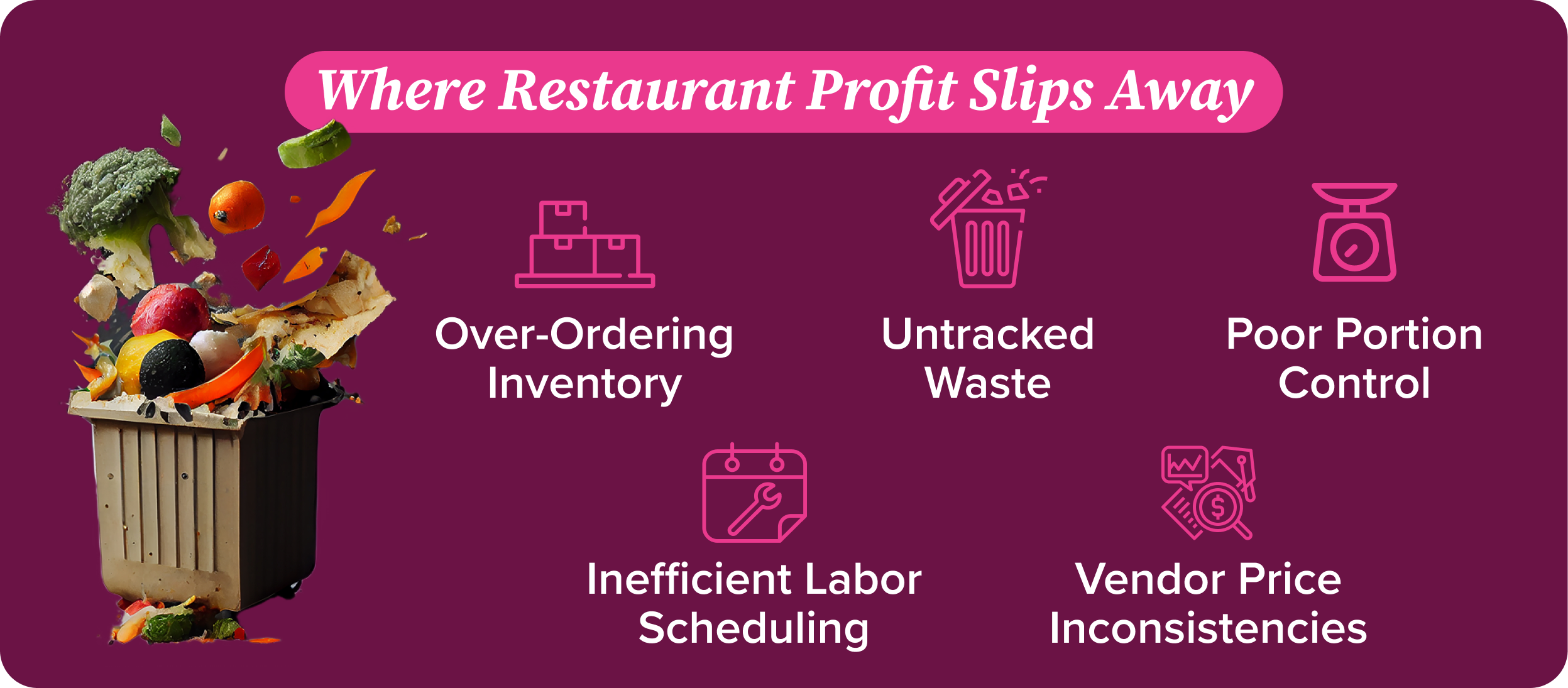
Food cost control requires close monitoring of ingredient usage, portion sizes, and waste levels. When operators track food costs consistently, they gain insight into where margins may be slipping. Identifying waste patterns and adjusting purchasing or preparation processes helps restaurants protect profitability. Comparing what was ordered, used, and sold helps close the loop and identify where adjustments are needed.
Staff Scheduling, Hiring, and Labor Management
Labor is one of the largest operating expenses for most restaurants. Effective operations management includes maintaining clear hiring processes and scheduling staff based on demand. Balanced scheduling ensures restaurants are adequately staffed while avoiding unnecessary labor costs during slower periods. Applying a forecast-driven approach to labor helps ensure staffing aligns with expected demand rather than guesswork.
Health, Safety, and Compliance Management
Restaurants must maintain strict food safety practices and health and safety compliance, which protects both guests and staff. Clear operational systems help teams follow procedures consistently while reducing the risk of violations or food safety incidents. Consistent processes at each stage of operations help maintain compliance without slowing teams down.
Vendor Management and Purchasing Controls
Vendor relationships play a significant role in restaurant operations. Managing suppliers carefully helps ensure reliable delivery schedules, consistent product quality, and stable pricing. Purchasing controls also help operators track order history and avoid unnecessary spending or duplicate purchases. Over time, better visibility into ordering patterns can strengthen vendor negotiations and improve purchasing efficiency.
How to Improve Operations Management in a Restaurant
Improving operations management in a restaurant starts with creating visibility into daily performance. Operators can reduce inefficiencies and make more informed decisions by combining data, structured workflows, and the right technology tools. The goal is to continuously refine the operational cycle, using insights from each stage to improve the next decision, whether that involves ordering, staffing, or menu adjustments.
Use Data to Monitor Restaurant Performance
Data allows operators to move beyond intuition and evaluate performance objectively. Sales trends, labor efficiency, and inventory usage can reveal operational patterns that might otherwise go unnoticed. Regularly reviewing performance metrics helps restaurant leaders identify opportunities to improve margins and streamline workflows. This is the point where reporting turns into action, helping operators decide what to change next.
Optimize Inventory and Purchasing Decisions
Smart purchasing decisions begin with accurate inventory tracking. When operators understand product usage and demand patterns, they can place orders more strategically. Optimizing purchasing helps reduce spoilage, prevent stock shortages, and keep food costs aligned with revenue. Better purchasing decisions directly improve the forecasting and ordering stages of the workflow.
Control Labor and Scheduling Costs
Effective labor management balances staffing levels with guest demand. Reviewing historical sales data can help operators predict peak hours and adjust schedules accordingly. This approach allows restaurants to maintain service quality while avoiding unnecessary payroll expenses. Aligning labor with demand improves efficiency across every shift, not just during peak periods.
Automate Back-Office Tasks to Reduce Manual Errors
Many operational tasks such as reporting, payroll tracking, and inventory monitoring can be automated through restaurant management software. Automation reduces manual errors while giving operators faster access to the data they need. This way, employees have more time to focus on service and execution.
Automation also helps keep the workflow moving in real time by reducing delays between tracking, reporting, and decision-making.
Key Metrics to Track for Effective Restaurant Operations Management
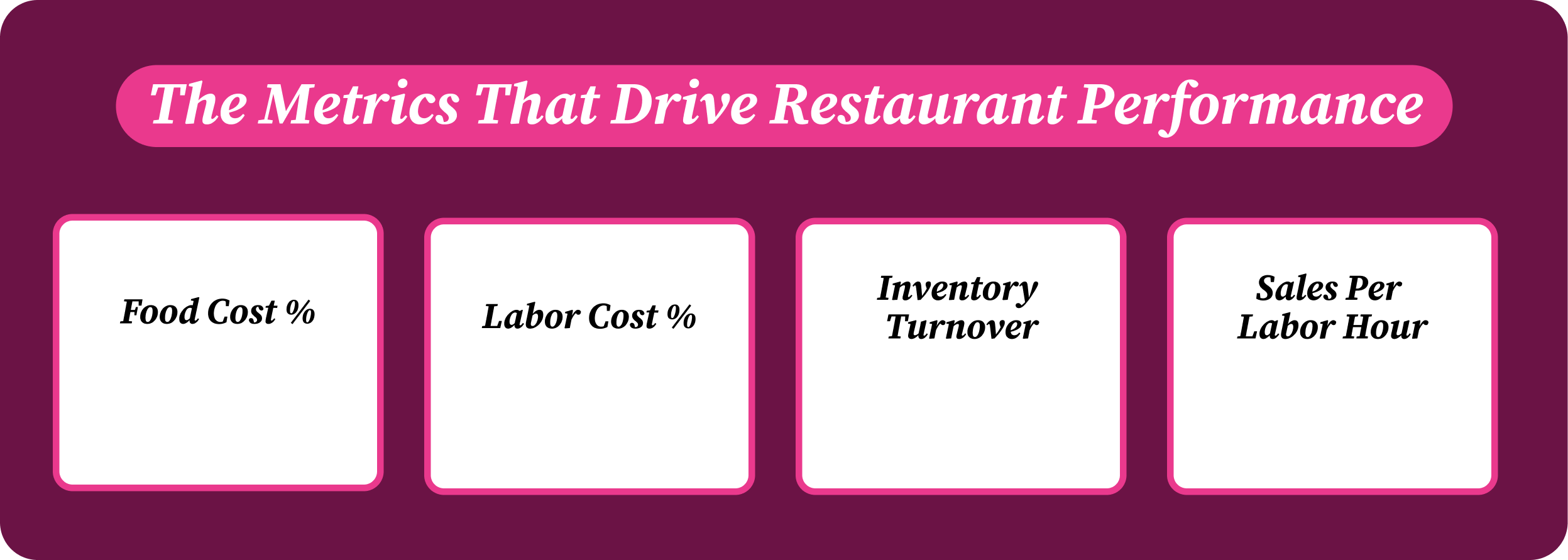
Tracking performance metrics helps restaurant leaders understand how operational decisions affect financial aspects of the business. These indicators provide insight into efficiency, cost control, and overall performance. Each metric ties back to a specific stage in the workflow, helping operators identify where to adjust.
Food Cost Percentage
Food cost percentage measures how much of a restaurant’s revenue is spent on ingredients. Monitoring this metric helps operators identify shifts in purchasing costs, portion control issues, or waste patterns. Keeping food costs within target ranges is essential for maintaining healthy margins.
Labor Cost Percentage
Labor cost percentage reflects the portion of revenue spent on wages and staffing. By tracking this metric regularly, operators can evaluate scheduling efficiency and adjust staffing levels when necessary. Balanced labor costs help ensure teams remain productive without overspending on payroll.
Inventory Turnover Ratio
Inventory turnover ratio measures how frequently stock is used and replenished over a specific period. A healthy turnover rate indicates that ingredients are moving efficiently through the kitchen without sitting unused. Monitoring this metric helps reduce waste and improve purchasing accuracy.
Sales Per Labor Hour
Sales per labor hour evaluates how effectively labor resources generate revenue. By comparing total sales to the number of labor hours worked, operators can assess workforce productivity. This metric helps restaurants refine scheduling decisions and maintain operational efficiency.
The Role of Accounting and Back-Office Systems in Restaurant Operations
Accounting and back-office systems centralize operational data, helping restaurants track expenses, manage payroll and purchasing, and monitor financial performance more efficiently.
With this visibility, restaurant leaders can see how daily decisions impact profitability, reduce manual reporting errors, and spot trends faster, which enables proactive responses before margins are affected. Over time, these habits drive stronger financial results and a more consistent guest experience.
Need help optimizing your back-office systems? Reach out to the Back Office team.