
A full dining room can hide an expensive problem. Guests are waiting, servers are stretched, and the extra sales aren’t translating into better margins. Restaurant front of house management connects those moving parts: people, service, scheduling, and the numbers behind each shift. For independent operators and multi-unit teams, the goal isn’t simply faster service. It’s consistent hospitality that makes financial sense. This guide breaks down the roles, routines, and performance measures that help you run a stronger floor in 2026.
What Is Front of House (FOH) in a Restaurant?
The restaurant front of house includes the guest-facing spaces, employees, and activities that shape the dining experience. Think entrance, host stand, dining room, bar, and checkout area. In some concepts, it also includes pickup counters and the team handling off-premise orders.
FOH employees welcome guests, explain menus, take orders, deliver food, manage payments, and resolve service issues. Their work turns kitchen output into an experience people want to repeat.
Good restaurant front of house management also gives that work structure. Clear responsibilities, realistic staffing, and reliable communication help employees deliver hospitality without leaving service quality or labor spending to chance.
Front of House vs. Back of House: Key Differences
Front of house focuses on guests and service. Back of house focuses on food preparation, production, storage, and kitchen sanitation. Servers, hosts, and bartenders typically work FOH; cooks, prep teams, and dishwashers typically work BOH.
The distinction matters for scheduling, training, and cost reporting, but the teams share the same outcome. A perfectly cooked meal loses value if it sits waiting for pickup. Friendly service cannot fix an inaccurate ticket that never reaches the kitchen.
Set shared expectations for order accuracy, pacing, allergy communication, and ticket handoffs. Track labor by department where your reporting allows it, then review total restaurant performance together. Separate responsibilities should create accountability, not competing teams or excuses when something goes wrong across every service period.
Key Front of House Roles and Responsibilities
General Manager
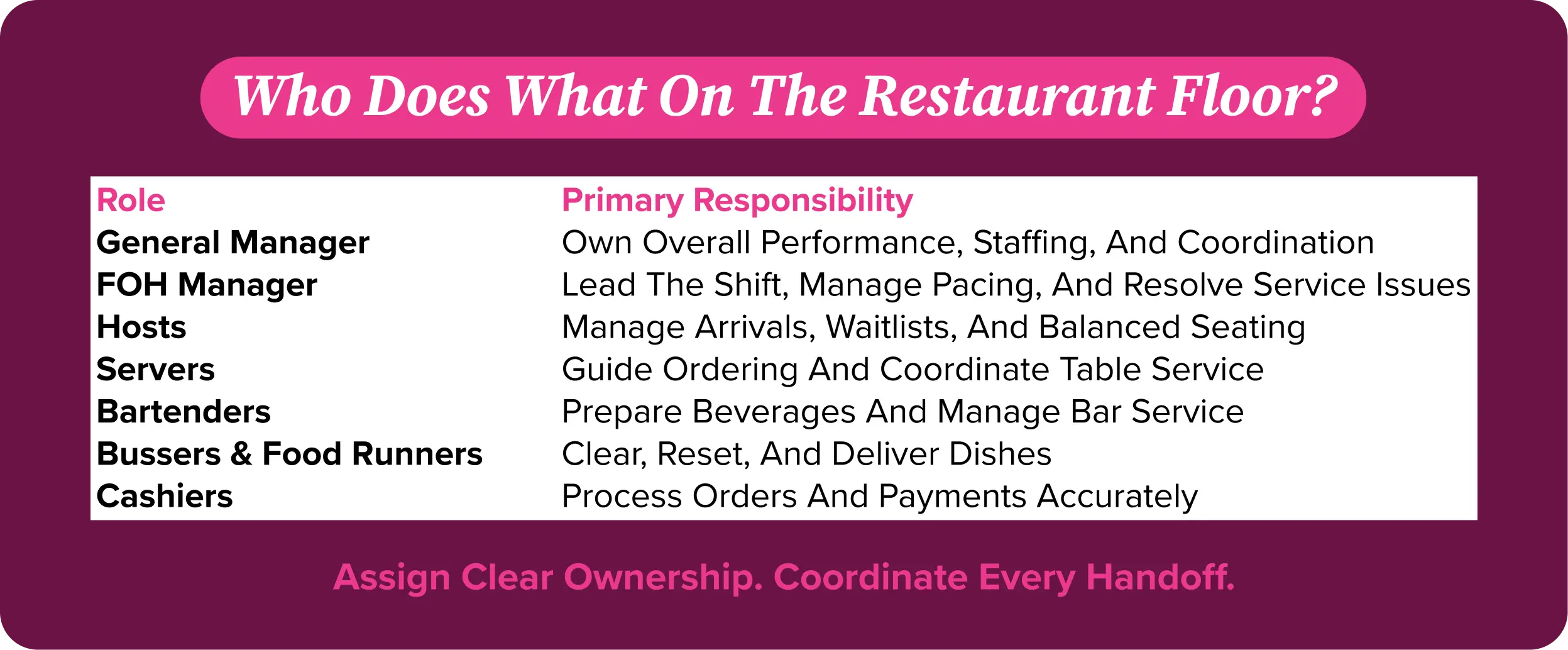
The general manager owns overall restaurant performance, including service, staffing, financial results, and coordination between departments. They set priorities, coach managers, and make sure the guest experience supports the business plan. In smaller restaurants, they may also lead the floor.
FOH Manager
The FOH manager runs guest-facing execution: sections, breaks, pacing, service recovery, and team readiness. They translate standards into decisions during a busy shift. They also review service problems and labor results afterward, so tomorrow’s shift benefits from today’s lessons.
Host or Hostess
Hosts manage first impressions, reservations, waitlists, and seating. Their decisions affect server workload and kitchen pacing, not just empty tables. Accurate wait estimates and balanced seating help prevent a promising start from turning into a frustrating meal for everyone involved.
Servers
Servers guide menu choices, record accurate orders, coordinate timing, and monitor guest needs. They should understand ingredients, modifiers, and escalation procedures for allergy questions. Their job includes relevant recommendations, not pressure selling, plus accurate checks and a thoughtful farewell.
Bartenders
Bartenders consistently prepare beverages, serve bar guests, manage their station, and follow applicable alcohol service requirements. Consistent recipes, accurate ringing, and portion control protect margins. They also communicate beverage delays before those delays become a dining room problem or guest complaint.
Bussers and Food Runners
Bussers clear and reset tables; food runners move completed dishes to the right guests. These support roles keep servers available and reduce bottlenecks. Clear responsibilities for clearing, resetting, and delivery prevent duplicated effort and unattended tables during the busiest periods.
Cashiers
Cashiers accurately process orders and payments, verify totals, and follow cash-handling procedures. In counter-service concepts, they also guide ordering and coordinate pickup. Accuracy matters as much as speed: mistakes create refunds, reconciliation work, and avoidable friction at the end of service.
Essential Front of House Restaurant Operations
Guest Greeting and Seating
Acknowledge arriving guests promptly, even when you’re helping someone else. Confirm party size, reservation details, and accessibility needs without making assumptions. Seat according to section capacity and kitchen readiness, not a rigid rotation alone. Keep wait estimates honest, and update guests when conditions change rather than letting uncertainty build.
Order Taking and Table Service
Set expectations for menu knowledge, order confirmation, and checkbacks. Enter modifiers correctly and follow your documented allergy process; never guess about ingredients or cross-contact. Pace courses with the kitchen. Watch the table, too: guests should not need to flag someone down for a missing item, refill, or delayed course.
Payment and Checkout
Present an accurate bill and make the next step obvious. Train employees on split checks, approved discounts, refunds, and payment security. Follow your payment provider’s procedures and applicable PCI DSS requirements. Checkout should feel easy, but speed never justifies sharing credentials or writing down sensitive card details for later.
Handling Guest Complaints
Listen without interrupting, acknowledge the issue, and agree on a practical next step. Give staff clear limits for service recovery and a manager escalation path. Record recurring problems by cause, not just compensation amount. A refund may close the check, but fixing the underlying issue protects the next visit.
Table Turnover
Coordinate clearing, resetting, and seating so a finished table doesn’t sit unavailable. Distinguish the dining time guests choose from delays your team can control. Faster turns should come from removing friction, not making people feel rushed. Review unusually long waits alongside table availability to spot handoff problems between employees.
Communication Between FOH and BOH
Use one agreed process for unavailable items, allergy alerts, course timing, and order changes. Identify who owns each message and how receipt is confirmed. During busy periods, a designated manager or expediter can prevent conflicting requests. Brief both teams before service, then review repeated breakdowns together after the rush. That consistency matters on every shift.
How to Manage Front of House Operations
Staffing and Scheduling
Build schedules around expected demand by daypart, role, and service channel. Consider reservations, local events, and recent sales patterns. Match experience to difficult shifts, and plan breaks and coverage. Check local scheduling rules before changing shifts. Across locations, use comparable assumptions but allow for each restaurant’s actual demand.
Training and Service Standards
Turn expectations into teachable actions: greeting, order confirmation, checkbacks, and payment handling. Pair new hires with capable trainers and verify skills before assigning independent sections. Explain why each standard matters. Employees follow procedures more consistently when they understand the guest experience and financial consequences behind them.
Floor Plan and Guest Flow
Walk the room before service. Look for blocked paths, awkward pickup areas, and sections that overload one server. Keep accessibility requirements in view. Separate delivery pickup traffic where feasible. A useful floor plan supports movement between hosts, servers, runners, and the kitchen without creating unnecessary steps or congestion.
Shift Management
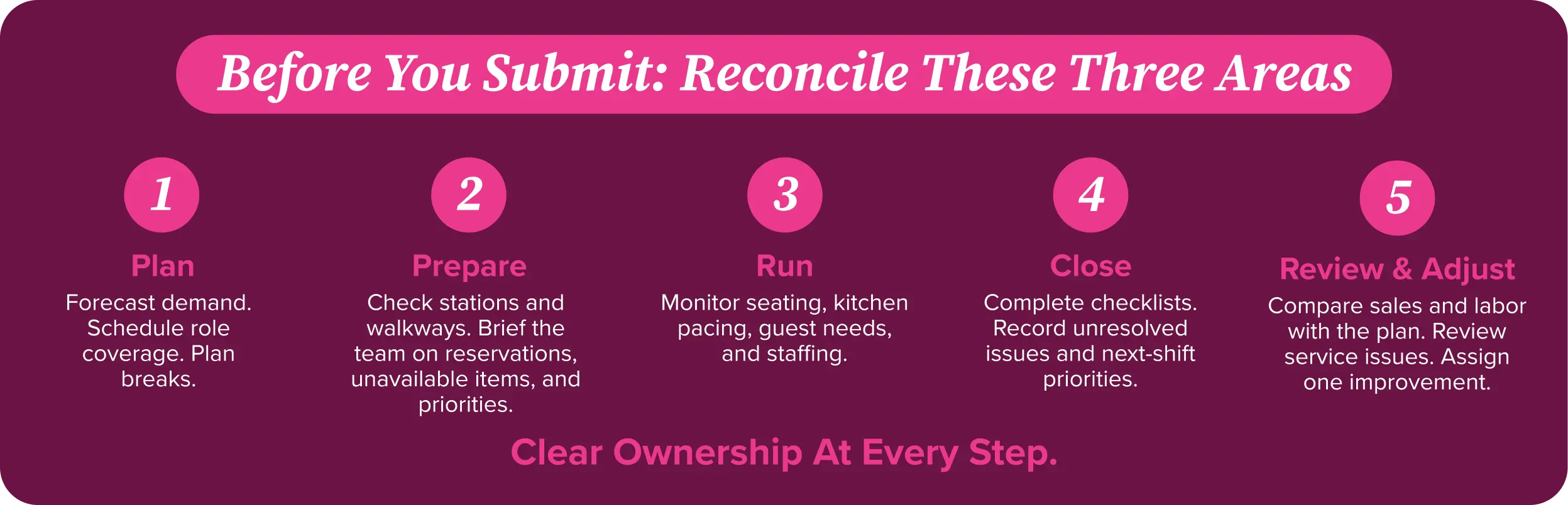
Start with a short briefing covering reservations, staffing, unavailable items, and anticipated pressure points. Assign decision makers for seating, complaints, and kitchen coordination. Watch actual demand against the plan throughout service. Adjust assignments and breaks thoughtfully rather than waiting until overtime or guest frustration makes the decision for you.
Opening and Closing Procedures
Use role-based checklists for station readiness, cleanliness, equipment checks, cash controls, and handoffs. Assign ownership and confirm completion. Closing should capture unresolved guest issues, maintenance needs, and next-day priorities. Managers should review exceptions, not merely collect signatures. Reliable routines reduce surprises when the next team walks through the door. Strong restaurant front of house routines keep those details visible.
How Front of House Performance Affects Your Bottom Line
Labor Cost as a Percentage of Sales
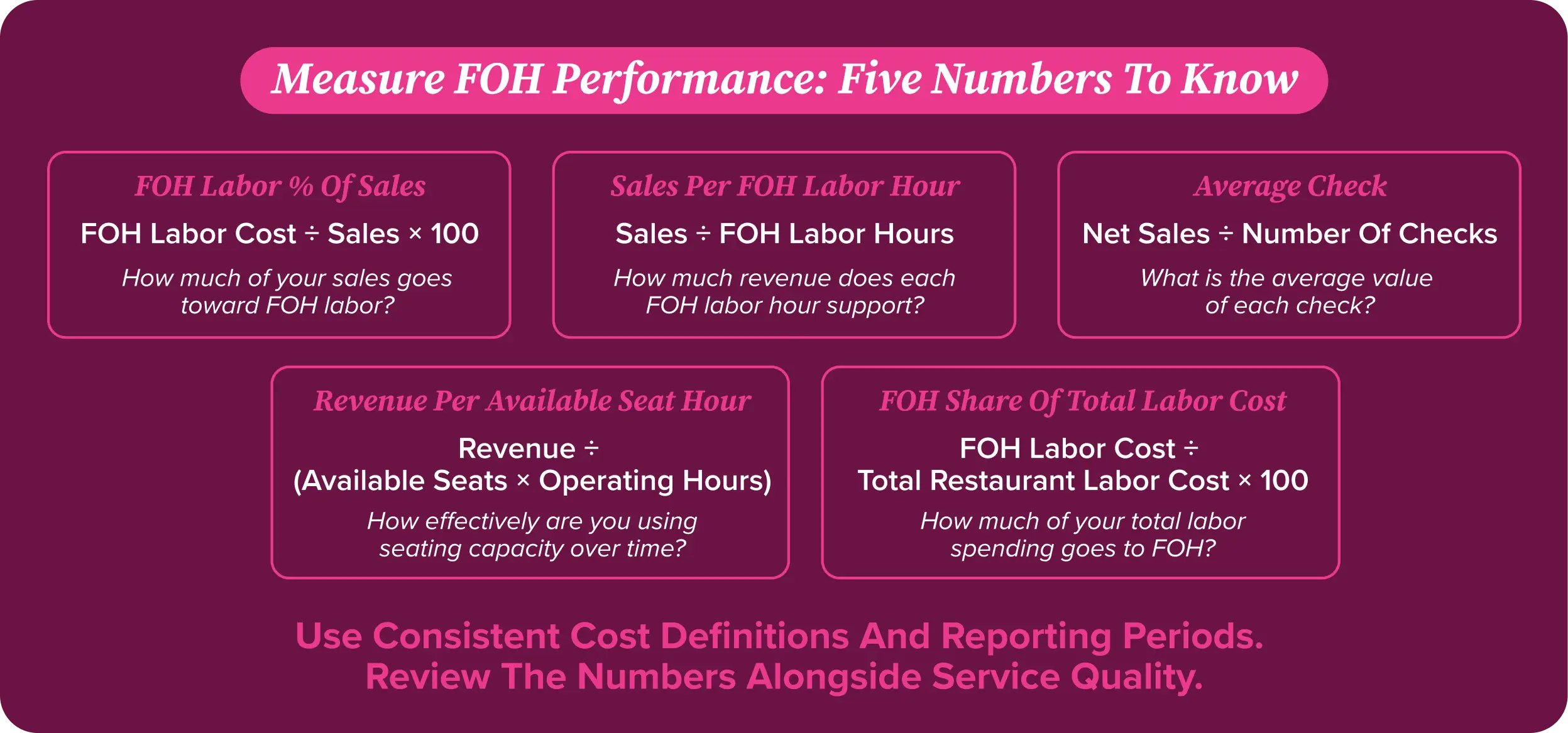
Calculate FOH labor percentage as FOH labor cost divided by sales, multiplied by 100. Define included costs consistently, such as wages, employer payroll taxes, and benefits. Review the same periods and sales basis. A lower percentage isn’t automatically better if understaffing causes lost orders, complaints, or turnover.
Tipped Wages and Payroll Compliance
Track hours, tips, overtime, and tip-pool eligibility accurately. U.S. federal, state, and local rules can differ; use the applicable requirements rather than assuming a national cash wage fits every location. Review current U.S. Department of Labor tipped-employee guidance and jurisdiction-specific rules with your payroll adviser before applying tip credits.
Table Turnover and Revenue per Seat
Table turns measure how often tables are used during a defined period. Revenue per available seat hour adds a time dimension: divide relevant revenue by available seats multiplied by operating hours. Compare similar dayparts. Shorter visits aren’t a win if rushed guests spend less or stop coming back.
Average Check Size
Choose a consistent definition, such as net sales per guest or per check, and label it clearly. Monitor changes alongside discounts, menu pricing, and product mix. Coach teams on useful recommendations, like a relevant side or beverage pairing, rather than treating every guest interaction as an upselling opportunity.
Sales per Labor Hour
Divide sales by labor hours for the same period. Specify whether you’re measuring FOH hours or total restaurant hours. Review productivity alongside service quality and role coverage. Rising sales per labor hour can signal better deployment, but it can also mask an exhausted team carrying an unsustainable workload. Restaurant front of house results need that context every week.
Front of House Management Best Practices for 2026
Use Data to Staff Smarter, Not Harder
For 2026, make demand-based scheduling a working routine, not an occasional spreadsheet exercise. Compare forecasts with actual sales and hours after each week. Where forecasting tools are available, test their recommendations against local knowledge. Weather, events, and a large party can change what a normal Tuesday actually needs.
Standardize Service Procedures
Document the essentials without scripting every conversation. Guests should receive consistent order accuracy, allergy escalation, and payment handling across shifts and locations. Keep procedures accessible, assign an owner, and update them when problems recur. A standard only helps if the team can explain it and use it during service.
Cross-Train FOH Employees
Build coverage for predictable pressure points, such as hosting, running food, and processing pickup orders. Confirm competency before moving employees into unfamiliar tasks. Check age restrictions, alcohol-service requirements, pay rules, and tip-pool implications when responsibilities change. Cross-training should create useful flexibility, not quietly turn every position into two jobs.
Improve FOH and BOH Communication
Agree on a single source for menu availability and order updates. If you use kitchen displays or handheld ordering, check that modifiers and allergy messages arrive clearly. Technology doesn’t replace acknowledgment. Test the handoff, identify an escalation route, and review failures with both teams instead of assigning blame afterward.
Track Service and Sales Performance
Use a small scorecard: labor percentage, sales per labor hour, average check, and selected service measures. Review results by shift and location, then choose one fix with a named owner. Avoid ranking restaurants without context. Different service models, opening hours, and guest mixes can make identical targets misleading. Restaurant front of house comparisons need context.
Key Takeaways
Restaurant front-of-house management works best when hospitality and financial discipline support each other. Define responsibilities, train for real service situations, and give every shift a clear operating plan.
Use labor percentage, sales per labor hour, average check, and seat productivity to understand results, not to chase isolated targets. Pair those numbers with guest feedback and service observations.
For independent restaurants, consistent routines reduce daily firefighting. For multi-unit operators, shared definitions make comparisons more useful. Either way, better performance starts with reliable information, clear ownership, and small improvements your team can repeat on the next shift and beyond it.
Ready to connect restaurant front of house decisions with your financial priorities? Click here to contact Back Office or request a demo to discuss your restaurant’s labor reporting and performance management needs.
FAQs
What is the difference between front of house and back of house?
Front of house manages guest-facing service, including seating, ordering, dining, and payment. Back of house manages food preparation, production, and kitchen support. Both teams share responsibility for accurate orders, safe food handling, and timely service. Clear handoffs connect their work and prevent guests from experiencing the gaps between departments.
Who manages the front of house in a restaurant?
Usually, a FOH manager or restaurant manager leads the floor, reporting to the general manager or owner. Smaller restaurants may combine these roles. Multi-unit groups often set standards centrally while location managers handle daily staffing, service recovery, coaching, and execution. Each shift still needs a clearly designated decision maker.
What is the main front of house positions?
The main positions are general manager, FOH manager, host, server, bartender, busser, food runner, and cashier. The exact mix depends on your concept. A counter-service restaurant may combine ordering and payment roles, while full-service dining typically needs more specialized coverage for seating, table service, beverages, and dining room support.
What percentage of restaurant labor cost is in front of the house?
There isn’t one reliable percentage for every restaurant. Concept, service model, wage rules, tipping practices, and role definitions change the split. Calculate FOH’s share by dividing FOH labor cost by total restaurant labor cost. Don’t confuse that figure with FOH labor cost as a percentage of sales; they’re different measures.
How do you improve front of house efficiency?
Start with the biggest recurring delay, then fix the process behind it. Match staffing to demand, clarify sections and handoffs, train employees, and simplify checkout. Track service outcomes alongside labor productivity. Review one change at a time so you can see whether it improves both guest experience and operating results at your restaurant.