

A busy dinner rush will tell you pretty quickly where training falls short. Tickets pile up, a new server needs help, and your manager is answering the same question for the fifth time. Restaurant training gives people a clearer path from knowing what to do to doing it well under pressure. Done consistently, it can help protect your margins, support your team, and make the guest experience more reliable. Here’s how to build a program that works on real shifts.
Why Restaurant Training Directly Impacts Profitability
Training takes paid time. So does fixing preventable mistakes. The goal is to spend that time once, then reinforce the habits that keep daily operations moving.
Improve Employee Productivity
Employees work more efficiently when they understand station setup, priorities, and handoffs. Teach the sequence behind each task, not just the task itself. Fewer interruptions give managers more time to run the shift.
Maintain Consistent Service Standards
Define what good service looks like: greeting guests, checking orders, handling delays, and closing checks. Shared expectations help the Tuesday lunch shift deliver the same fundamentals as Saturday dinner.
Reduce Employee Turnover
Being thrown onto the floor without support is frustrating. Clear expectations, practice, and useful feedback can help new hires feel capable. Training will not solve every retention problem, but confusion rarely helps.
Control Labor Costs
A trained team can spend less time correcting orders or waiting for direction. Use demand and demonstrated skills to plan coverage. Better training should improve execution, not justify unsafe staffing cuts.
Improve Guest Satisfaction
Guests notice accurate orders, informed recommendations, and calm problem-solving. Teach employees when to resolve an issue themselves and when to involve a manager. That clarity can prevent small problems from becoming expensive complaints.
Core Areas of a Restaurant Training Program
Training needs to prepare people for an actual shift—not just show them where everything is and have them sign a checklist. Before someone works on their own, they should know what’s expected, how to handle the usual problems, and when to ask for help.
Everyone needs the basics. From there, training should focus on the job they’ll be doing. These seven areas are a good place to start.
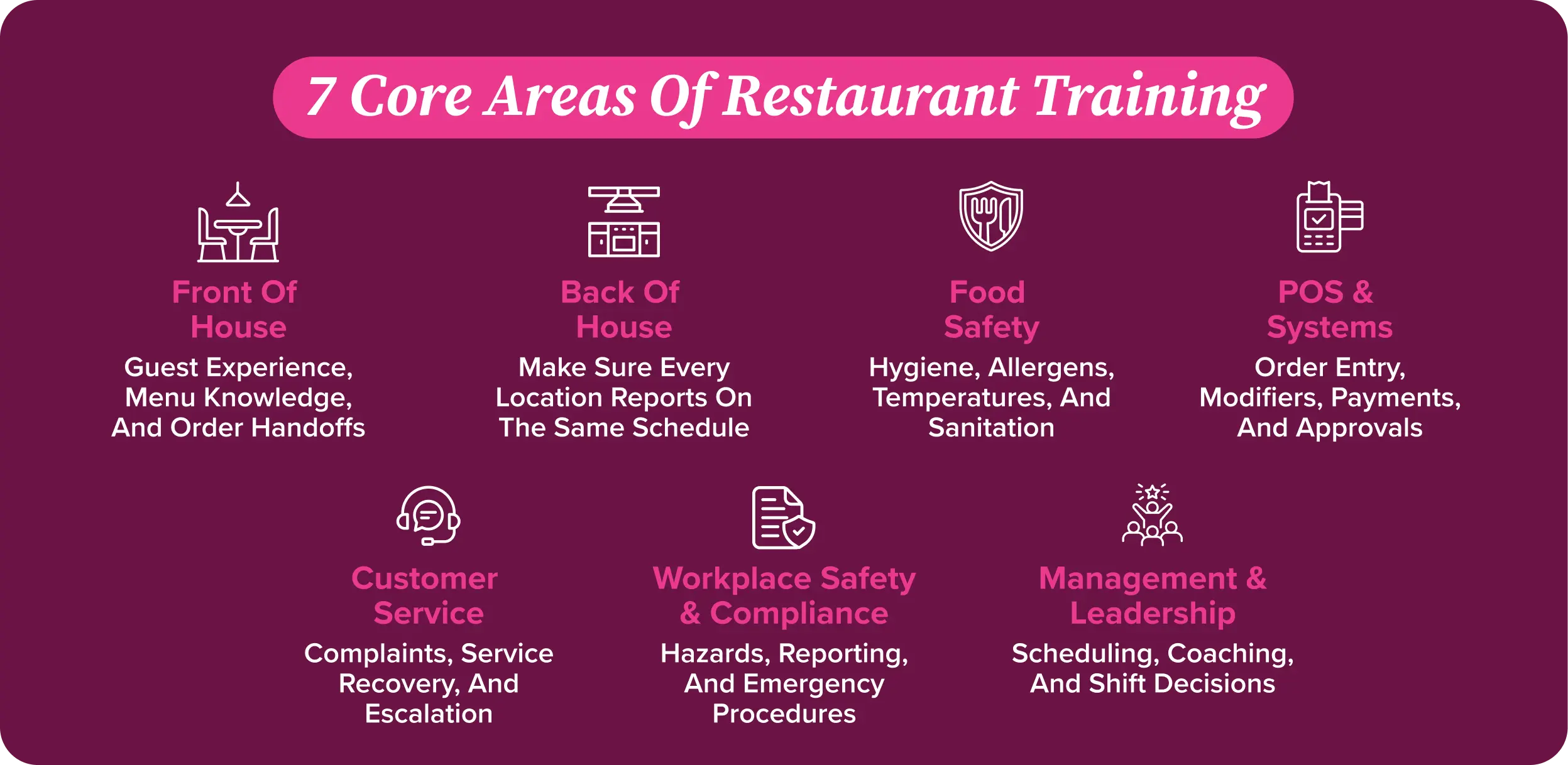
Front of House Training
Walk new hires through the guest experience, from taking a reservation to closing out the check. Cover seating, menu questions, allergies, pacing, and payments. Have servers practice telling a table that an item has sold out and passing special requests to the kitchen. If you offer takeout or delivery, show them how to check and hand off those orders, too.
Back of House Training
Show people how you want the work done, then watch them do it. That includes recipes, portions, prep, labeling, storage, equipment, and closing down a station. Walk through how tickets move during service and who checks food before it goes out. Make it clear when to call out a shortage—while there’s still time to do something about it.
Food Safety and Sanitation Training
Don’t assume someone knows your procedures because they’ve worked in a kitchen before. Go over handwashing, illness reporting, allergens, cross-contamination, and food temperatures. Have employees use the thermometers and demonstrate how to mix and use cleaning products. Base the training on the food safety requirements for your location.
POS and Systems Training
Give staff time to work through the POS before they’re taking orders in a rush. Let them practice modifiers, split checks, refunds, and sending orders to the right place. Explain what they can fix themselves and what needs a manager. Use training mode where available so practice doesn’t turn into an order in the kitchen or a charge on someone’s card.
Customer Service Training
“Take care of the guest” leaves a lot open to interpretation. Talk through what staff should do when a meal is late, an order is wrong, or a guest is upset. Practice listening, checking what happened, and explaining the next step. Be clear about who can offer a replacement, comp an item, or approve a refund.
Compliance and Workplace Safety Training
Cover workplace policies and the hazards people may run into on shift, including slippery floors, hot equipment, and sharp tools. Show employees how to report an injury or unsafe condition and what to do in an emergency. Explain harassment reporting procedures, too. Everyone should know who to contact, including when their usual manager isn’t there.
Management and Leadership Training
Being good on a station doesn’t automatically make someone ready to manage a shift. New managers need help with scheduling, labor, coaching, and documenting concerns. Give them practice assigning work, explaining priorities, and addressing problems directly. They also need to know when to step in and when to let an employee work through something with support.
How to Build a Restaurant Training Program
Start small enough to maintain. A clear checklist and a reliable trainer are more useful than a huge manual nobody opens. Build the program around observable skills, then improve it as you learn where employees struggle. Keep the system practical for every shift.
Identify Training Needs by Role
List the tasks each position must perform independently. Ask current employees where mistakes happen and review complaints, waste, and corrections. Separate essential first-shift knowledge from skills that can wait until the employee has more experience.
Create Standardized Training Materials
Write short procedures with photos, recipes, and examples where useful. Keep one current version that staff can access easily. Assign someone to update materials whenever menus, equipment, or workflows change. Retire old copies so conflicting instructions do not circulate.
Set Training Goals and Expectations
Replace vague goals like “learn the register” with observable outcomes. For example, a cashier should correctly enter a modified order and explain when a manager must approve a refund. Tell employees how those skills will be checked.
Assign Trainers and Managers
Choose trainers who follow procedures and explain them patiently. Your fastest employee is not always your best teacher. Give trainers enough scheduled time to demonstrate, supervise practice, and provide feedback without abandoning their own responsibilities.
Establish Training Timelines
Set milestones by role, shift exposure, and experience. Include quieter practice periods before demanding services. Allow extra practice when needed rather than treating a date on the calendar as proof that someone is ready for independent work.
Document Training Completion
Record the skill, training date, trainer, and assessment result. Note any follow-up practice needed. A signature shows that a conversation happened; an observed demonstration gives better evidence that the employee can actually do the work.
Building a Restaurant Onboarding Checklist
A new hire shouldn’t have to guess what to do next or which manager to believe. A useful onboarding checklist gives them a clear starting point: what their job covers, how we do things here, and who to go to when they get stuck.
The checklist is there to track training, not to get every box checked as quickly as possible. Leave room for questions, and make sure your managers and trainers are teaching the same procedures. If one person says one thing and the next person says something different, sort that out before it becomes the new hire’s problem.
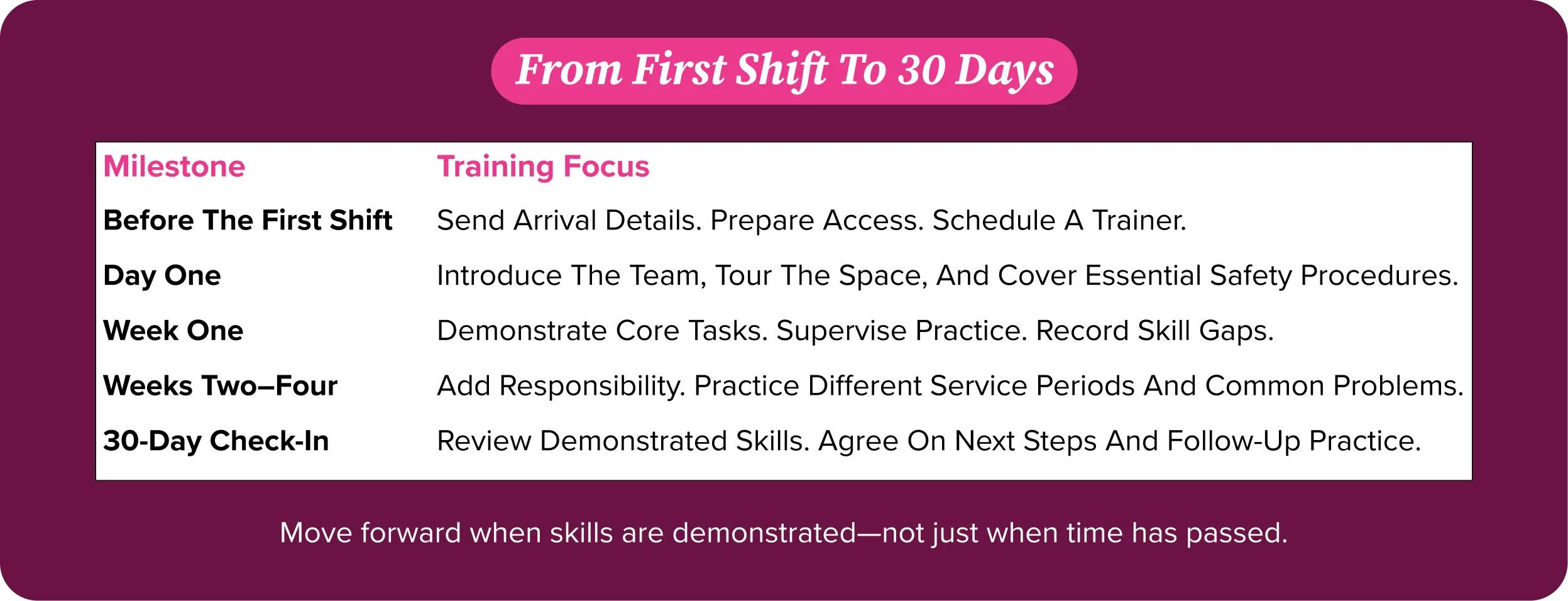
Before Their First Shift
Send the schedule and arrival details ahead of time. Be specific about what to wear, what paperwork to bring, and who to ask for when they walk in. Check any required certifications and discuss accommodations that need to be in place before they start.
Have their system access ready and put a trainer on the schedule. Don’t leave that assignment until they’re standing at the host stand waiting for someone to help.
Day One: Show Them Around
Start with a walk through the restaurant and a few introductions. Show them where to put their things, how to clock in, how breaks work, and who to tell if they’re running late or need to report a problem.
Point out the emergency exits and safety equipment. Before they handle food, cover handwashing, basic hygiene, and when illness needs to be reported. Keep the rest of the shift manageable. They don’t need to learn the whole restaurant in one afternoon.
Week One: Teach It, Then Watch Them Do It
Demonstrate the basics of their role, then give them time to practice while someone watches. Check how they wash their hands, store food, clean their area, and handle the tasks they’ll repeat every shift.
Ask them to talk you through what they’re doing. You’ll catch more that way than by asking, “Does that make sense?” If something is wrong, explain it and have them try again. Note anything that needs another demonstration so the next trainer knows where to pick up.
Weeks Two Through Four: Build Up the Work
Add responsibility when they can handle the work consistently. Have them work through different service periods when possible, including a busy rush and the quieter work that comes before or after it. Talk through common problems, too—not just how things go when everything runs smoothly.
Shadowing helps, but they also need a turn doing the job. Let them take the lead on tasks they’ve practiced, with a trainer close enough to step in. If they’re struggling, narrow the assignment and work on the part that’s giving them trouble.
At 30 Days: Sit Down and Check In
Review the checklist together. What can they do on their own? Where do they still need help? Ask what feels unclear and whether they’ve been getting consistent direction.
Agree on the next few things to work on and set a date to check back. Thirty days is a good time for a conversation, not an automatic sign-off. Give them more responsibility because they’ve shown they’re ready—not just because a month has passed.
Training Methods That Work in Restaurants
People need to see the task, try it, and get feedback. Mix methods to fit the skill and the shift. A short video might explain a procedure, but it cannot show whether someone can execute that procedure safely during service. Build practice into the plan.
On-the-Job Training
Demonstrate one task, explain why each step matters, then supervise the employee doing it. Start when the station is manageable. A trainer who is buried in tickets cannot give a beginner much useful attention.
Shadowing
Give shadowing a purpose. Ask the employee to watch specific handoffs, decisions, or guest interactions. Afterward, discuss what happened and why. Then switch from watching to doing; observation alone does not establish competence.
Cross-Training
Teach adjacent skills that improve coordination, such as servers learning the expo process. Confirm competence before relying on someone for coverage. Cross-training should create flexibility without blurring responsibilities or bypassing required safety instruction.
Role-Playing
Rehearse situations people find awkward: an allergy question, a declined payment, or an upset guest. Keep scenarios realistic and brief. Discuss the response afterward, including when to stop improvising and get a manager involved.
Video and Digital Training Modules
Use short modules for repeatable information such as system navigation or cleaning sequences. Make content accessible and current. Follow digital lessons with questions or demonstrations rather than assuming a completed screen means the skill is mastered.
Refresher Training
Revisit procedures after menu changes, equipment updates, incidents, or repeated errors. Focus on the specific gap instead of repeating the entire onboarding program. Check afterward whether the correction holds during an actual shift.
Microlearning
Use brief pre-shift lessons for one narrow topic, such as reading an allergen reference or labeling a prepared item. Keep the takeaway actionable. Microlearning reinforces established instruction; it should not replace full training for complex or hazardous work.
How to Measure Training Effectiveness
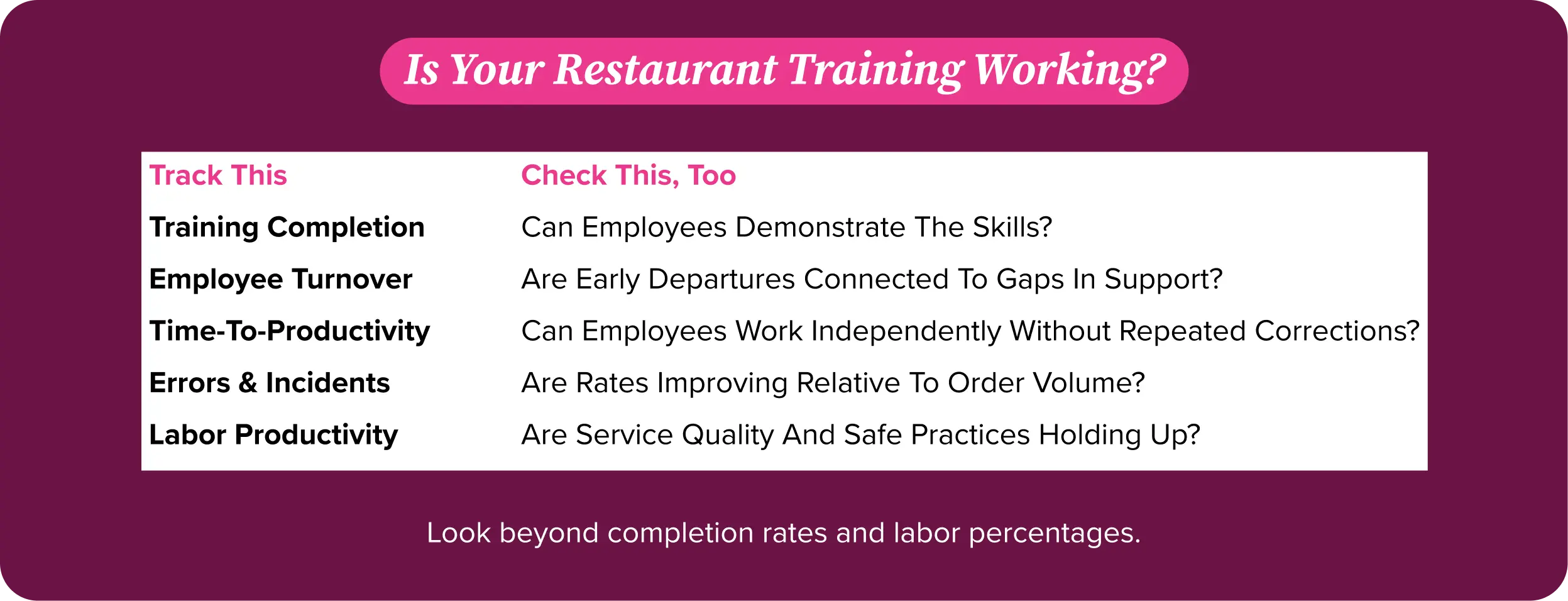
A completed training checklist is a start. The real test is what happens on the floor: can the new server handle their section, are fewer orders coming back, and does the manager still have to step in every few minutes?
Keep an eye on the numbers below, but compare like-for-like shifts. A quiet Tuesday and a short-staffed Saturday will tell very different stories.
Training Completion Rate
Take the number of employees who finished their assigned training, divide it by the number assigned, and multiply by 100.
Check who still has training outstanding and whether they need time or help to finish it. Then watch them do the job. Finishing a food safety module isn’t the same as handling food safely during a rush.
Employee Turnover Rate
Divide the number of people who left during the period by your average headcount, then multiply by 100.
Look separately at people who leave in their first few weeks. Did they get proper training, or were they put on a shift and left to figure it out? Training may be part of the problem, but hours, pay, scheduling, and management deserve a look too.
Time-to-Productivity
Track how long it takes a new hire to work on their own to the standard you expect. Be clear about what that means for each role, and use the same checks for people doing the same job.
Don’t count someone as ready just because they’re quick. If another team member keeps fixing their mistakes, they’re still learning.
Error and Incident Rates
Track remakes, order corrections, complaints, and safety incidents against the amount of business you’re doing. Ten remakes out of 1,000 orders isn’t the same as ten out of 200.
Make sure staff feel comfortable reporting problems. Reports may rise because people are speaking up, not because the team is doing a worse job.
Labor Productivity
Compare sales per labor hour or labor hours per cover on similar shifts. Check for menu price increases, changes in staffing, and differences in how busy you were.
Then look beyond the spreadsheet. If labor numbers improve but guests wait longer and the team stays late to catch up, you haven’t necessarily made the operation better.
Staying Compliant While Training Your Team
Build compliance into everyday training, not a separate talk everyone forgets. Requirements vary by location and role, so check with the agencies that oversee your restaurant before setting your procedures.
Food Safety and Hygiene Requirements
Teach handwashing, safe food temperatures, allergen procedures, and when employees need to report an illness. Check local food handler and manager certification requirements, too. Have staff demonstrate the procedures at their stations rather than just read about them. Follow the rules adopted in your jurisdiction.
Workplace Safety Training
Walk through the hazards employees actually face: hot oil, wet floors, sharp tools, and cleaning chemicals. Show them safe handling procedures and how to report a problem. Provide required safety instruction in language and terms they understand. Leave time for questions before anyone starts unfamiliar work.
Labor and Workplace Compliance
Record and pay employees for required job training, including assigned online lessons completed at home. Explain timekeeping, break procedures, and how to raise workplace concerns. Check applicable wage, overtime, and youth employment rules before assigning training shifts or equipment tasks.
Training Documentation and Records
Keep a record of what was taught, who attended, and which skills were checked. Track certificate renewals and follow-up practice. Assign someone to review these records regularly so missing training gets attention before the next inspection or shift.
Final Thoughts
Restaurant training works best when it becomes part of how you run the place. Start with clear expectations, give people time to practice, and make sure trainers teach the same procedures. Then watch what happens during service.
If employees keep asking the same question or making the same mistake, revisit the instruction before blaming the person. The next step might be a clearer checklist, another demonstration, or more supervised practice.
You don’t need to rebuild everything at once. Pick one role or recurring problem, improve the training around it, and check whether the change holds up on a busy shift.
Give your managers more time to train, coach, and support your team. Simplify the back-office work that pulls them away from the floor—so they can focus on helping employees put training into practice. Click here to book a Back Office demo to see how.
FAQ’s
How long should restaurant employee training take?
Set the timeline around the role, the employee’s experience, and the skills they need to demonstrate. Use your first month for structured practice and check-ins, but don’t treat a calendar date as proof that someone is ready to work independently.
What topics should be included in restaurant staff training?
Cover food safety, workplace safety, service expectations, menu knowledge, systems, and role-specific tasks. Include handoffs, common problems, and when to ask a manager for help. Use demonstrations to check understanding rather than relying only on completed lessons or signed checklists.
How do you train restaurant staff on a tight budget?
Start with short checklists, existing procedures, and focused practice during manageable periods. Choose patient trainers and give them scheduled teaching time. Reuse materials where practical, but keep them current. Required job training still needs to be recorded and paid. (dol.gov)
How often should restaurant employees be retrained?
Plan refreshers when menus, equipment, systems, or procedures change. Revisit skills after repeated mistakes or incidents, too. Use shift observations to decide who needs extra practice, and check any certification renewal or recurring training requirements that apply to your location.
How does training affect restaurant labor costs?
Budget for both the learner’s time and the trainer’s attention. To assess the return, compare similar shifts for corrections, manager interventions, and productivity. Don’t judge training by labor percentages alone; check whether service standards and safe working practices hold up.