

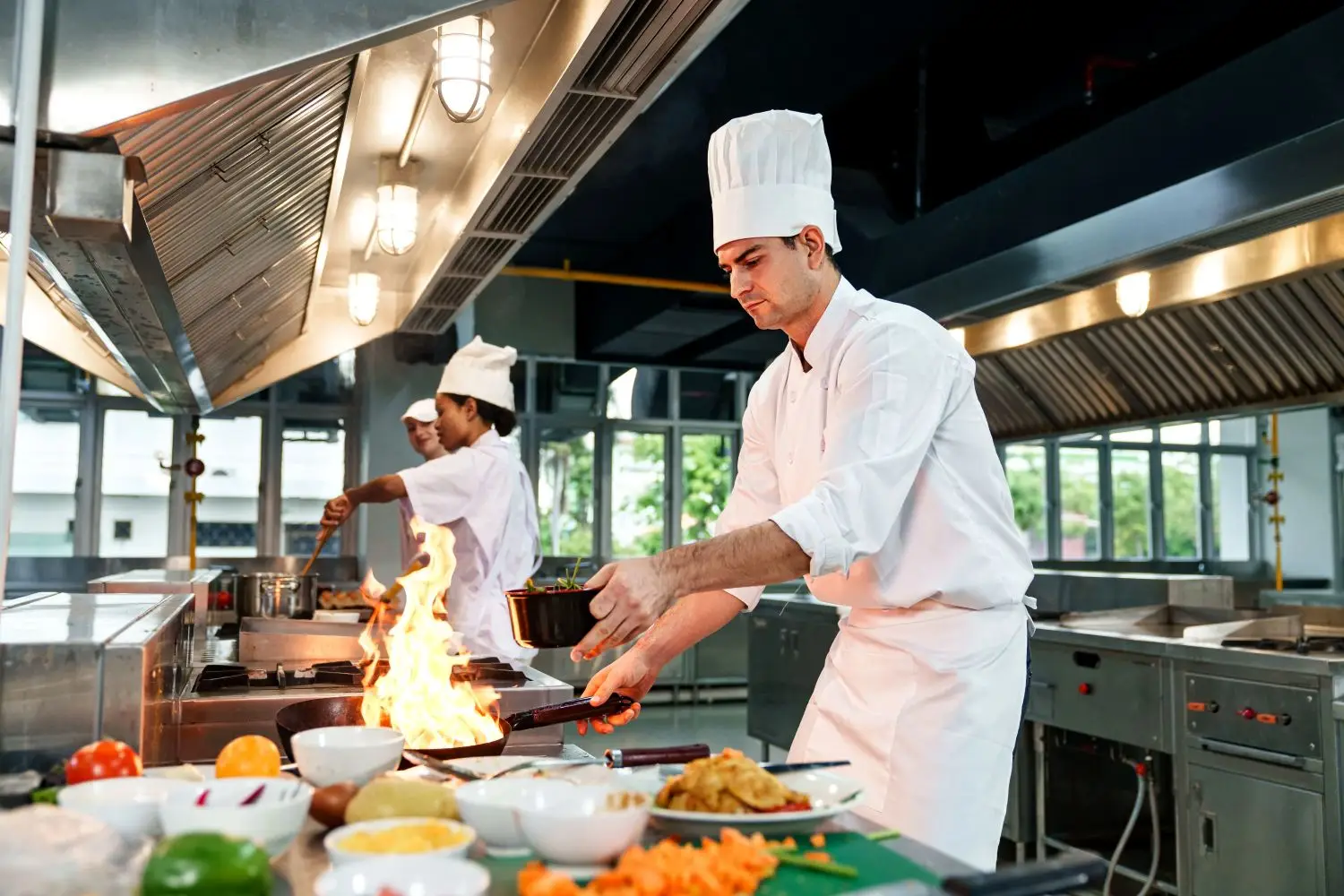

While you may not think of serving guests as a “workflow,” every successful restaurant relies on a coordinated system of processes that keeps service moving efficiently and delivers a consistent guest experience. From taking orders and preparing meals to restocking ingredients and closing out the day, each task must connect smoothly to the next. When those processes are disconnected or poorly coordinated, even small delays can lead to longer ticket times, frustrated employees, and dissatisfied guests.
Optimizing your restaurant workflow starts with reviewing how work moves through both front- and back-of-house operations. By identifying bottlenecks, standardizing essential procedures, simplifying unnecessary steps, and connecting operational data through integrated technology, you can build systems that help employees work more efficiently and managers respond faster. The result is a restaurant that can handle busy shifts, staffing changes, and future growth without requiring managers and employees to reinvent processes every day.
Where Restaurant Workflows Break Down
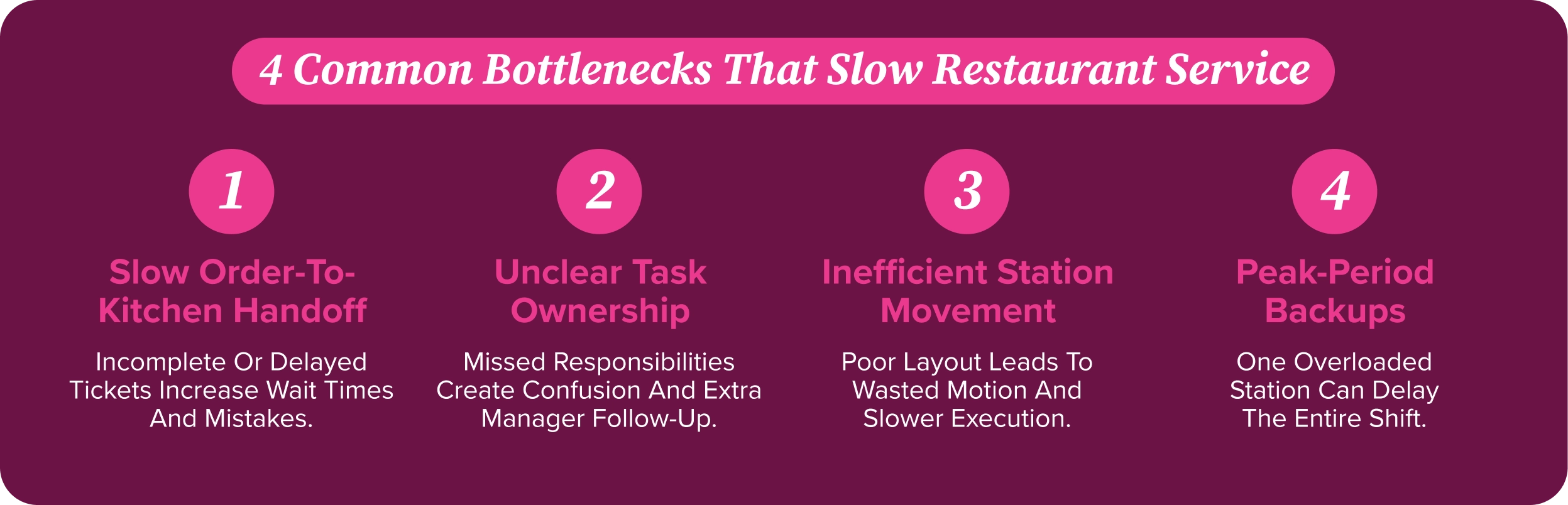
Well-designed workflows help employees coordinate responsibilities, move efficiently, and maintain consistent service throughout each shift. When these processes begin to break down, the problems typically originate from several common issues:
- Delays between order taking and kitchen execution: When orders reach the kitchen slowly or without complete details, ticket times increase, mistakes multiply, and guests wait longer.
- Lack of clear task ownership across teams: When employees are unsure who owns a task, responsibilities get missed or duplicated, putting extra workload on managers to resolve the confusion and chase task completions across shifts.
- Inefficient movement between stations: When food stations lack a logical flow, employees waste valuable time navigating around equipment, supplies, coworkers, and cramped workspaces.
- Bottlenecks during peak service periods: When a designated process can’t keep up with demand during busy shifts, orders accumulate, quality declines, and delays are compounded from a single pressure point throughout the entire restaurant.
How to Structure an Efficient Restaurant Workflow
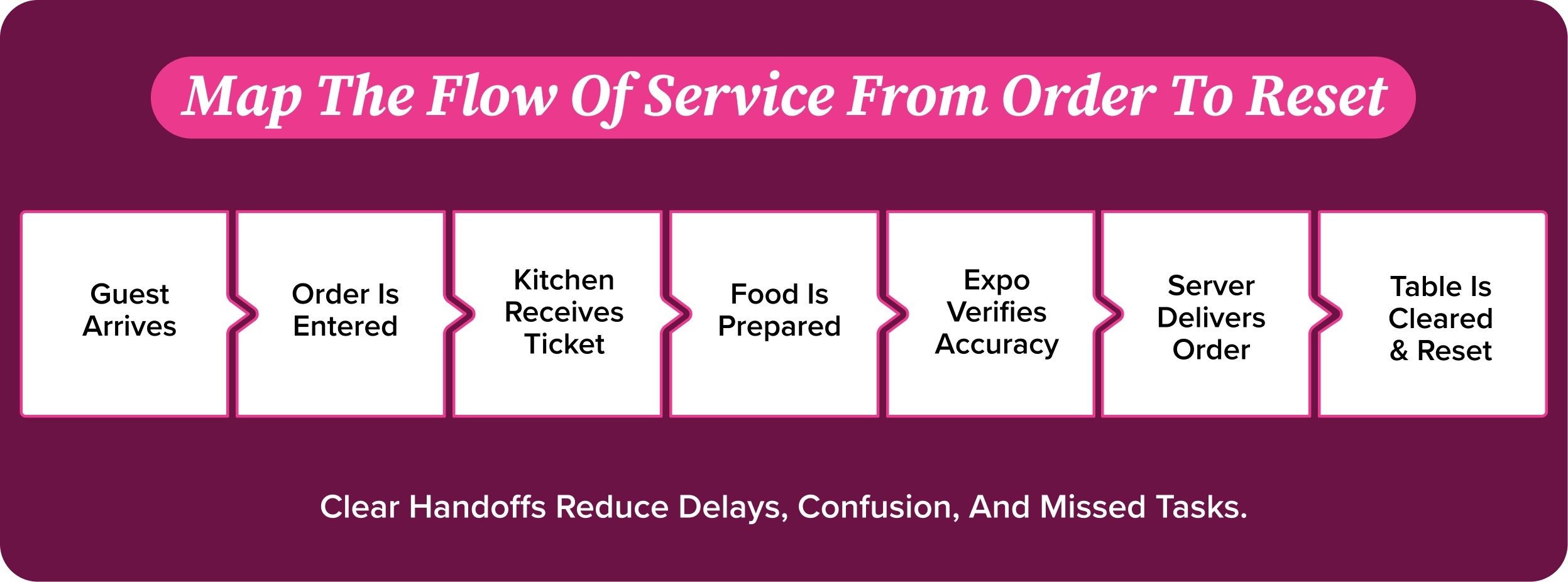
Efficient restaurant workflows provide employees with clear, repeatable paths for completing tasks and coordinating service. Building consistent workflows that maximize operational efficiency begins by following these steps:
- Define clear steps from order to service: Map every step an order follows, from the initial greeting of the guests at the door to resetting the table once the guests have left the restaurant. This creates a clear sequence for employees to follow during every shift.
- Assign ownership at each stage of the workflow: Designate a specific role to manage each task or decision throughout each shift. This prevents responsibilities from being missed or duplicated and minimizes the follow-up required of the management team.
- Align front-of-house and back-of-house operations: Create shared procedures for order modifications, allergy alerts, ticket priorities, food readiness, and guest updates. Then hold pre-shift meetings to review important details and help both teams coordinate service as conditions change.
- Reduce unnecessary steps and movement: Observe employees during busy shifts to identify repeated trips, crowded pathways, or misplaced supplies, then reorganize stations to simplify work processes, allowing employees to work more efficiently.
- Standardize workflows across shifts and staff: Create consistent procedures for opening, mid-day, and closing shifts. Keep expectations consistent across employees and shifts through training, checklists, and regular reviews.
- Document processes to reduce dependency on individuals: Record essential procedures in accessible checklists, job aids, or digital operating manuals that employees can reference without waiting for a specific manager. This provides a self-help pathway for employees to quickly get answers on task standards, assigned roles, timing expectations, or escalation procedures, even when an experienced manager is temporarily unavailable.
How to Optimize Workflows for Faster Service
Once you have established clear restaurant workflows, the next step is to fine-tune them so each process supports the fastest, most efficient service possible. Use the following strategies to refine and improve your workflows:
- Optimize high-friction steps: Review the tasks that consistently take the most time and identify opportunities to simplify them. Pre-stage frequently used supplies, eliminate redundant checks, or move frequently used tools closer to the point of use to reduce unnecessary work during service.
- Prepare ingredients and stations in advance: Complete prep lists, ensure stations are fully stocked, and arrange tools within reach so cooks can remain on the line and deliver food quickly.
- Reduce rework: Review common causes of remakes, corrections, and repeated tasks, then adjust the process to prevent those issues earlier. Reducing rework allows employees to spend more time completing orders and less time correcting avoidable mistakes.
- Balance workload across stations: Compare workload and capacity at each station during peak periods. When one station consistently becomes a bottleneck, redistribute tasks, adjust prep responsibilities, or cross-train employees to provide additional capacity where it is needed most.
- Adjust workflows based on performance data: Review ticket times, order volume, labor data, and other operational metrics to identify recurring slowdowns. Use those patterns to refine existing processes rather than relying on one-time observations or assumptions about where delays occur.
- Remove unnecessary movement: Track where employees spend time walking, waiting, or searching for supplies. Rearranging equipment, storage, or staging areas can reduce wasted movement and keep employees focused on service.
How to Measure and Improve Workflow Efficiency
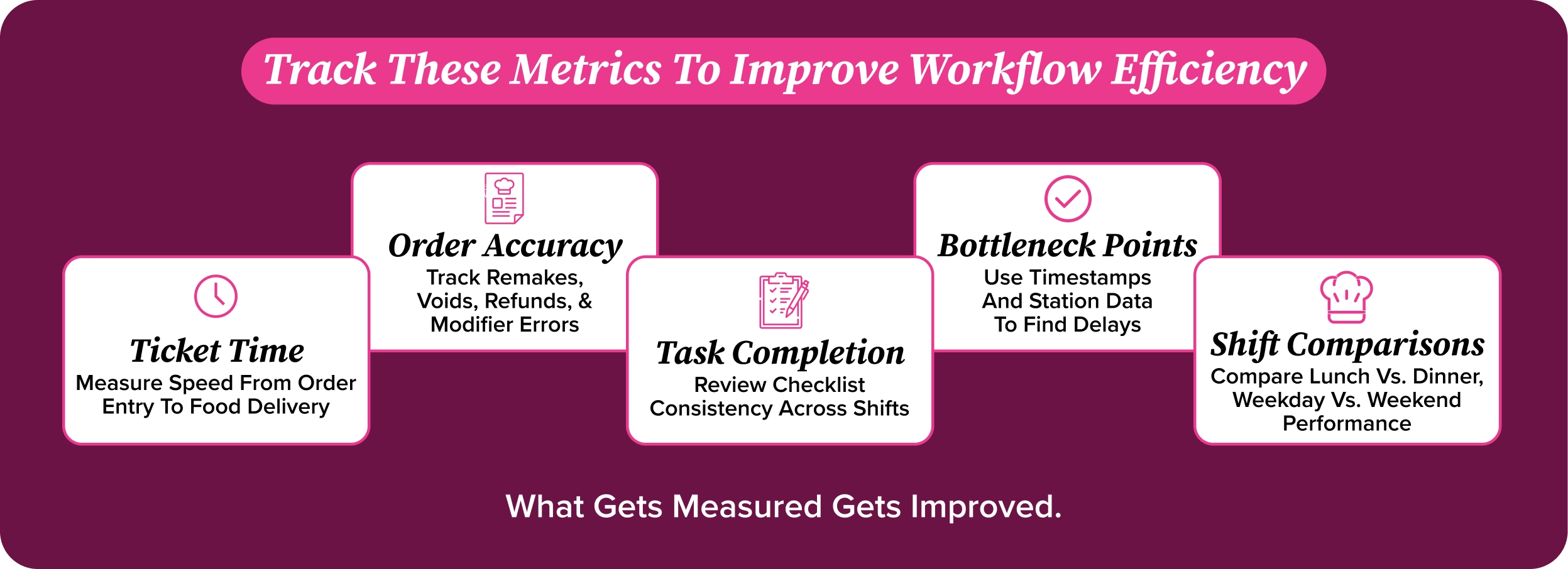
Workflow improvements should be supported by measurable performance data rather than observation alone. Track the following metrics to identify inefficiencies, evaluate changes, and guide ongoing process improvements:
- Track order completion time and service speed: Measure minutes from order entry to food delivery, then compare average ticket times by service period. Tracking speed reveals where delays occur and whether workflow changes improve guest experience.
- Monitor error rates and order accuracy: Record remakes, voids, refunds, and incorrect modifiers per shift, then calculate errors as a percentage of total orders. Reviewing results by menu item, employee, station, and shift can reveal whether accuracy problems stem from an overly complicated dish, a training gap, or unclear communication during busy service periods.
- Evaluate staff coordination and task consistency: Use checklist completion rates to assess whether employees complete assigned opening, service, and closing duties consistently. Review results weekly to identify unclear ownership or recurring coordination gaps.
- Identify bottlenecks using workflow data: Review POS timestamps, kitchen display data, table-turn times, and inventory logs to locate stages where work bottlenecks exist. For example, compare minutes spent in order entry, preparation, expo, and delivery to determine whether delays originate at a specific station, during a handoff, or when supplies run low during service.
- Compare performance across shifts and time periods: Compare average ticket times, sales per labor hour, and error rates across lunch, dinner, weekdays, and weekends. Reviewing trends weekly or monthly helps distinguish isolated problems from recurring workflow weaknesses.
Common Workflow Mistakes That Slow Down Service
Many common mistakes that lead to slow service times are avoidable with thoughtful planning and preparation. Integrated systems help restaurants anticipate demand, recognize emerging problems, and keep orders moving efficiently throughout the shift. Avoid these common mistakes that lead to workflow breakdowns:
- Scheduling based on habit instead of demand: Repeating the same schedule each week can leave critical stations understaffed during unexpected rushes. Using historical sales, reservations, and forecasted demand to align staffing with anticipated volume can help reduce wait times and prevent employees from becoming overwhelmed.
- Failing to account for off-premise orders: Online, delivery, and takeout orders draw from the same kitchen capacity as dine-in service. Integrating off-premise channels with the POS and kitchen display system improves order pacing and allows managers to make labor and operational decisions based on total order volume.
- Waiting until after the shift to address identified problems: Post-shift reports may help to explain what went wrong, but they cannot prevent delays that are already affecting guests. Real-time alerts and reporting allow managers to reassign employees, address ticket backups, or adjust order flow before an issue disrupts the entire shift.
- Using poorly configured or disconnected POS systems: Disconnected systems and incorrect routing rules create duplicate entry, incomplete tickets, and manual data entry work for managers tracking the shift. A properly configured, integrated POS sends accurate information directly to the appropriate stations, simplifies handoffs, and keeps orders moving quickly through your designated workflows.
Build a Faster, More Efficient Restaurant Workflow
Improving speed of service starts with understanding how work moves through your restaurant. By identifying bottlenecks, standardizing procedures, connecting front- and back-of-house systems, and tracking performance, you can create smoother workflows without sacrificing accuracy or hospitality. Focus first on the processes causing the greatest delays, then use real-time data to measure results.
Need help pinpointing delays? Reach out to the Back Office team to identify bottlenecks in ordering, inventory, scheduling, reporting, or other processes that may be slowing service.
FAQ’s
How do you know if your restaurant workflow is inefficient?
You’ll usually see it in slower ticket times, more remakes, missed tasks, inconsistent handoffs, and employees spending too much time waiting, walking, or searching for supplies. If service feels reactive instead of organized, your workflow likely needs attention.
What is the biggest cause of workflow delays in restaurants?
One of the biggest causes is disconnected processes between front- and back-of-house. When orders, task ownership, or communication are unclear, small delays quickly turn into longer ticket times, avoidable errors, and service bottlenecks.
How can small restaurants improve workflow without hiring more staff?
Small restaurants can improve workflow by simplifying steps, organizing stations more efficiently, standardizing procedures, and clearly assigning responsibilities. In many cases, better coordination and stronger systems create more impact than adding labor.
What systems help improve restaurant workflow?
Integrated systems such as POS, kitchen display, inventory, labor, and reporting tools help improve workflow by connecting operational data and reducing manual work. When systems work together, managers can spot issues faster and keep service moving more efficiently.
How do you identify bottlenecks in a restaurant workflow?
Start by reviewing workflow data such as ticket times, POS timestamps, order volume, error rates, and checklist completion. Then compare where delays happen most often—whether during order entry, prep, expo, or delivery—to pinpoint the stage that is slowing service down.
How often should restaurant workflows be reviewed?
Restaurant workflows should be reviewed regularly, not just when problems arise. A weekly or monthly review of performance trends, combined with observations during busy shifts, helps catch inefficiencies early and supports continuous improvement.