Commodity forecasting highlights from CommodityONE
This snapshot report is released every week. To learn more about the FULL report, click here.
Designed to support purchasing and forecasting teams in managing price risks, CommodityONE provides powerful tools like commodity forecasting and item-specific food cost modeling to help you plan smarter and maximize profitability. Learn how you can receive even more in-depth insights delivered daily from CommodityONE to elevate your strategy.
Chicken production continues to run ahead of last year, with year-to-date output up 2.6% and weekly harvests still trending higher. Even with that supply, pricing is mixed by cut: breast meat has fallen to a seven-month low and tenders are down 6%, while wings moved the opposite direction, climbing 8% to a 13-week high. Record-high bird weights, up 3.7% year over year, are helping keep the overall market better supplied.
Outlook: Chicken remains one of the more manageable protein categories, but cut-level volatility means operators should keep a close eye on the items driving the most menu volume.
Beef
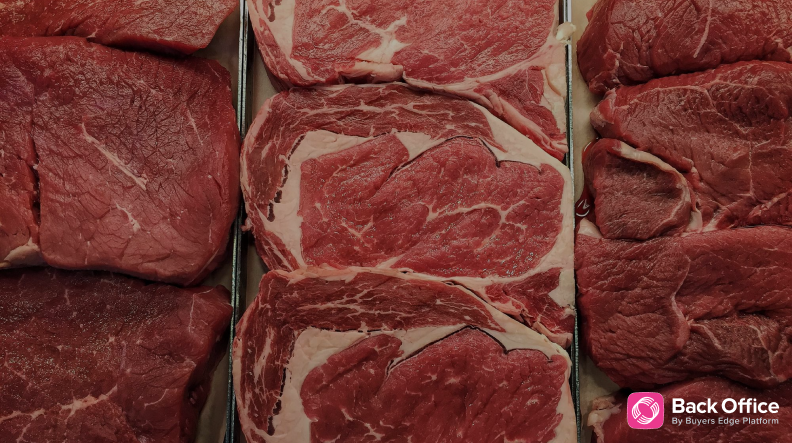
Beef supply remains tight, with fed cattle slaughter down 8.3% from the same week last year. Boxed beef values softened 1.5% last week, and some loin items like strips and top sirloins are still trading below 2025 levels, but the broader cattle supply picture continues to keep pressure on pricing. That means even when select cuts ease, the category overall remains expensive.
Outlook: Beef prices are likely to stay elevated, so this is a good time to look for value in alternative cuts and evaluate where higher-cost items are impacting margins most.
Pork
Pork continues to offer one of the better protein values in the market. Belly prices are still down 33% from a year ago, and while the overall cutout moved slightly higher last week, second-quarter gains were much smaller than normal seasonal patterns. With hog slaughter still running about 2% above last year, near-term supply remains supportive.
Outlook: Pork still looks attractive for menu placement, though seasonal firming later in the quarter could start to reduce some of that pricing advantage.
Produce
Produce markets delivered some welcome relief last week after several weeks of increases. Iceberg lettuce dropped 28% week over week, 48-count avocados fell nearly 20% to a six-week low, and 25-pound large Roma tomatoes declined 16.8% to a new year-to-date low. These moves offer some breathing room, especially for operators with produce-heavy menus.
Outlook: Short-term costs have improved, but produce markets can turn quickly during seasonal transitions, so this remains a category worth watching closely.
Dairy
Dairy markets are still offering some cost relief, with June cheese block prices averaging 18% below last year and marking one of the weaker June averages in the past decade. At the same time, seasonal heat is starting to affect milk production, and tighter spot availability may begin putting a floor under the market.
Outlook: Dairy remains favorable for now, but the chance for significantly lower pricing may be starting to fade.
Grains
Grain markets turned more sensitive following the USDA’s June Acreage Report, especially after corn stocks were estimated at 5.295 billion bushels, lower than traders had expected. That lower stock figure reinforces the idea that demand remains strong and leaves less room for weather-related disruptions later this summer.
Outlook: Grain volatility could build in the weeks ahead, which may eventually affect feed, oil, and ingredient costs across multiple categories.
Seafood
Frozen Alaskan pollock continues to trend higher, with prices now up 26% since February and sitting at a 17-month high. Limited import volumes have been the main driver, and while supply may begin improving later this year, the current market is still feeling the effects of that earlier tightness.
Outlook: Seafood costs may remain firm in the near term, particularly for whitefish, so buyers should stay alert for timing opportunities if supply starts to recover.
Want the full report in your inbox everyday?
Submit the short form to learn how to get the FULL CommodityONE report delivered DAILY to your inbox.
CommodityONE offers a diversity in format and provides definitive content that presents the trends and forecasts that align with what’s happening in the industry. Sign up for CommodityONE today to unlock the most in-depth foodservice commodities report on the market.
Expert insights curated weekly
Powered by CommodityONE
Share this post
Related posts
Explore our latest insights for optimizing your restaurant operations.
Knowing how much revenue is needed to cover expenses is an essential aspect of a restaurant operator’s financial planning. Break-even analysis provides a clear benchmark for measuring performance in order ...
Understanding your restaurant’s profitability should not require digging through a stack of reports or waiting until the end of the quarter to see how the business is performing. Knowing how ...
Restaurant portion sizes directly affect operational aspects of the kitchen, like food cost, inventory accuracy, and recipe consistency. Even small portion mistakes can reduce margins over time. Learning how to ...