



Understanding your restaurant’s profitability should not require digging through a stack of reports or waiting until the end of the quarter to see how the business is performing. Knowing how to calculate net income from a balance sheet is an important skill that allows operators to clearly see what revenue is remaining after food costs, labor, rent, utilities, taxes, and other expenses are accounted for. With a simple system for calculating and reviewing net income each month, you can spot trends earlier, strengthen cost controls, and make smarter decisions for long-term financial health.
What Is Net Income on a Balance Sheet?
Net income is the amount of profit a business has left after subtracting total expenses from total revenue over a specific period. While the calculations for net income start on the income statement, the net income category also connects to the balance sheet through retained earnings, which reflects the portion of profits kept in the business over time.
For restaurant operators, net income is an important measure of overall financial health. It shows whether sales are strong enough to cover all operating expenses for the period while still maintaining a profit.
How Net Income Is Calculated and Why It Matters
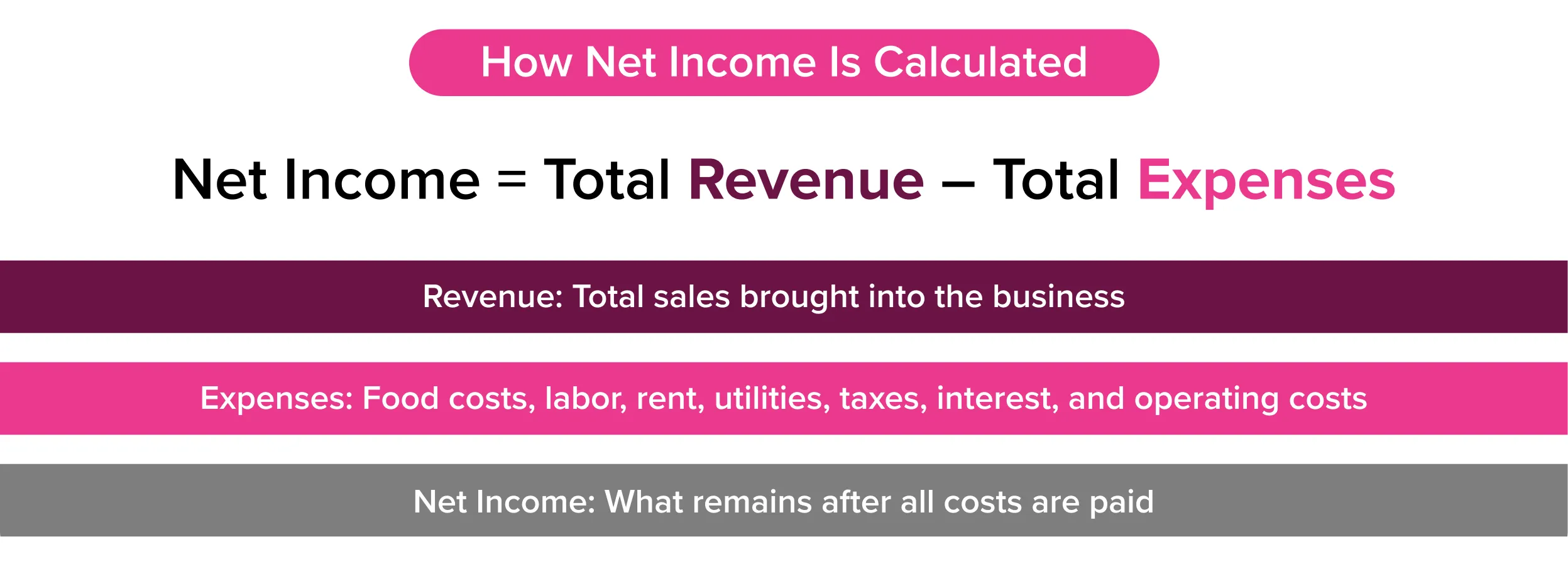
Net income is calculated by subtracting all business expenses from total revenue for a specific reporting period. These expenses include cost of goods sold, labor, rent, utilities, operating costs, interest, taxes, and any other costs required to run the business.
Net Income = Total Revenue – Total Expenses
For restaurant operators, this number shows whether the business is truly profitable after all costs are accounted for. Strong sales alone do not always mean strong performance. A restaurant may bring in steady revenue but still struggle with profitability if food, labor, and other costs are too high.
Understanding how to calculate net income from a balance sheet helps operators evaluate the financial impact of daily decisions. For example, changes in menu pricing, vendor costs, scheduling, or sales volume can all affect whether the restaurant ends the period with a profit or a loss. When operators know how to read and calculate net income, they are better equipped to identify problems early and make meaningful changes quickly to minimize operational losses.
Why You Can’t Pull Net Income Directly from a Balance Sheet
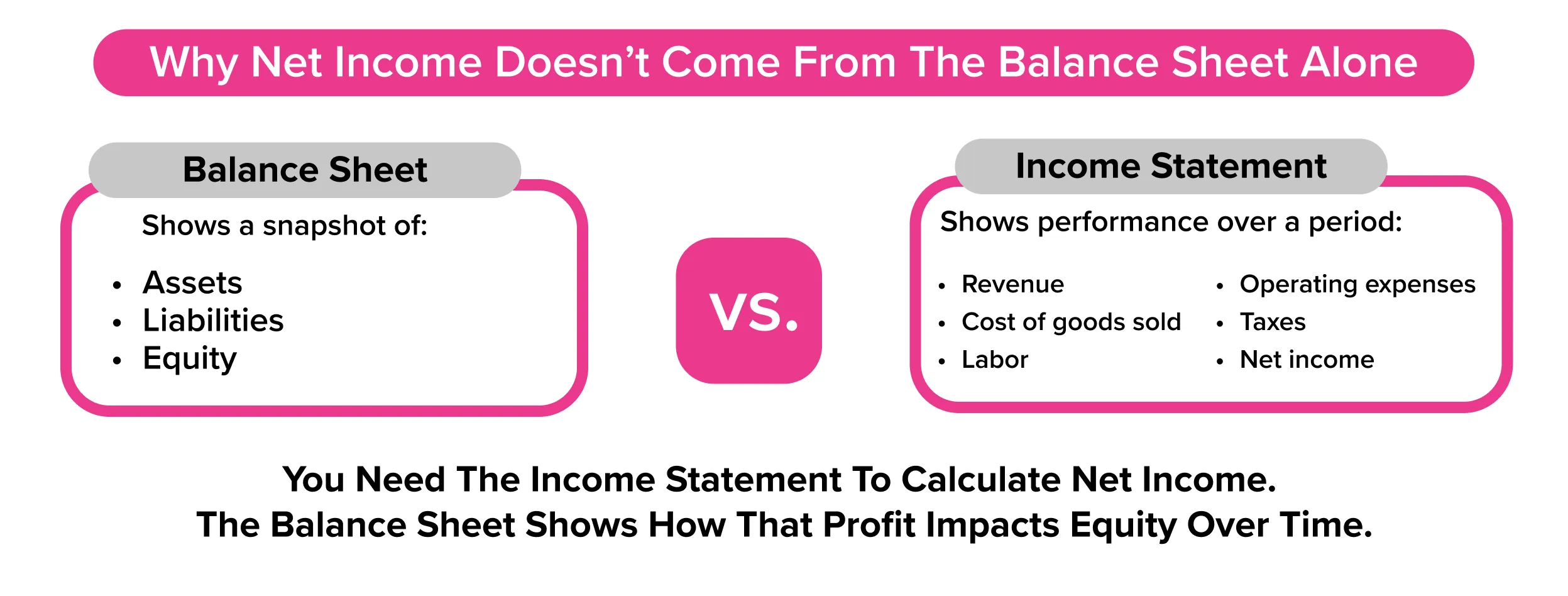
A common misconception is that net income can be found directly on the balance sheet. In reality, you cannot calculate net income from a balance sheet alone because the balance sheet does not show all revenue and expenses for a specific period.
Instead, the balance sheet shows what the business owns, what it owes, and how much equity remains at a specific point in time. These categories are known as assets, liabilities, and equity. For example, a restaurant’s balance sheet may show cash on hand, equipment, inventory, loans, and retained earnings, but it will not show the full detail needed to calculate profit for that specific period.
To calculate net income accurately, operators need information from the income statement, which tracks revenue, cost of goods sold, labor, operating expenses, taxes, and other expenses incurred during the period. The balance sheet can help show how profit affects the restaurant’s overall financial position, but it does not include all the revenue and expense details needed to calculate that period’s net income.
Why Net Income Isn’t an Asset (and What It Really Is)
Net income isn’t an asset because it isn’t a tangible thing the restaurant owns, such as cash, inventory, equipment, or property. Instead, net income is a calculation that represents the amount of profit the business earned after covering its expenses during a specific period.
On the balance sheet, net income is listed in the equity section, specifically through retained earnings. A balance sheet is organized around three main categories: assets, liabilities, and equity. Net income starts on the income statement, where revenue and expenses are tracked. From there, any profit kept in the business (as represented by the net income calculation) flows into retained earnings, increasing the value shown under equity.
Essentially, net income shows the increase in business value created during a specific period. The confusion often happens because people often associate net income with an increase in cash, which isn’t necessarily accurate.
Why Net Income vs. Cash Flow Are Not the Same
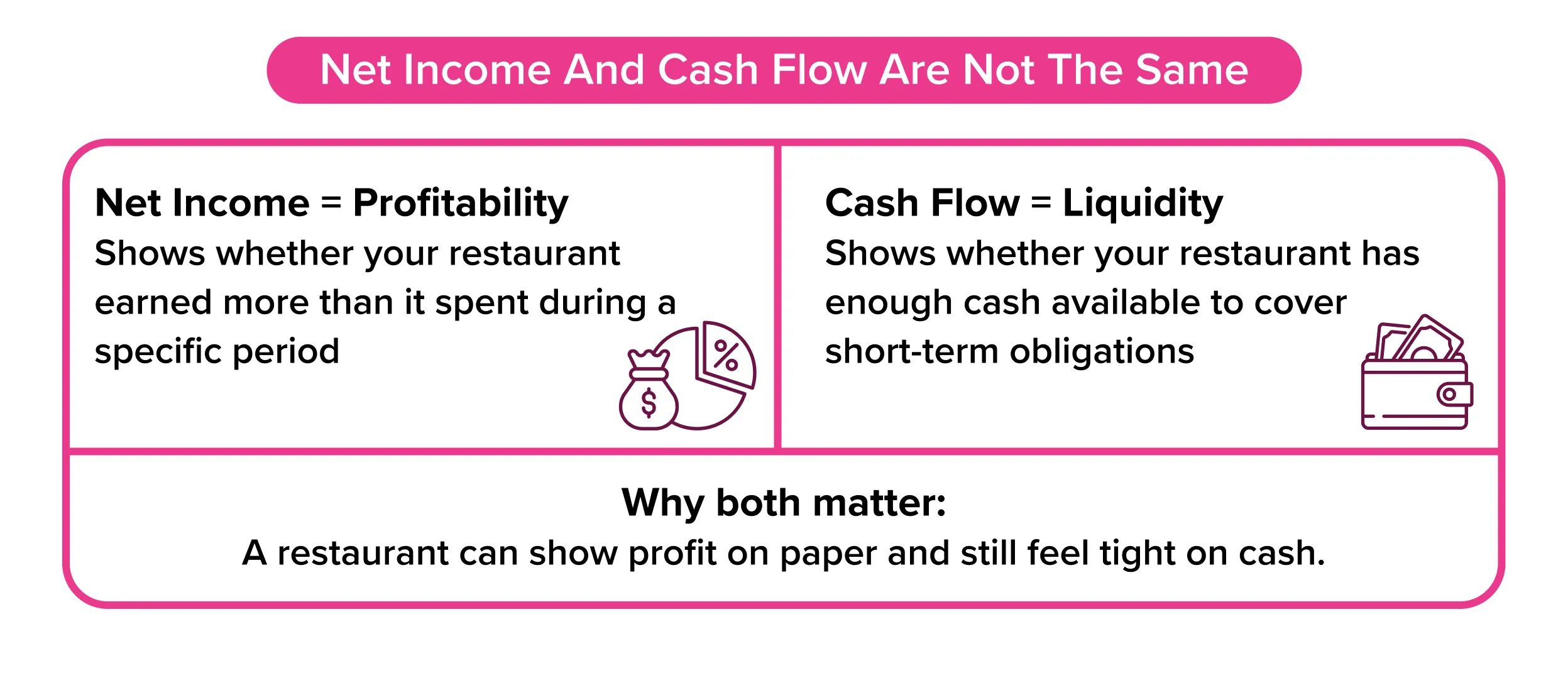
Net income and cash flow are closely related, but they are not the same thing. Net income shows whether the restaurant was profitable after revenue and expenses were recorded. Cash flow shows how money actually moves in and out of the business.
This difference matters because a restaurant can show strong net income and still feel tight on cash. For example, profits may be tied up in inventory, delayed vendor payments, loan payments, payroll timing, or money owed but not yet received. On the other hand, having a lot of cash in the bank does not always mean the restaurant is financially healthy. If net income is trending downward, the business may be relying on temporary cash reserves while profitability weakens.
For restaurant operators, it is important to review both numbers together:
- Net income measures profitability: It shows whether the restaurant is earning more than it spends over a specific period.
- Cash flow measures liquidity: It shows whether the restaurant has enough available cash-on-hand to cover bills, payroll, inventory, and other short-term obligations.
Reviewing net income and cash flow together gives operators a clearer picture of financial health and helps make better operational decisions than either number alone.
Simplify Net Income Tracking with Better Financial Systems
Net income helps restaurant operators understand whether the business is truly profitable after all revenue and expenses are accounted for. While it cannot be pulled from the balance sheet alone, using simple, automated reporting systems can make it easier to calculate, monitor, and compare net income each month. With the right tools in place, operators can spot trends sooner and make stronger decisions for long-term financial health.
FAQ’s
Can you calculate net income directly from a restaurant’s balance sheet?
No. A balance sheet shows what your restaurant owns (assets), what it owes (liabilities), and what equity remains at a specific point in time—but it does not capture the period’s revenue and expenses. To calculate net income, you need the income statement (P&L), which tracks every dollar of revenue and expense. The balance sheet only reflects the impact of that net income through the retained earnings line in the equity section.
Where does net income appear on a restaurant balance sheet?
Net income does not appear as a standalone line item. Instead, it flows into the equity section through “retained earnings.” This represents the cumulative profit the business has kept over time. Each period’s net income updates the retained earnings balance, allowing you to see how your operational performance contributes to the long-term financial health and equity of your restaurant.
What is the difference between net income and cash flow?
Confusing these is a common financial pitfall.
- Net Income measures profitability: It confirms if your revenue exceeded your expenses (COGS, labor, rent, etc.) during a specific period.
- Cash Flow measures liquidity: It tracks the actual movement of cash in and out of your bank account.
A restaurant can be profitable on paper (net income) but still feel “cash-tight” if money is tied up in inventory, delayed vendor payments, or loan obligations. Reviewing both metrics together is essential for proactive decision-making.
Why is tracking net income critical for restaurant operators?
Strong top-line sales do not always mean a healthy bottom line. Net income is the true indicator of whether your menu pricing, labor management, and cost controls are effective. By tracking this figure, you can spot “margin pressure” early—such as rising food costs or over-scheduling—and pivot quickly to protect your profitability before a minor issue becomes a major loss.
How often should a restaurant review net income?
While a monthly review is the industry standard, Back Office advocates for weekly financial reporting. Waiting until the end of the month means you are looking in the rearview mirror. Reviewing net income on a weekly cadence allows you to identify trends as they happen, helping you move from reactive “scorekeeping” to making informed operational decisions on the floor while the numbers are still actionable.