

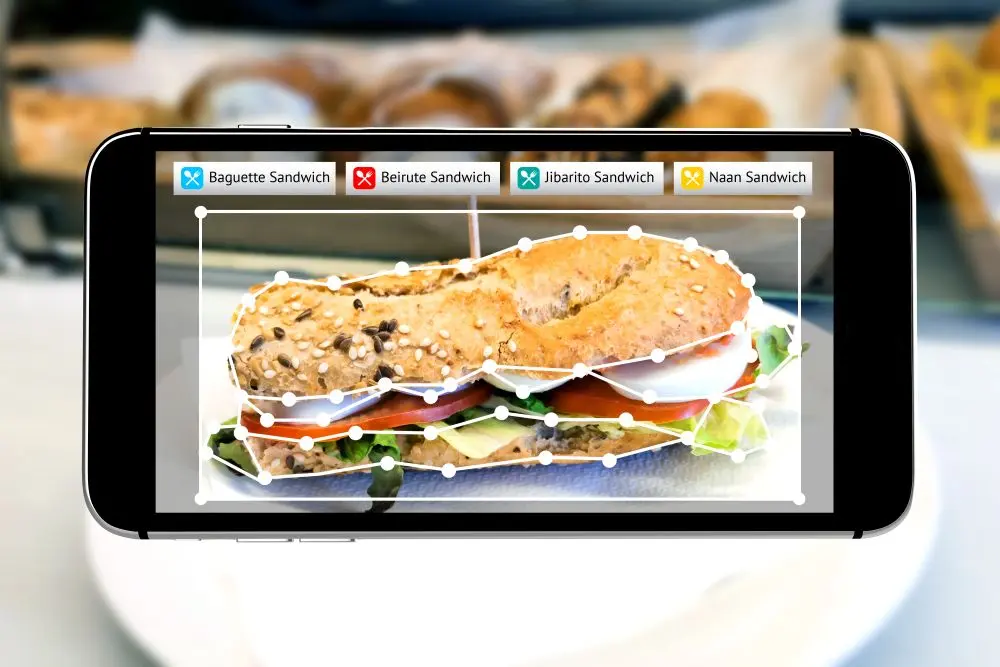
Artificial intelligence (AI) isn’t just transforming the way restaurants operate. AI in foodservice is redefining the entire ecosystem. From voice-activated ordering to predictive inventory and robotic kitchens, AI has evolved from an abstract concept to a practical tool that drives measurable results. For operators, it’s no longer about if they are using AI, but how soon and where it will make the biggest impact.
Across the industry, forward-thinking brands are leveraging AI in foodservice to streamline operations, strengthen customer relationships, and create data-driven efficiencies that scale. Whether running a regional QSR or an independent concept, understanding how AI fits into your business now can set you apart from the competition later.
What Is Artificial Intelligence in Foodservice?
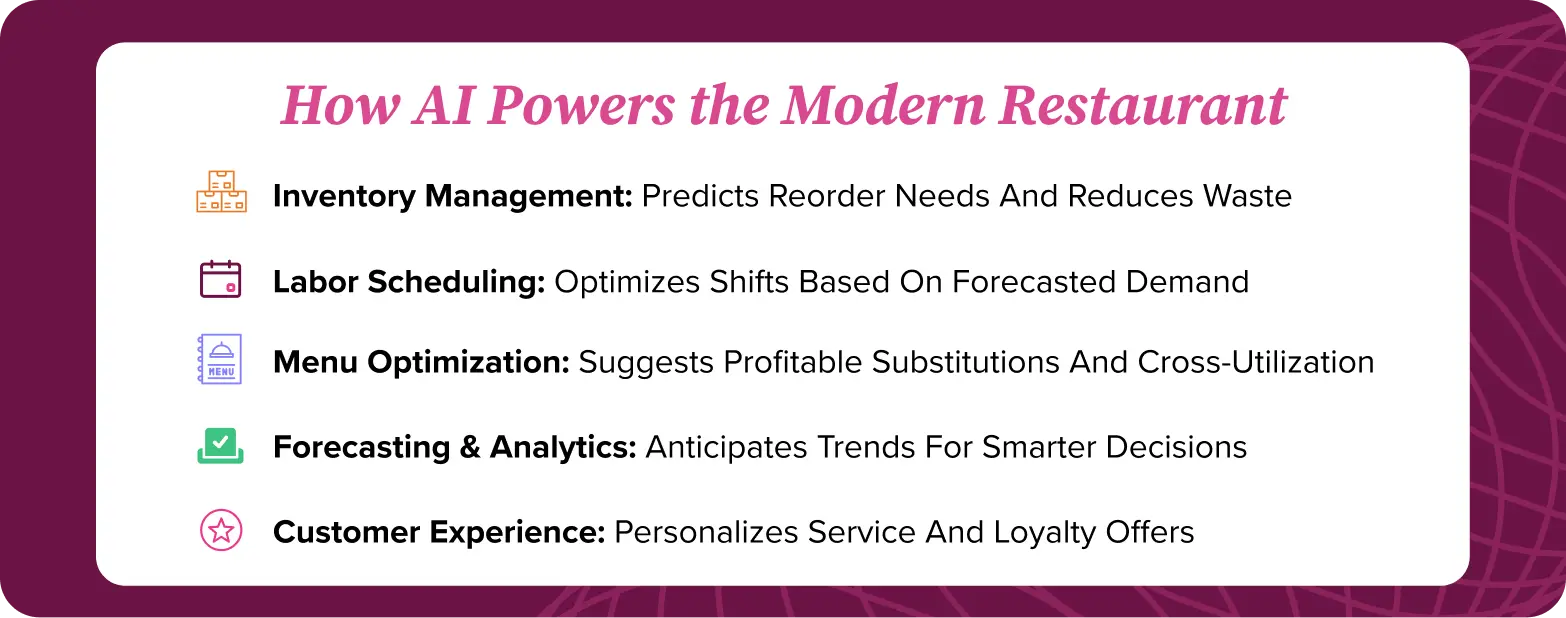
AI in foodservice combines automation, analytics, and machine learning to help operators make smarter, faster operational decisions.
AI is already reshaping how restaurants forecast demand, schedule labor, manage inventory, and personalize menus in real time. Smart systems track internal trends, and some analyze external factors to predict when business will spike or slow down. In the kitchen, machine learning models can analyze ingredient usage to recommend reorder quantities or suggest substitutions, reducing waste and lowering COGS. These technologies work quietly in the background, analyzing data, learning from patterns, and adapting to change, so businesses can operate with agility and precision.
The goal is to empower teams with better insights and more time for what matters most: delivering hospitality, quality, and consistency across every location.
Key Benefits of AI in Foodservice
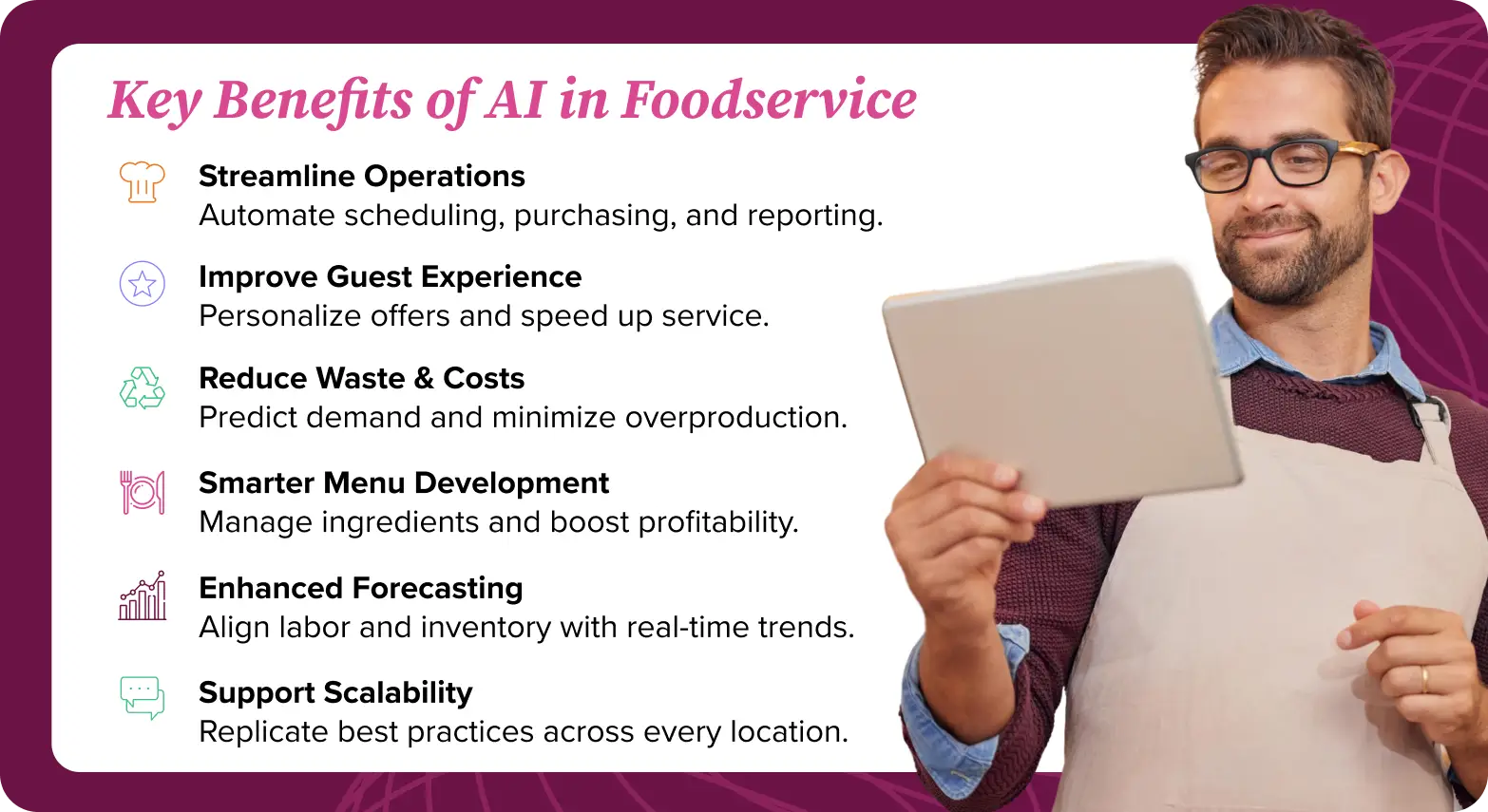
AI isn’t a single tool, it’s a framework for creating a smarter, more efficient operation. When implemented strategically, it becomes the invisible engine that keeps your business agile and efficient. It can help:
- Streamline operations: Automate scheduling, purchasing, and reporting to reduce manual work and improve accuracy.
- Improve customer experience: Deliver faster, more personalized service that keeps guests coming back. Smart kiosks and loyalty platforms use predictive data to tailor offers and enhance service.
- Reduce costs and waste: Predictive ordering minimizes overproduction and spoilage by aligning prep with demand.
- Menu development: Manage ingredients, explore cross-utilization, and suggest high-margin substitutions, giving your team more creative freedom when designing your restaurant’s menu.
- Enhance forecasting: Machine learning aligns labor, inventory, and purchasing with real-time demand signals, boosting accuracy and efficiency.
- Support scalability: Standardize processes and replicate best practices across multiple locations.
Real-World Applications of AI
AI in foodservice is no longer hypothetical. It is actively transforming how operators run their businesses, helping them work smarter, reduce costs, and deliver better experiences to customers. Here are some real-world examples:
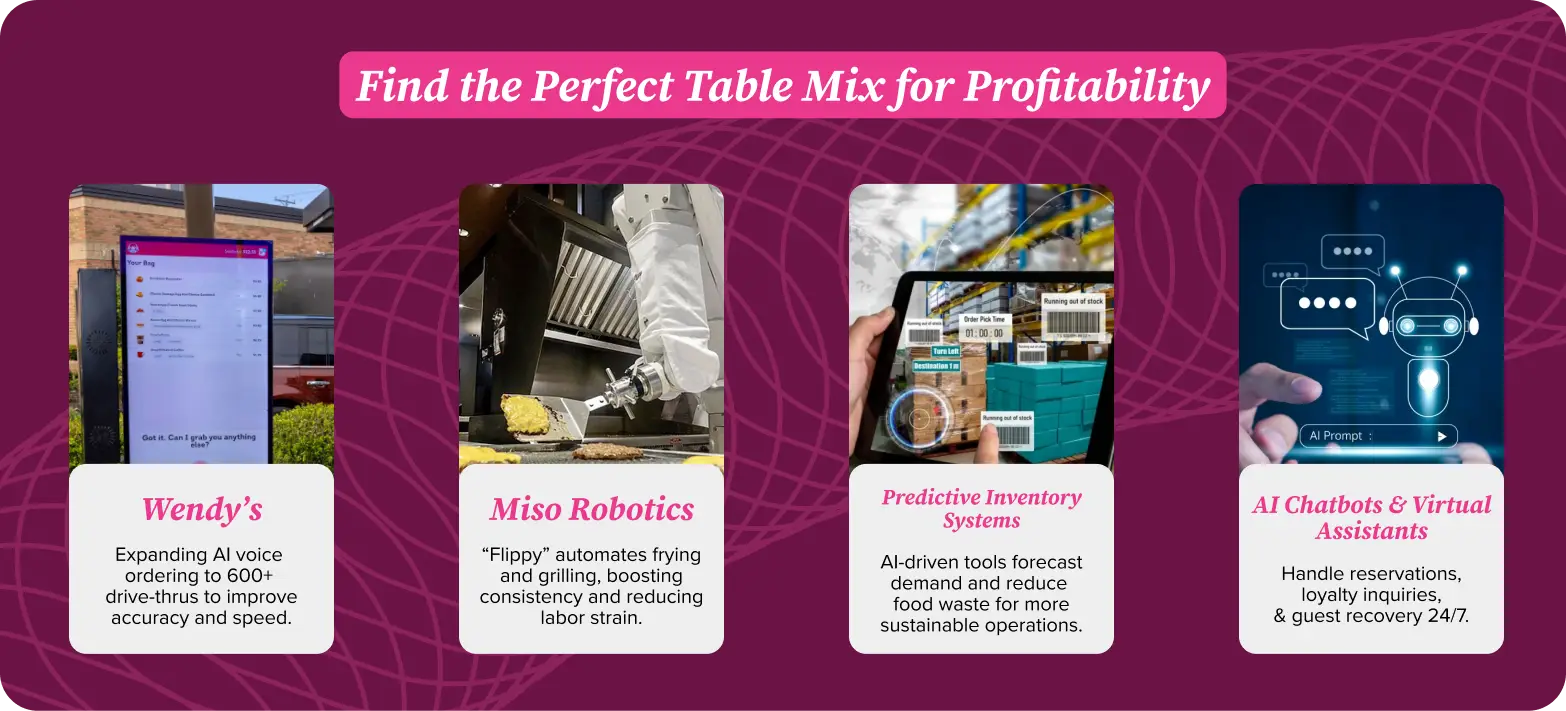
- Smart kiosks and voice ordering: Wendy’s plans to expand AI voice ordering across 600 U.S. drive-throughs, demonstrating how conversational AI can improve speed, accuracy, and upselling.
- Predictive inventory management: Platforms use real-time data to forecast demand and reduce food waste, helping operators cut costs while meeting sustainability goals.
- Kitchen robotics: Automation is handling repetitive tasks in the kitchen. Miso Robotics’ Flippy, used in restaurants like CaliExpress, automates frying and grilling, ensuring consistent results while freeing staff to focus on higher-value work.
- AI customer service solutions: Chatbots and virtual assistants now handle reservations, loyalty inquiries, and even guest recovery, giving operators 24/7 responsiveness.
Integrating AI Into Your Operations
For many operators, the biggest challenge isn’t understanding why AI matters — it’s knowing where to start and recognizing the benefits of a truly integrated system.
Start by identifying your most pressing operational pain points. Are prep levels inconsistent? Labor costs unpredictable? Inventory items running out too frequently? Pinpoint the problem first, then explore solutions that integrate with your existing back-office systems, such as POS, payroll, or inventory management tools.
Clean and organize your data, since accuracy is critical. Train staff to understand the insights AI provides, and focus on small, strategic pilots before scaling. A test-and-learn approach helps keep costs low and minimizes disruption while improving ROI.
According to the CHEF’STORE, the most successful operators implement AI incrementally, starting with tools that automate data collection and analytics, then expanding to predictive forecasting. Starting small and scaling thoughtfully often yields the best results.
Overcoming Adoption Challenges
Integrating AI requires both investment and a shift in mindset. Upfront costs can be managed through phased rollouts, allowing your team to capture early wins before scaling. Resistance among staff is common but manageable, especially when you emphasize that AI makes their jobs easier rather than replacing them. Training, transparency, and clear examples of efficiencies help foster acceptance.
Choose systems that complement your existing platforms, and always prioritize data privacy. Transparency builds trust with both employees and customers.
Harvard Business Review notes that AI adoption succeeds when leaders treat it as a collaboration tool that handles complex issues, rather than as a replacement. This approach allows teams to focus on relationship building and hospitality.
The Future of AI in Foodservice
AI is moving beyond isolated functions to become the connective tissue linking supply chains, operations, and guest analytics. It’s no longer just about faster service — it’s about smarter ecosystems.
According to Deloitte, 82% of restaurant leaders plan to increase AI investment by 2026, signaling a clear shift toward integrated automation and data intelligence.
The next phase will focus on “human and AI” collaboration, using AI to enhance, not replace, human decision-making. The restaurants that succeed won’t be the most automated — they’ll be the ones that balance technology with creativity, quality, and genuine hospitality.
Implement AI in Your Restaurant Today
Work with your team to use AI as a strategy for resilience. Use it to streamline decisions, reduce friction, and unlock new layers of profitability. Start small, automate where it matters most, and let proven ROI guide your next steps.
Every operator has the same goal: Operate smarter, scale sustainably, and deliver consistent value. Leverage Back Office software to integrate AI across your operations, from supply chain to guest analytics, and start turning insights into results today.