


Bookkeeping may not be the flashiest part of running a restaurant, but it is one of the most important. Every service brings in dozens — perhaps hundreds — of transactions that need to be tracked, reconciled, and reported. For owners and managers already stretched thin by labor challenges, compliance, and rising food costs, bookkeeping often becomes a task that only gets serious attention when something goes wrong.
But thoughtful bookkeeping supports every part of a restaurant’s success. From daily sales tracking to long-term strategy, organized financial systems and the right tools can simplify your workload and strengthen your bottom line.
What is Restaurant Bookkeeping?
Bookkeeping is the ongoing process of recording and organizing the flow of money in and out of a business. It’s often more complicated for restaurants. The unique pace and volume of transactions in foodservice go beyond simple recordkeeping, with sales from multiple payment types, fluctuating food and beverage costs, payroll, and tips. Every comp, void, delivery fee, and tip-out matters because even small inconsistencies can create big discrepancies in financial reports. Capturing these nuances accurately is what makes restaurant bookkeeping so vital.
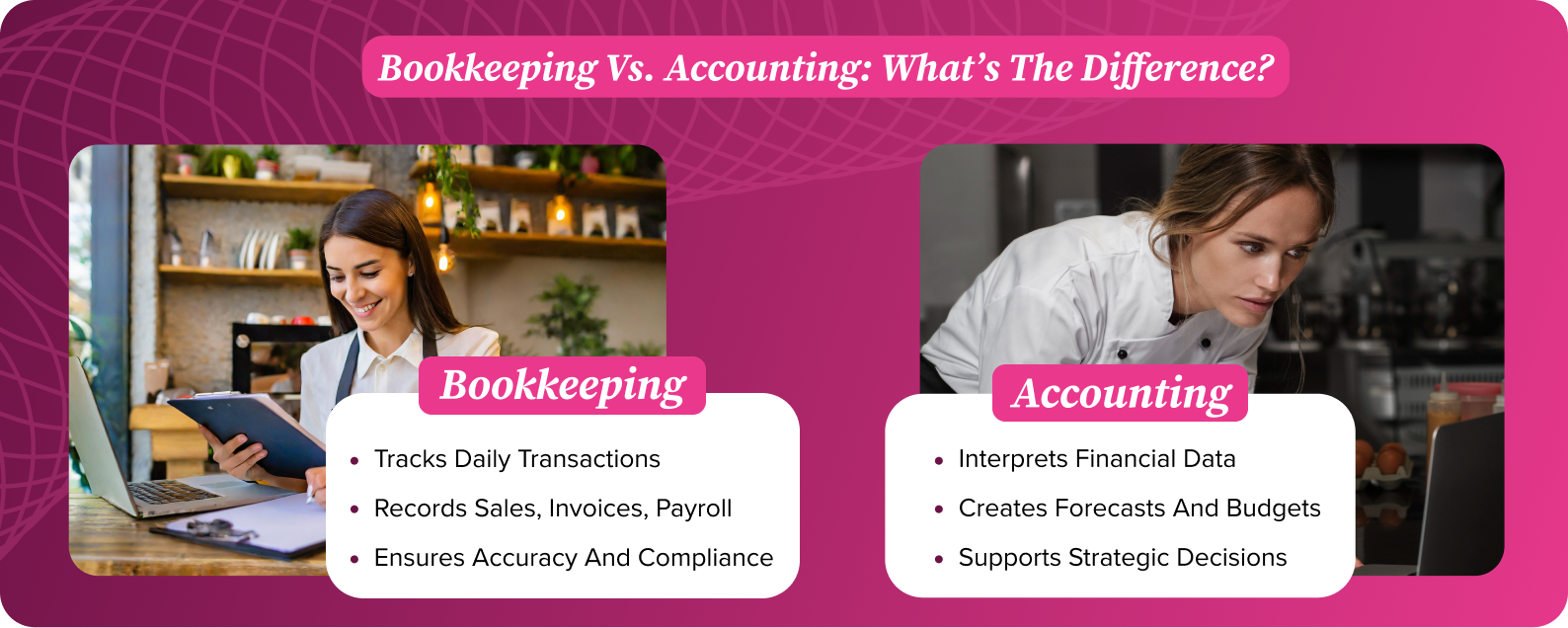
Bookkeeping is different from accounting. Bookkeeping covers the daily and weekly tasks that keep the numbers accurate, while accounting is the higher-level interpretation of those numbers. Think of it like this: bookkeeping is the foundation, while accounting is the strategy that forms the upper floors. Without reliable bookkeeping, the financial picture you’re making decisions off of can be incomplete or, even worse, misleading.
Why Bookkeeping Matters for Restaurants
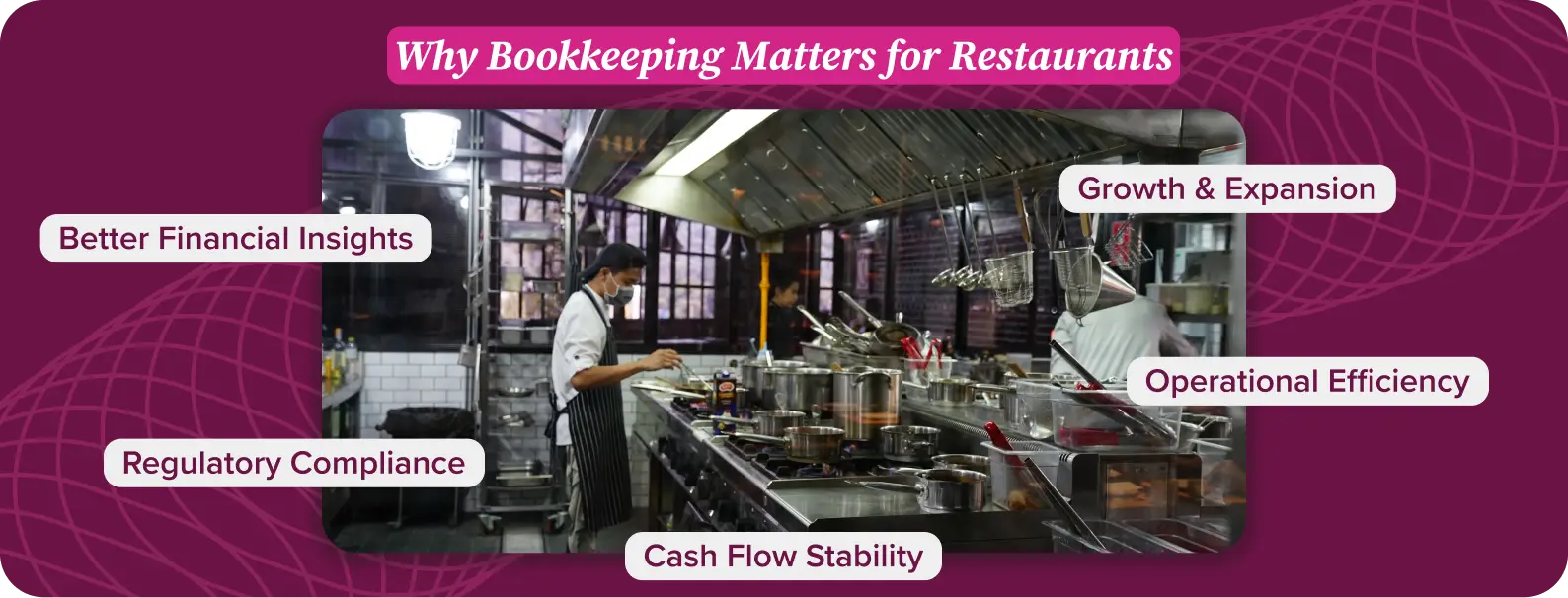
Strong restaurant bookkeeping creates stability. It also helps keep you compliant and provides the data needed for growth and expansions.
Accurate bookkeeping should give you a real-time look at the financial health of your restaurant so you can see what’s working and where you might be losing money. Clean books allow you to build accurate budgets, manage cash flow, and cover payroll and vendor bills in a timely, organized way.
It also helps you stay compliant with sales tax, payroll tax, and reporting obligations, which is critical in an industry where audits can be disruptive and costly. Most importantly, restaurant bookkeeping provides the insights that shape smarter decisions: when to adjust menu pricing, whether to bring on another staff member, or when it’s time to expand.
Denver-based Shanahan’s Steakhouse, a high-volume steakhouse, experienced these benefits firsthand. By partnering with Back Office, they streamlined bookkeeping processes, improved accuracy, and freed up time to focus on hospitality. With clearer financial insights, the leadership team could make sharper decisions that supported growth without sacrificing service.
Essential Restaurant Bookkeeping Tasks
While every restaurant is different, certain tasks are essential to keeping the books clean and reliable:
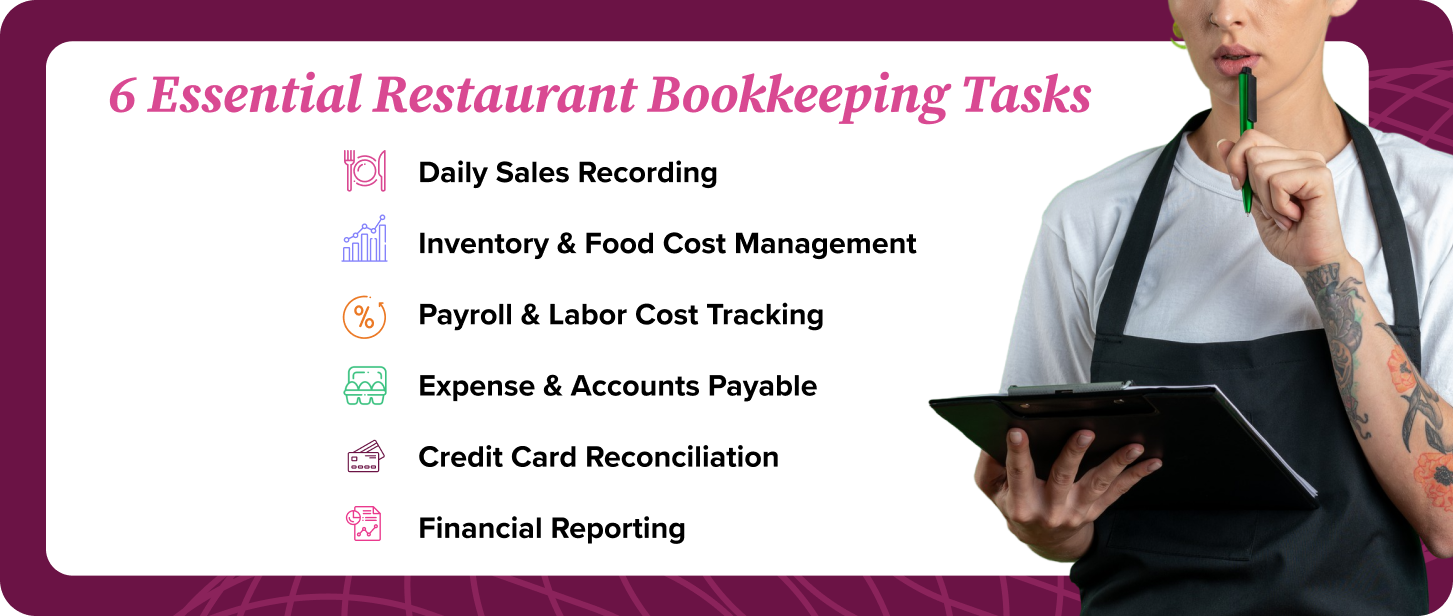
- Daily Sales Recording: Daily sales should be logged, broken down by payment method, and matched against bank deposits. Recording sales daily keeps revenue in check and prevents discrepancies from slipping through the cracks.
- Inventory and Food Costs Management: Bookkeeping helps you track food invoices, purchase orders, and usage. Monitoring food cost percentages shows whether waste, shrinkage, or price increases are eating into your margins.
- Payroll and Labor Cost Tracking: Wages, overtime, and benefits must be captured, along with tax withholdings and tip reporting. When done well, this data reveals true labor costs as a percentage of sales.
- Tracking Expenses and Accounts Payable (AP): Logging and categorizing expenses keeps cash flow predictable and avoids late fees.
- Credit Card Reconciliations: Regular reconciliations ensure deposits match transactions and catch fraud or errors early.
- Financial Reports for Decision-Making: P&L statements, cash flow reports, and balance sheets guide menu pricing, staffing, and expansion decisions.
How to Set Up Restaurant Bookkeeping
A reliable bookkeeping system starts with a few practical decisions: which tools to use, how to organize your records, and who will keep everything current. Getting those pieces in place early makes the daily work easier and gives you numbers you can trust.
Choose Software That Fits Your Restaurant
Start with bookkeeping software that fits your budget and the way your restaurant operates. Look for tools that connect with your POS, bank accounts, and payroll system so you spend less time moving numbers between platforms. If you manage multiple locations, make sure you can review performance by location as well as across the business.
Consider the support you’ll need, too. A system should make it easier to track sales, manage invoices, and understand your financial position—not add another complicated task to your day.
Organize Your Accounts and Opening Balances
Build a restaurant-specific chart of accounts: the categories you’ll use to organize sales, expenses, assets, and liabilities. Separate food and beverage sales, ingredient purchases, labor, occupancy costs, and other operating expenses so your reports show where money is coming from and where it’s going.
Add vendor details, connect business accounts, and verify your opening balances against existing records. Keep business and personal spending separate, and establish how you’ll record tips, sales tax, gift cards, and delivery-platform fees. A bookkeeper or accountant can help set this up correctly, even if you plan to handle the ongoing work yourself.
Set a Schedule and Assign Ownership
Decide who will record transactions, review invoices, and reconcile accounts. Capture sales and expenses daily, review outstanding bills weekly, and complete bank and credit card reconciliations as part of your monthly close. Check deposits against POS activity and payment-processor statements, allowing for fees and settlement timing.
If you’re managing the books yourself, learn the basics before relying on automated reports. Software can reduce manual entry, but someone still needs to review exceptions and confirm that transactions land in the right accounts.
Best Practices for Restaurant Bookkeeping
Consistent processes make restaurant bookkeeping manageable. That’s where leveraging technology comes in. Back Office’s restaurant software centralizes daily sales, payroll, accounts payable, and reporting in one place, cutting down on errors and freeing staff from manual data entry.
Equally important is developing a rhythm. Enter sales and expenses every day, reconcile accounts weekly or monthly, and keep inventory aligned with bookkeeping records so food costs reflect reality. Pay close attention to prime costs (food and labor combined), since they account for the bulk of expenses and can quickly dictate profitability.
Accuracy matters in other areas, too. Tips must be tracked and reported correctly to stay compliant. Strong internal controls, such as separating who records sales from who handles vendor payments, help reduce the risk of mistakes or fraud.
With the right mix of software and consistent habits, bookkeeping becomes less of a burden and more of a tool for better decision-making. You might even find yourself getting excited about it.
Should You Outsource Your Restaurant Bookkeeping?
As your restaurant grows, the books tend to get more complicated. More employees, vendors, sales channels, and locations mean more transactions to review—and less time to review them. If bookkeeping regularly falls behind or pulls you away from running service, it may be time to bring in help.
Recognize When You Need Support
Late reconciliations, unexplained differences in deposits, and reports you don’t trust are signs that your current setup needs attention. Outsourcing can also make sense before an expansion, when consistent processes and dependable reporting become even more important. The goal isn’t simply to hand off data entry. It’s to keep your financial information accurate and useful without making you the bottleneck.
Compare Your Bookkeeping Options
You could hire a part-time or full-time bookkeeper, work with an independent professional, or partner with an outsourced bookkeeping firm. An employee provides in-house support, while an outside provider may offer more flexibility as your needs change. Compare the total cost, restaurant experience, and level of service—not just the monthly price.
Before choosing a provider, confirm who handles reconciliations, accounts payable, payroll coordination, and month-end reporting. Ask about reporting deadlines, access to your records, and how questions or discrepancies will be resolved. Don’t assume tax filings or accounting advice are included.
Keep Visibility Into Your Numbers
Outsourcing doesn’t mean stepping away from your finances. Review reports regularly and stay involved in payment approvals and major decisions. Whether your books are managed internally or by a provider, Back Office’s restaurant software can help centralize financial information so your team has a clearer view of performance. The right support should give you more time for hospitality without leaving you in the dark about the business.
The Role of Back Office Software in Restaurant Bookkeeping
Manual bookkeeping is slow, error-prone, and expensive. Operators that rely on manual processes often waste hours each week and still end up with unreliable numbers. Paper invoices pile up, spreadsheets get messy, and reconciling bank accounts is a tedious chore.
By automating daily cash reconciliation, payroll, general ledger coding, and AP, Back Office takes the friction out of bookkeeping. Operators gain real-time visibility into financial health, with accurate reports that guide menu engineering, labor planning, and growth strategies.
The benefits go beyond convenience. Automation improves accuracy, reduces compliance risks, and creates ROI by giving operators the insights they need to act quickly and confidently. Shanahan’s Steakhouse, for instance, achieved more accurate financial reporting and stronger cash flow management, allowing the leadership team to focus on hospitality instead of paperwork.
Turn Bookkeeping into a Strategic Advantage
From tracking daily sales to monitoring prime costs and producing reliable reports, thorough bookkeeping is the backbone of a restaurant’s financial health. It lays the groundwork for profitability and growth. When done consistently and supported by the right tools, it can turn a burden into a business advantage.
Back Office helps restaurants take control of their books with Bookkeeping software designed for the unique demands of the industry. By automating manual tasks and providing clear financial insights it allows owners and managers to focus on what they do best: deliver exceptional dining experiences.
Bookkeeping might never be glamorous, but with the right systems, it becomes your most reliable growth tool. Click here to learn how Back Office helps restaurants master it.